Apple passed Nvidia on July 27 to become the world’s most valuable public company, closing the trading day with a market capitalisation of $4.95 trillion against Nvidia’s $4.77 trillion. It was the first time Apple had topped Nvidia at market close since April 2025, CNBC reported. Nvidia’s shares fell nearly 5% on the day.
🔍 THE BOTTOM LINE
The market cap flip is not just a chart curiosity. It is the clearest signal yet that investors are beginning to price the risk of the AI infrastructure buildout, not just the reward. Apple — the company that chose to rent AI capacity rather than build it — is being rewarded. Nvidia — the company financing its own customers — is being questioned.
What the Numbers Say
So far in 2026, Nvidia’s shares have climbed just 4%, while Apple’s are up 24%, according to CNBC’s data. Apple has outperformed the broader market as investors have rewarded its reluctance to spend heavily on capital expenditures for AI, preferring to rent cloud capacity instead of building its own data centres.
Nvidia had held the top spot since June 2025, when it took the crown from Microsoft. The chipmaker briefly held a $5 trillion capitalisation in October 2025. At Monday’s close, it had given back roughly $230 billion of that.
Why Nvidia Fell
Nvidia’s decline was not driven by a single headline. It was the accumulation of a week’s worth of financial disclosures that all pointed in the same direction: the chipmaker is increasingly using its own balance sheet to finance the AI infrastructure market that buys its chips.
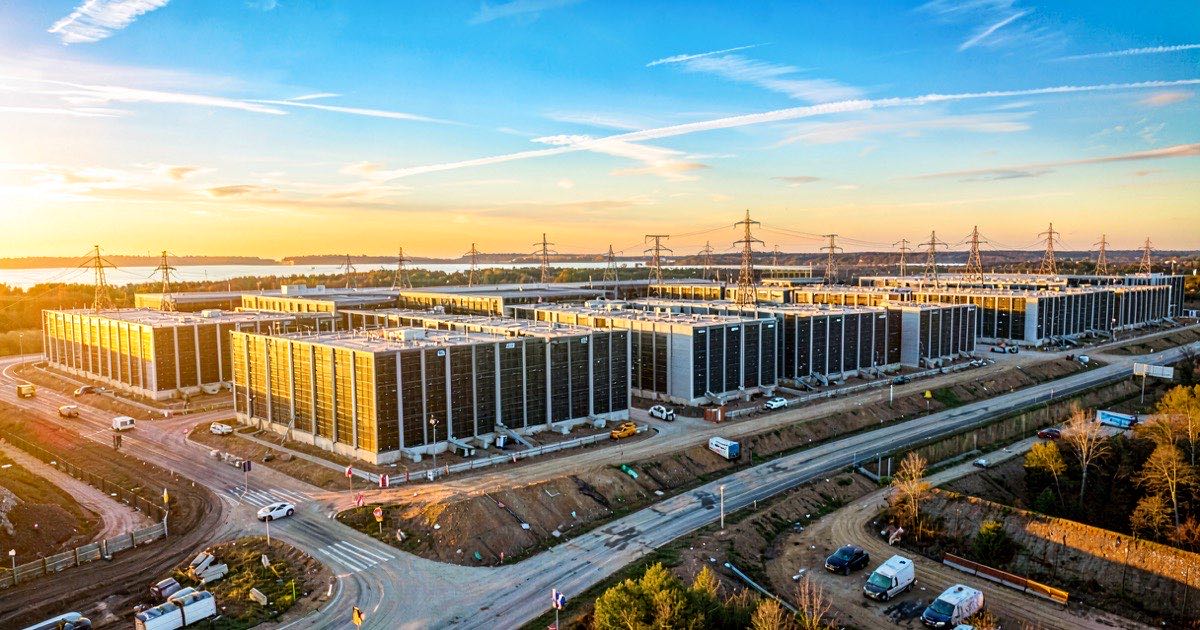
The Wall Street Journal and Bloomberg reported on July 27 that Nvidia is in talks to guarantee roughly $250 billion in financing for OpenAI to lease computing from a massive data centre project in Ohio. The Financial Times followed on July 28 with a report that Nvidia is behind a separate $50 billion lease on a Texas data centre designed around its own DSX reference architecture. And Nvidia announced a $5 billion investment in Ilya Sutskever’s Safe Superintelligence lab, tying the funding to access to its next-generation Vera Rubin systems.
As Startup Fortune noted in its analysis, the customer, the financier, and the supplier are no longer cleanly separate. CNBC quoted Wedbush analyst Matthew Bryson as saying Nvidia’s investments fit “squarely into the circular investment theme” driving market concerns.
The price of credit default swaps on Nvidia bonds recorded their highest intraday increase since active trading began in November, Bloomberg reported via Axios, according to ICE Data Services figures. That is not panic — it is the market repricing the risk that Nvidia’s role as supplier is becoming something closer to banker.
Why Apple Rose
Apple’s appeal to investors in this moment is precisely what it is not doing. The company has avoided the massive capital expenditure commitments that define the AI infrastructure buildout. Instead of building gigawatt-scale data centres, Apple rents cloud capacity from Amazon Web Services, Google Cloud, and others, paying for what it uses rather than locking in multi-decade lease commitments.
Apple is expected to report fiscal third-quarter earnings on Thursday, in which the iPhone maker is expected to reveal for the first time some of the financial impacts from the AI-driven global memory chip shortage, which forced the company to raise Mac and iPad prices in June.
Meanwhile, Nvidia’s sales are now in their third year of massive AI-driven growth, but many investors have switched their focus from GPUs to memory chips and other data centre infrastructure that benefit from the AI boom — companies like Micron Technology, SK Hynix, and SanDisk.
What Is “Circular Financing” and Why It Matters
What is circular financing? In the context of the AI buildout, circular financing describes a structure where a chipmaker (Nvidia) provides capital or guarantees to its own customers (OpenAI, data centre operators) so those customers can buy the chipmaker’s products. The money flows out and comes back as revenue.
The Bank for International Settlements warned about this exact kind of structure in its 2026 Annual Economic Report, published June 28. The BIS said chipmakers, hyperscalers, and AI labs are increasingly tied together through private arrangements where companies take stakes in customers that then commit to buying chips or computing power. It also warned that the same asset can be pledged multiple times when the financing is poorly disclosed.
The bullish case is that Nvidia has the balance sheet, the chips, and the customer demand, so it uses all three to make sure the infrastructure gets built. The bearish case is that if AI demand disappoints, the same relationships that made growth look inevitable could pull losses through the system quickly.
NZ Angle
For New Zealand investors with exposure to US tech through index funds or KiwiSaver default options, the Apple-Nvidia flip matters because both companies are likely top-10 holdings. The question is not which one to own — it is whether the AI infrastructure trade is shifting from a growth story to a risk story. NZ fund managers who overweight Nvidia on momentum are now sitting on a stock that has gained 4% year-to-date against Apple’s 24%.
❓ FAQ
When did Nvidia last hold the top spot? Nvidia became the world’s most valuable company in June 2025, surpassing Microsoft. It held the position for just over a year before Apple reclaimed it on July 27, 2026.
Why is “circular financing” a concern? Because the chipmaker is financing the very customers who buy its chips. If those customers cannot generate enough revenue from AI services to repay the financing, Nvidia’s exposure runs in both directions — it loses on the financing side and on the chip sales side simultaneously.
Does this mean the AI boom is over? Not necessarily. Nvidia’s revenue is still growing, and the infrastructure being built is real — it involves land, power, leases, and years of construction. The market is repricing the risk around who pays for it and how, not questioning whether AI demand exists.
What should NZ investors watch? Apple’s earnings on Thursday, July 31, will reveal the first financial impact of the AI-driven memory chip shortage. Nvidia’s next earnings will show whether the circular financing concerns are translating into actual margin pressure or remained a sentiment-driven selloff.
🔍 THE BOTTOM LINE
Apple’s return to the top of the market cap table is less a vote of confidence in Apple than a vote of caution about Nvidia. The iPhone maker did not do anything extraordinary this week. Nvidia did — it committed billions more to financing its own ecosystem, and the market responded by knocking $230 billion off its value. The AI infrastructure boom is not over, but the market has started asking who is left holding the bill if the demand does not arrive on schedule.
📰 Sources
- CNBC — Apple ends day as world’s most valuable company, passing Nvidia
- Startup Fortune — Nvidia is financing a $50 billion Texas data center that will run on its own chips
- Yahoo Finance — Apple overtakes Nvidia as most valuable company
- CNBC — Apple raises Mac and iPad prices amid memory chip shortage