Bedrock Robotics, the San Francisco company refitting heavy construction equipment for full autonomy, has raised a $600 million Series C at a $4.1 billion post-money valuation, co-led by CapitalG and Emergence Capital, according to the company’s announcement carried by GlobeNewswire and The Robot Report’s interview with CEO Boris Sofman. The round takes Bedrock’s total venture funding to nearly $1 billion, barely two years after the company came out of stealth.
The investor list reads like a who’s-who of late-stage autonomy bets: new money from US Innovative Technology Fund, Bessemer Venture Partners and Temasek, alongside existing backers 8VC, Georgian, Valor Equity Partners, Xora, Eclipse, Perry Creek Capital and NVIDIA. NVIDIA’s continued presence matters beyond the cheque, since the same company supplies much of the compute stack that makes retrofit autonomy work in the field — an investor-customer-supplier triangle that suggests the round is as much about the supply chain as the balance sheet.
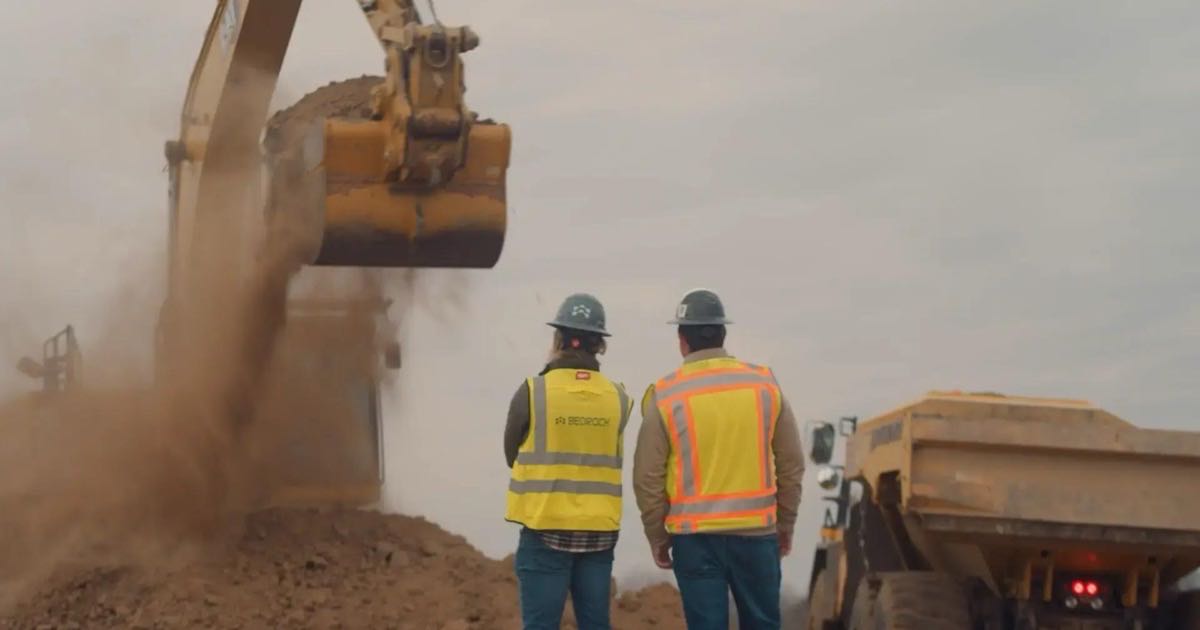
The commercial footprint explains why Bedrock needed that much capital at once. In the months since the site covered its first driverless commercial excavator deployments in August, the company has pushed beyond its initial West and Central South territory into the Midwest and South Atlantic — anchored by a partnership with Texas contractor Haydon to automate earthwork, with regional partners added across Minnesota, Florida, Georgia, Missouri and Virginia. The machines are working on live job sites spanning data centres, healthcare facilities and heavy civil infrastructure.
“We have proven that fully autonomous excavators can perform real work of value alongside the crews and workflows already in place on job sites,” Sofman said in the announcement. He framed the next challenge as dependability at scale: “This funding allows us to expand deployments, strengthen the field operations behind every machine, and work with more partners as they integrate intelligent systems into everyday work.” Growth is not friction-free — Sofman told The Robot Report plainly that “new customer demand is very high” and the company is “scaling across the board, from operations to hardware to supply chain operations” to keep up. Two hires underscore where the pressure sits: Amy Jones Satrom (operations, ex-Amazon, Nuro and Uber) as VP of operations, and Lando Juarez, formerly head of legal for Uber’s autonomous mobility business, as general counsel.
The roadmap Sofman sketched out to The Robot Report is broader than digging holes. Construction is “a massive market — 4 to 5 percent of U.S. GDP,” and Haydon will test Bedrock’s excavators for autonomous trench work, with bulldozers, articulated dump trucks and wheel loaders positioned as the next machine classes to automate. Longer term he points to mining and agriculture — industries that run the same heavy equipment and the same labour constraints. For 2027 the target is concrete: “getting to triple-digit machines working autonomously across the country.”
The economics Sofman offered are worth quoting at length, because they are the actual argument for the round: a job completed two months faster because autonomous machines run around the clock means a developer paying 9% interest on a $400 million loan saves $6 million that can fund the next project. Around that math sits the labour backdrop The Robot Report cites — roughly a fifth of construction workers over 55, estimates that more than 40% of the workforce will retire within five years, large projects running on average 20% over schedule and 80% over budget, and 87% of firms reporting unfilled hourly craft positions.
Two things in this round deserve more attention than the headline numbers. The first is the model: Bedrock does not sell contractors new robots, it retrofits autonomy onto the equipment fleets crews already run. That keeps the customer’s capital outlay lower than a purpose-built robot would, and it lets Bedrock ride demand for machines that already exist — but it also ties Bedrock’s margins to the machine owners’ economics and to a retrofit supply chain rather than a factory line. Investors funding a $4.1 billion valuation on retrofits are betting that distribution and field operations, not hardware novelty, are the moat. That is a different bet from the humanoid path, and the construction-robotics funding landscape now spans everything from $200M autonomous-construction rounds to $20M niche bots, so the market is effectively running both theses at once.
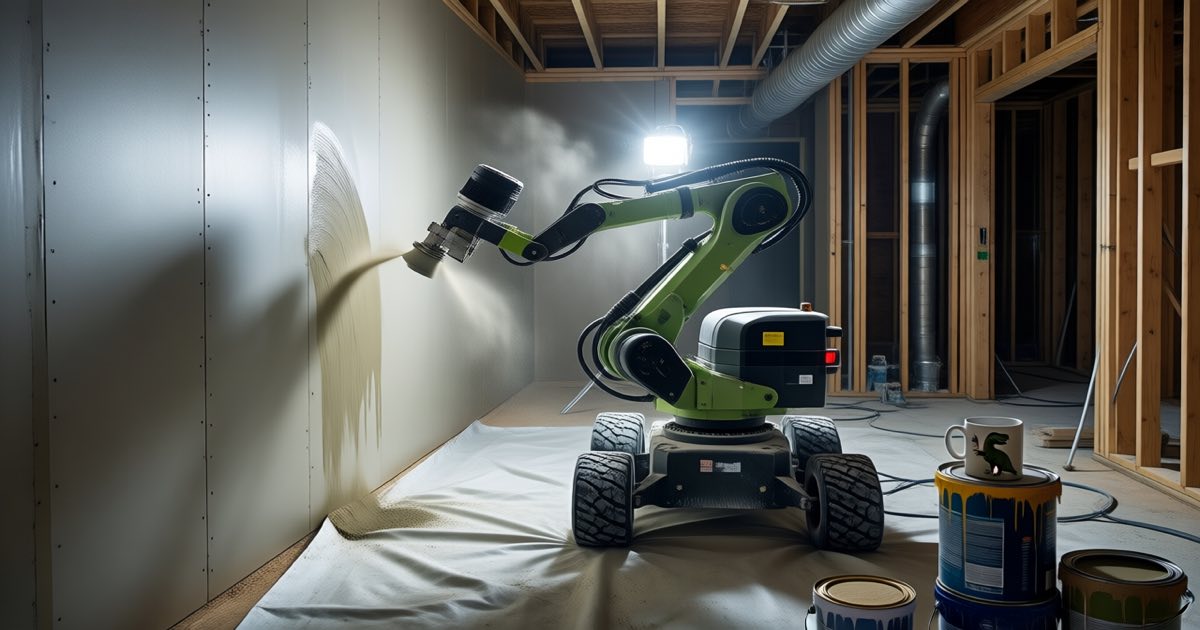
The second is what this means outside the US. New Zealand and Australia read the same labour statistics with even fewer hands to replace: a shrinking rural trades workforce, chronic cost overruns on civil projects, and a machinery fleet that skews old. The transferable piece is not the retrofit hardware — triple-digit machine fleets imply contractor scale most NZ firms will never reach — but the utilisation math. If autonomy’s real product is construction hours that do not stop at sunset, the lever it pulls is project finance cost, and finance costs are exactly where NZ infrastructure projects bleed. Watch whether Haydon’s trench-work trial produces published cycle-time data; that single metric will tell the rest of the anglosphere construction industry whether the $4.1 billion valuation is priced on promise or on proven hours. Niche specialists like the wall-finishing robots the site covered last month raised $20M on the same logic — every trade the general labour pool is losing, someone is automating.
Sources: The Robot Report, GlobeNewswire via Yahoo Finance, VC News Daily.