1. Singapore Mandates AI Skills for All Tertiary Students from 2027
May 23, 2026 | Channel NewsAsia
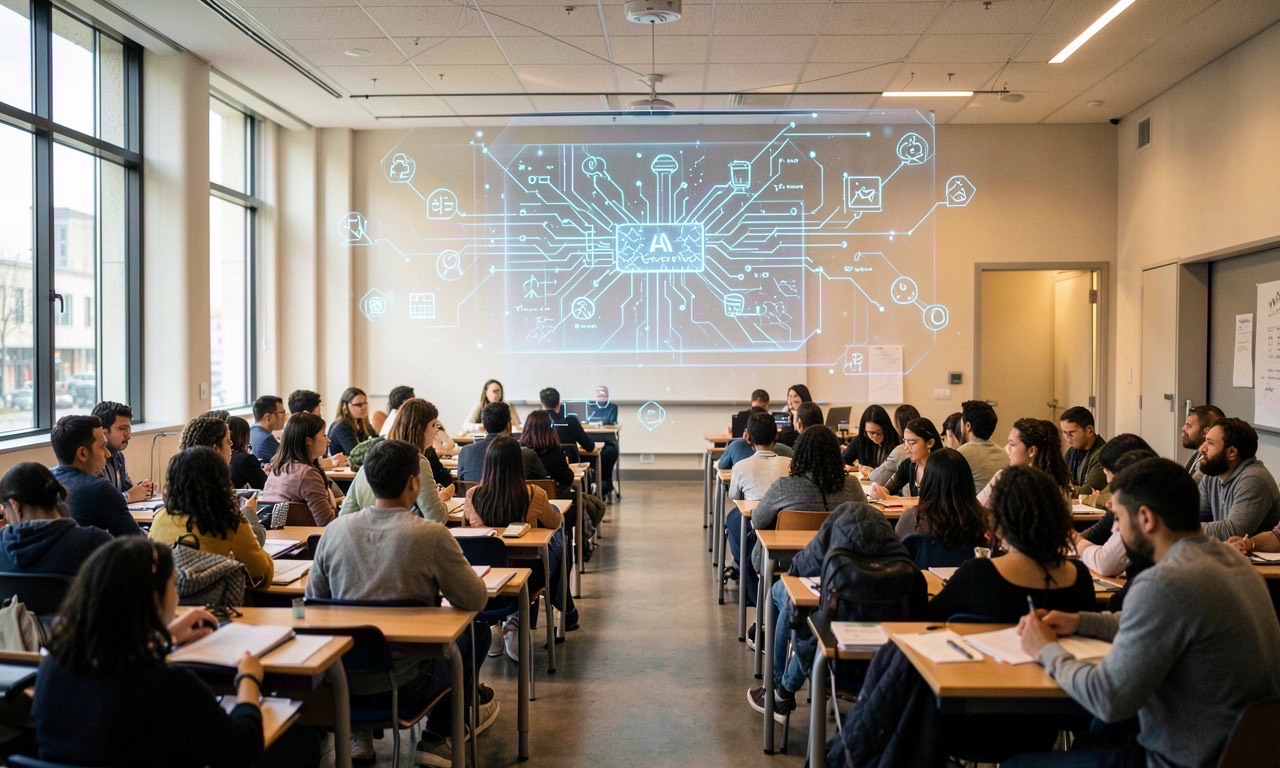
Singapore announced that from the 2027 academic year, every university, polytechnic, and ITE (Institute of Technical Education) student will be required to take compulsory AI modules. The mandate covers all disciplines — not just STEM.
- Coverage: All tertiary students — university, polytechnic, ITE
- Scope: Compulsory modules across all disciplines, not just engineering/CS
- Timeline: 2027 academic year implementation
- Singapore’s rationale: AI literacy is now a basic competency, not a specialisation
- Implementation challenge: Training faculty to teach AI across disciplines
Why it matters: Singapore is the first country to make AI education genuinely universal at tertiary level — not “AI courses available” but “AI courses required.” The key detail is all disciplines. An arts student in Singapore will graduate with AI skills. That’s not a policy statement — it’s a competitive advantage for an entire generation. NZ and Australia will watch closely.
2. Norway Mandates AI Skills Training in Higher Education
May 2026 | Complete AI Training
Norway has joined the movement, requiring all universities to integrate AI skills training into their curricula. The government frames it as “national infrastructure” — treating workforce AI readiness with the same seriousness as roads and broadband.
- The mandate: All Norwegian universities must integrate AI training
- The framing: “Workforce readiness as national infrastructure”
- Norway’s advantage: Universal public education system makes implementation simpler
- Approach: Integration into existing courses, not standalone modules
Why it matters: Norway’s framing is worth noting — AI skills as national infrastructure, not as a curriculum update. This reframes AI education from “nice to have” to “essential public good” on par with numeracy and literacy. Other European countries will almost certainly follow.
3. Taiwan Launches AI Talent Ark — AI Teacher Training at Scale
May 23, 2026 | Taipei Times
Taiwan’s Ministry of Education launched the “AI Talent Ark” programme, which pairs experienced teachers with AI-powered teaching assistants. The programme acknowledges that experienced teachers won’t always be available — and AI may be a “better” option for personalised student guidance.
- The name: “AI Talent Ark” — deliberate Noah’s Ark framing for an educational transformation
- The approach: AI-powered teaching assistants supplement — and sometimes replace — human teachers
- Taiwan’s position: Willing to be more aggressive on teacher replacement than most Western nations
- Controversy: “Experienced teachers will not always be available to advise aspiring teachers” — but AI programs could fill gaps
Why it matters: Taiwan is asking the question most education systems are avoiding: what happens when there aren’t enough good teachers? Their answer — AI assistants, deployed at scale — is controversial but pragmatic. Every country with a teacher shortage is going to face this question. Taiwan is just first to answer it out loud.
4. MIT Launches “Universal AI” — A Pathway to AI Fluency for Anyone, Anywhere
May 12, 2026 | MIT News
MIT announced “Universal AI,” a structured pathway designed to make AI fluency accessible “to anyone, anywhere.” The programme is self-paced, online, and covers AI fundamentals through practical application — aimed at learners without technical backgrounds.
- Target audience: Non-technical learners — no coding prerequisites
- Content: AI fundamentals, practical application, ethics, and societal impact
- Format: Self-paced, online, free/low-cost
- MIT’s framing: “A pathway to AI fluency that’s accessible and approachable to anyone, anywhere”
- Why it matters: MIT is the gold standard for technical education. If they’re investing in non-technical AI fluency, it signals that AI literacy is too important to leave to CS departments.
Why it matters: The most prestigious technical university on Earth is building AI courses for non-technical people. That’s the signal. If you can’t code but need to understand AI at work, MIT’s Universal AI pathway might be the most credible option available.
5. Google Expands AI Educator Series to India, Partners with UNICEF
May 2026 | Storyboard18
Google is expanding its AI educator training programme to India, partnering with UNICEF and local state governments. The programme trains teachers to use Gemini, NotebookLM, and other Google AI tools in the classroom — localised for Indian languages and curricula.
- Partners: UNICEF, Indian state governments
- Tools: Gemini, NotebookLM, custom Google AI education tools
- Localisation: Content adapted for Indian languages and curricula
- Goal: Train teachers, not just deploy tools — sustainable AI adoption
Why it matters: Google’s play here is strategic: train the trainers, build long-term dependency on Google’s AI ecosystem, and shape how a generation of Indian students interacts with AI. For educators, it’s a valuable free resource. For Google, it’s a decade-long pipeline investment masked as philanthropy. Both things can be true.
6. Louisiana Parishes Pilot AI Coding Platform in High Schools
May 2026 | Technical.ly
Ten Louisiana parishes are piloting an AI-powered coding platform in high schools — using AI to tutor students through computer programming courses. The pilot replaces traditional instruction with AI-guided, self-paced learning in coding.
- Scope: 10 Louisiana parishes piloting the programme
- Method: AI-powered platform tutors students through coding exercises
- Result: Students progress at their own pace, with AI providing personalised feedback
- Challenge: Replacing human instruction with AI guidance — works for coding, less certain for other subjects
Why it matters: AI-as-teacher is no longer theoretical. These high school students are learning to code from AI, not from human instructors. If this pilot succeeds, it will be replicated. If it fails, the reasons will shape how AI education is designed going forward. Either outcome produces useful data.
🔍 THE BOTTOM LINE
May 26, 2026, shows a clear global trend: AI education is no longer optional or experimental. Singapore and Norway are making it compulsory. Taiwan is deploying AI teachers. MIT is building AI fluency for non-technical learners. The window for “wait and see” on AI education is closing — for students, teachers, and policymakers. The countries that treat AI literacy as infrastructure will have an advantage in the next decade. The countries that treat it as an elective won’t.
Sources
- Channel NewsAsia — “All university, polytechnic and ITE students to learn AI skills from 2027”
- Complete AI Training — “Norway mandates AI skills training in higher education”
- Taipei Times — “Education ministry launches AI Talent Ark”
- MIT News — “Universal AI: pathway to AI fluency for anyone, anywhere”
- Storyboard18 — “Google expands AI educator series to India, partners with UNICEF”
- Technical.ly — “10 Louisiana parishes pilot AI coding platform in high schools”