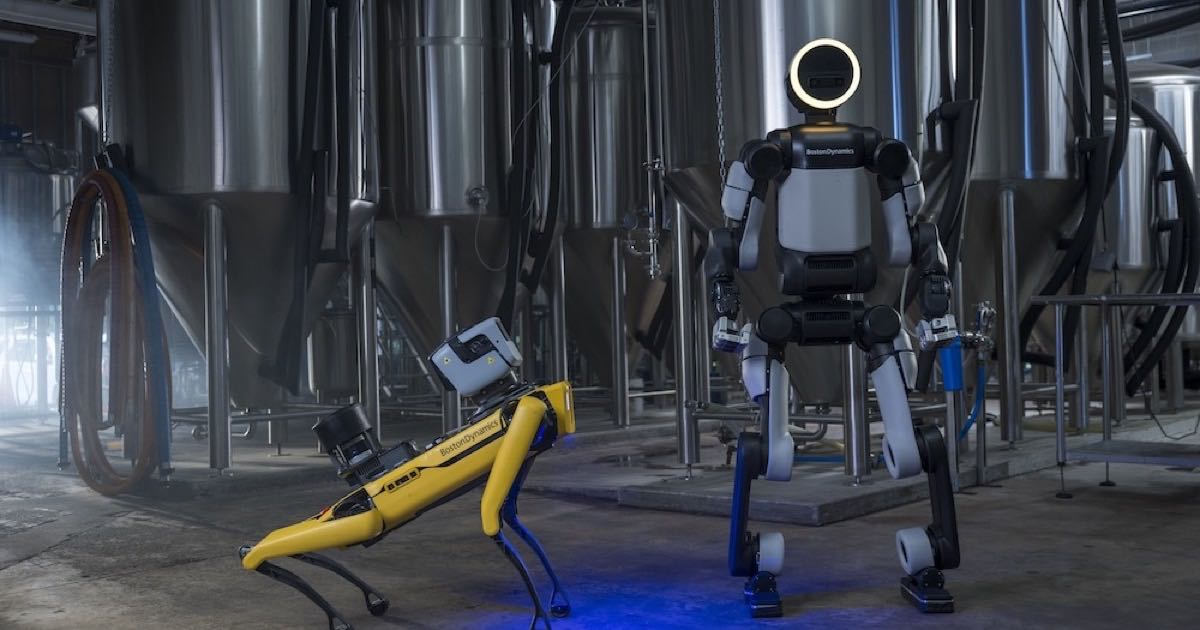
The paperwork is mundane — a third-quarter regulatory filing by Hyundai Glovis, the group’s logistics arm — but it settles a question that has hung over Boston Dynamics since 2021. According to the filing on Tuesday, as reported by The Korea Herald, all put and call options tied to Boston Dynamics’ common shares were exercised and expired during the quarter. SoftBank’s remaining 9.65% stake has been bought out, and executive chair Chung Euisun plus Hyundai Motor Group affiliates now hold 100% of the robotics company.
The July trigger was no surprise. SoftBank had exercised its put option under the shareholder pact inherited from the original sale — coverage at the time framed the deal as Hyundai agreeing to buy back roughly 500 billion won of stock. What is new is the completion, confirmed not by a press release but by option records in a quarterly filing: nothing is left to exercise. Boston Dynamics is, as a matter of filing paperwork, a wholly owned family-group asset.
The Glovis numbers, itemised
Hyundai Glovis injected 46.5 billion won (about $34.8 million) to lift its own stake 1.08 points to 12.47% at the end of Q3, following a 63.1 billion won investment in the first half of 2026. Those are not headline-grabbing sums next to the rumoured ~$335 million total consideration, but they show how the buyout was financed: quietly, spread across affiliates, with the logistics subsidiary adding to an existing position rather than making a splash.
The parent company hopes the money is going somewhere useful. Boston Dynamics’ revenue for the first nine months of 2026 rose 29% year-on-year to 136 billion won. Its net loss over the same period widened to 626.6 billion won, driven by R&D and getting the Atlas production line ready. Revenue up a quarter and a half, losses up more — that is the signature of a company in a manufacturing ramp, not a research lab coasting on viral videos.
One owner, one deadline: 30,000 Atlases by 2028
Consolidation is the point. As The Korea Herald frames it, with no external shareholders to balance, the group can move capital expenditure, R&D decisions and cross-affiliate collaboration at its own pace. The stated plan is unchanged and now unconditional: 30,000 Atlas units of annual production capacity by 2028, with first deployments at Hyundai Motor Group Metaplant America in Georgia, doing parts sorting and transport before any attempt at complex assembly.
The timeline is aggressive, and the filing math shows why. A 626.6 billion won loss cannot be a permanent condition; the entire thesis of the ownership consolidation is that volume manufacturing turns it around. AI Magazine’s earlier coverage of Hyundai’s plan describes the 2028 rollout as starting with proven-benefit processes like parts sequencing — the same low-intensity work named in the filing’s deployment notes. The gap between a 12.47%-owned logistics subsidiary’s stake and a factory running 30,000 humanoids a year is where all of Hyundai’s robotics capital has to earn its keep.
There is also an exit in the roadmap. Sources suggest a possible Boston Dynamics IPO around 2029 or 2030, once production ramps, though no official timeline exists. It is worth remembering how this looked mid-year: the July buyout coverage carried Glovis’ own estimate valuing Boston Dynamics around 30 trillion won — the number that eventually put the company’s valuation jump since 2021 at more than twentyfold. Full ownership makes that future listing a single-stockholder decision, which is precisely the governance posture you want if you intend to sell shares into the market.
The quiet end of the SoftBank era
The ownership structure tells the story of two different bets. SoftBank bought Boston Dynamics from Google in 2017, sold 80% to Hyundai in 2021, kept a stake and a put option — and has spent 2026 pivoting toward industrial robot arms via ABB’s robotics unit. Hyundai, meanwhile, kept absorbing every share on offer through three capital increases and this quarter’s final exercise.
The pattern is bigger than one robot company. Japanese and Korean conglomerates are sorting their automation portfolios into two camps: proven industrial robotics (SoftBank-ABB) versus speculative humanoids (Hyundai-Boston Dynamics, with Tesla’s Optimus and Figure following the same bet from the independent side). Full ownership doesn’t make Atlas work in a factory. It just means that from today, nobody else’s board gets a vote on whether it does — and the 2028 Metaplant deadline now rests on one group’s balance sheet, with a 9M loss line that says the clock is already running.
Further reading: this morning’s Atlas-GlobalFoundries fab trial covers the robot’s first non-automotive customer; Hyundai’s original buyout of SoftBank’s stake in July set up today’s completion; Hyundai’s 20,000-robot supply chain target shows how the group plans to use them; and Metaplant’s RMAC humanoid rollout is where the first units land.