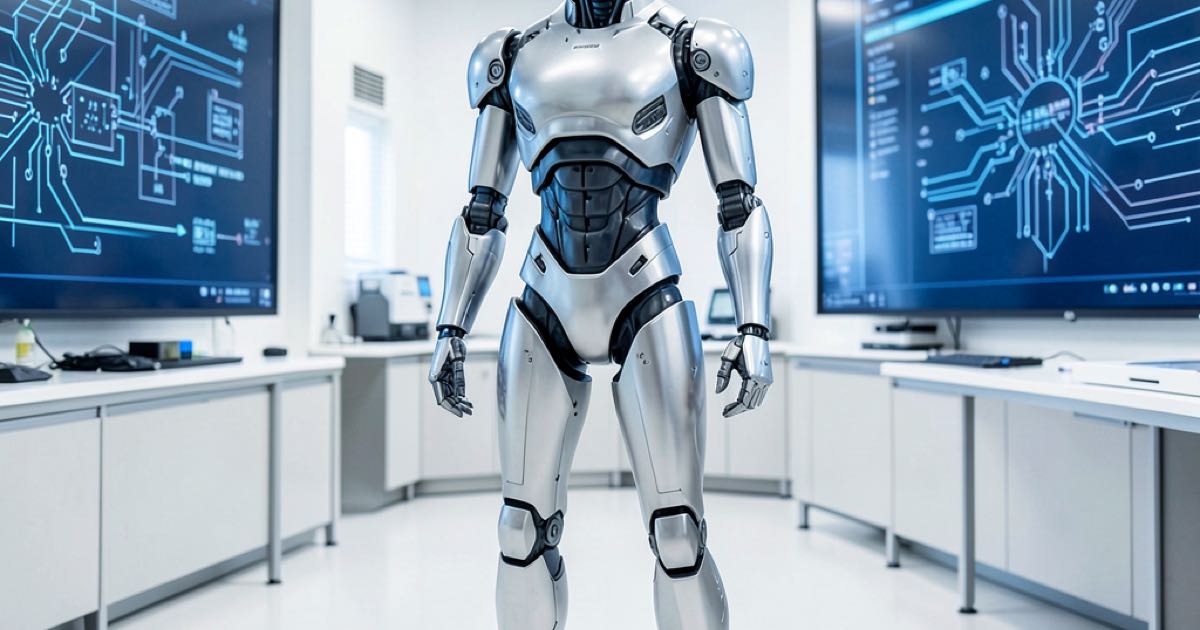
LG Electronics is accelerating its robotics partnership with Nvidia, targeting 100,000 hours of humanoid robot training data by the end of 2026 at a new data factory in Seoul’s Yangjae district.
Madison Huang, Nvidia’s senior director of product marketing for Omniverse and robotics — and the eldest daughter of Nvidia CEO Jensen Huang — visited the facility on Tuesday, inspecting progress alongside LG Electronics CEO Lyu Jae-cheol, LG CNS CEO Hyun Shin-gyoon, and LG Sciencepark President Chung Sue-hyun.
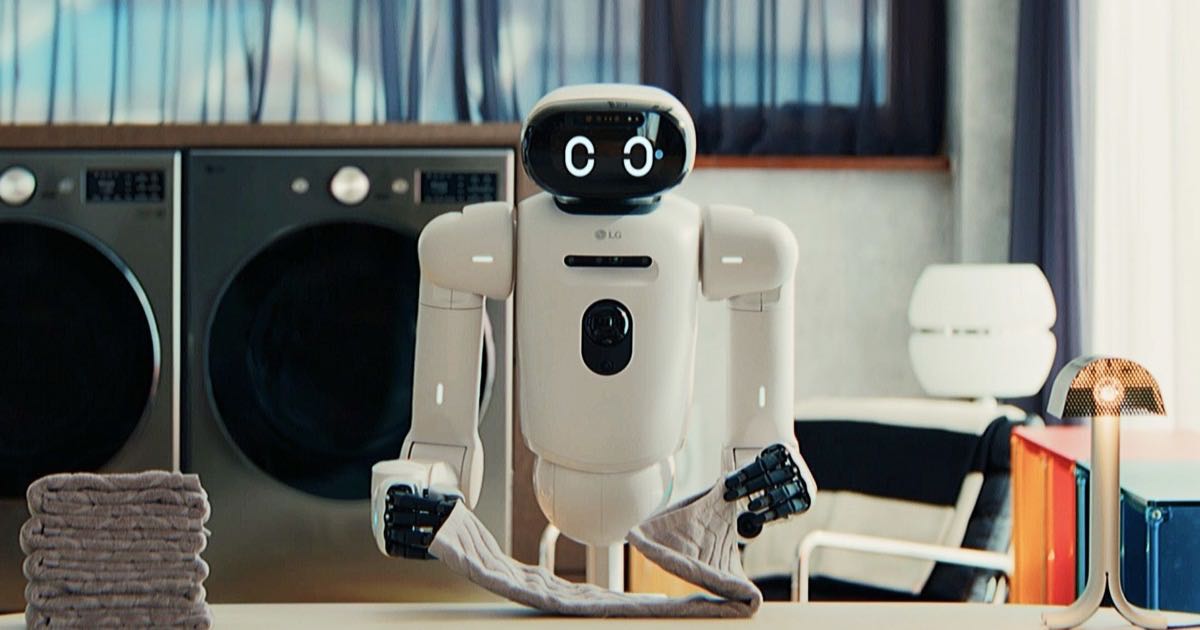
She was greeted by LG’s CLOiD robot, which presented her with a bouquet. Huang left a handwritten message reading “Amazing LG.”
What the Data Factory Does
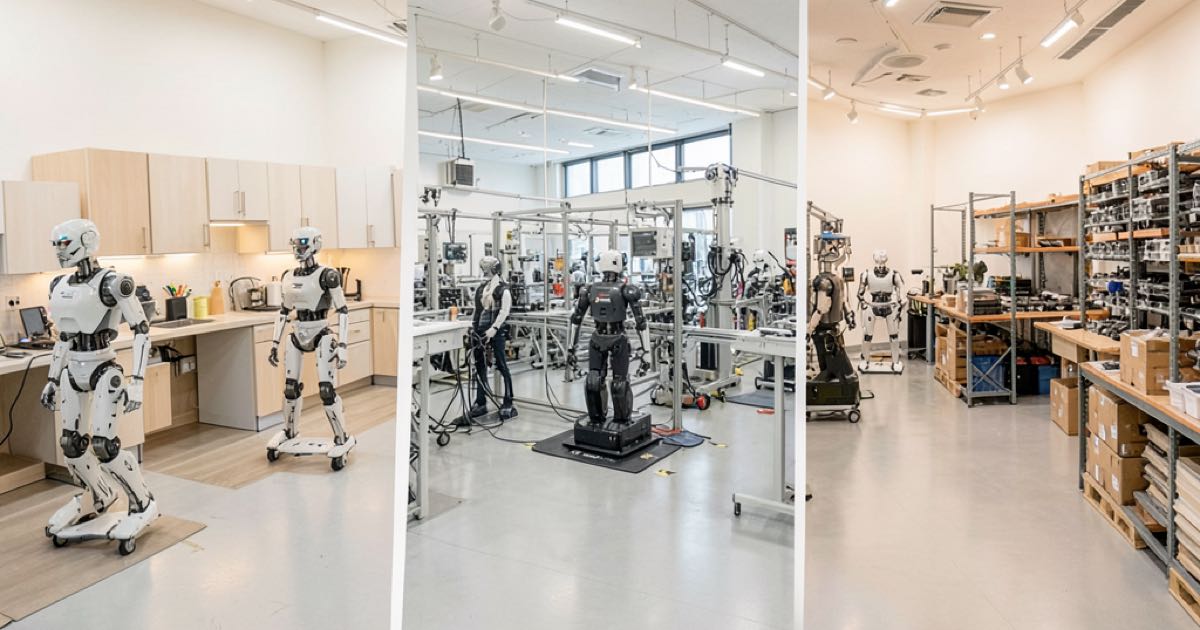
The Yangjae facility is designed to generate and collect training data for robot AI models across multiple simulated environments:
- A space designed to resemble a home, where CLOiD robots perform household tasks such as cleaning
- A replica of LG Electronics’ washing machine plant in Tennessee, where robots move and stack parts
- Training spaces for LG CNS’s logistics automation solutions
- LG Innotek’s robotic-hand systems
Data collected from these tasks is processed using Nvidia’s robotics tools, including data augmentation and synthetic data generation through Nvidia Cosmos, before being fed back into the training pipeline.
LG expects to collect 100,000 hours of robot training data at the facility by the end of this year — equivalent to nearly 12 years of continuous operation.
What This Means for the Humanoid Robot
The training data feeds directly into LG’s robot foundation model — the core AI system that helps robots perceive their surroundings, understand instructions, and perform physical tasks. This is particularly important for humanoids, which need to handle a wide range of objects and adapt to changing environments rather than repeat a limited set of programmed movements.
The visit came four days after LG Group Chairman Koo Kwang-mo and Jensen Huang signed an MoU at Nvidia’s Santa Clara headquarters, agreeing to develop a bipedal humanoid robot for a Q1 2027 unveiling. The data factory is the infrastructure layer making that timeline possible.
Lyu said: “We will secure competitiveness in physical AI by bringing together the group’s core capabilities under the ‘One LG’ approach and through strategic cooperation with global partners. We aim to become a total robotics solutions provider.”
LG Electronics also disclosed details of the Nvidia partnership in its half-year report, saying the companies are carrying out joint projects covering manufacturing robots from proof-of-concept testing through deployment at actual production sites.
Why This Matters for the Robotics Industry
The 100,000-hour target is significant because data scarcity is one of the biggest bottlenecks in humanoid robotics. Most robot training today relies on teleoperation — humans controlling robots to demonstrate tasks — which is slow and expensive. LG’s approach of building dedicated environments where robots generate data continuously, combined with Nvidia’s synthetic data pipeline, aims to accelerate that process dramatically.
If LG succeeds, it could close the data gap that has kept humanoid robots in the demonstration phase for most companies. Competitors like Tesla and Unitree are pursuing similar strategies, but LG’s advantage is its existing consumer electronics infrastructure — it already manufactures robots and has distribution channels in place.
NZ Angle
New Zealand’s aged care sector faces worsening labour shortages, with the Health Ministry projecting a shortfall of 8,000 carers by 2028. Service robots — including humanoid-form robots trained on data pipelines like the one LG and Nvidia are building — could play a growing role in home care and hospital logistics. The cost and capability of these robots will be shaped by how quickly companies like LG solve the training data problem.
❓ FAQ
What is a robot data factory? A dedicated facility where robots perform tasks in simulated real-world environments — homes, factories, warehouses — while their sensors and actions generate training data for their AI models.
Why is 100,000 hours a big deal? Most robot training data is collected through teleoperation (humans controlling robots), which is slow. 100,000 hours of operation from physical robots, combined with synthetic data generation, represents a step change in training volume.
Is this the same as the humanoid robot LG and Nvidia announced this week? Connected but distinct. The data factory feeds the AI model that will eventually run in the humanoid robot LG and Nvidia plan to unveil in early 2027.
Does Nvidia work with other robot makers this way? Yes. Nvidia’s Isaac GR00T, Cosmos, and Jetson Thor are available to multiple robotics companies. What makes the LG partnership notable is the commitment to a dedicated data factory with a specific training data target.
📰 Sources
- Korea Herald — LG, Nvidia target 100,000 hours of humanoid training data
- [LG Electronics half-year report (August 2026)]
- Nvidia — Madison Huang visits LG robotics data hub