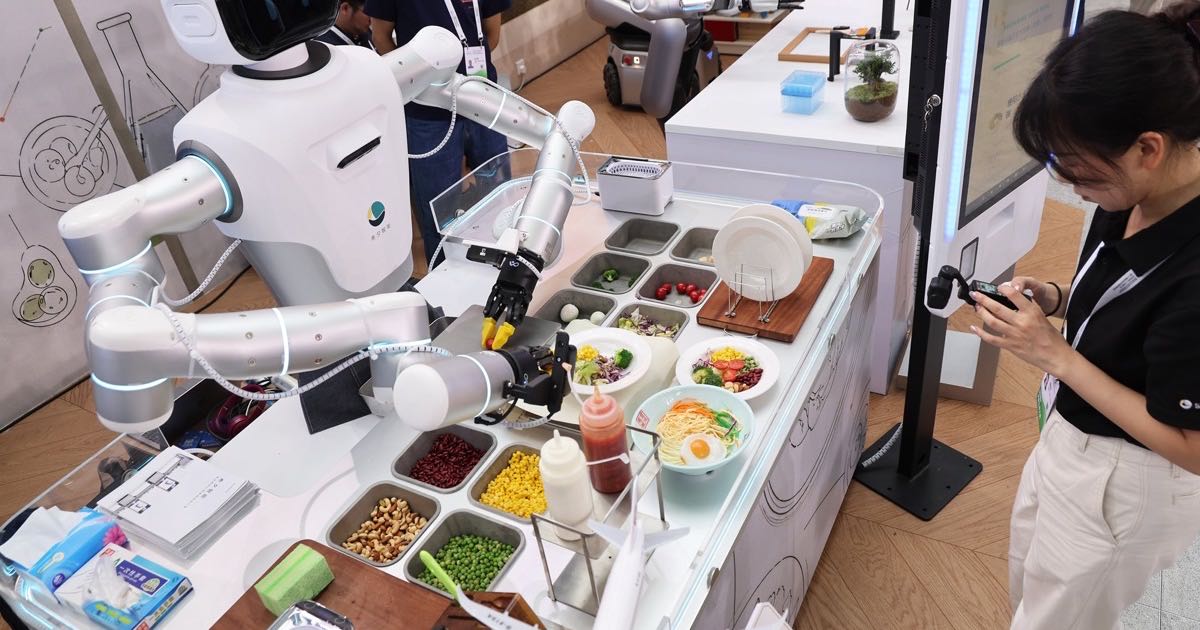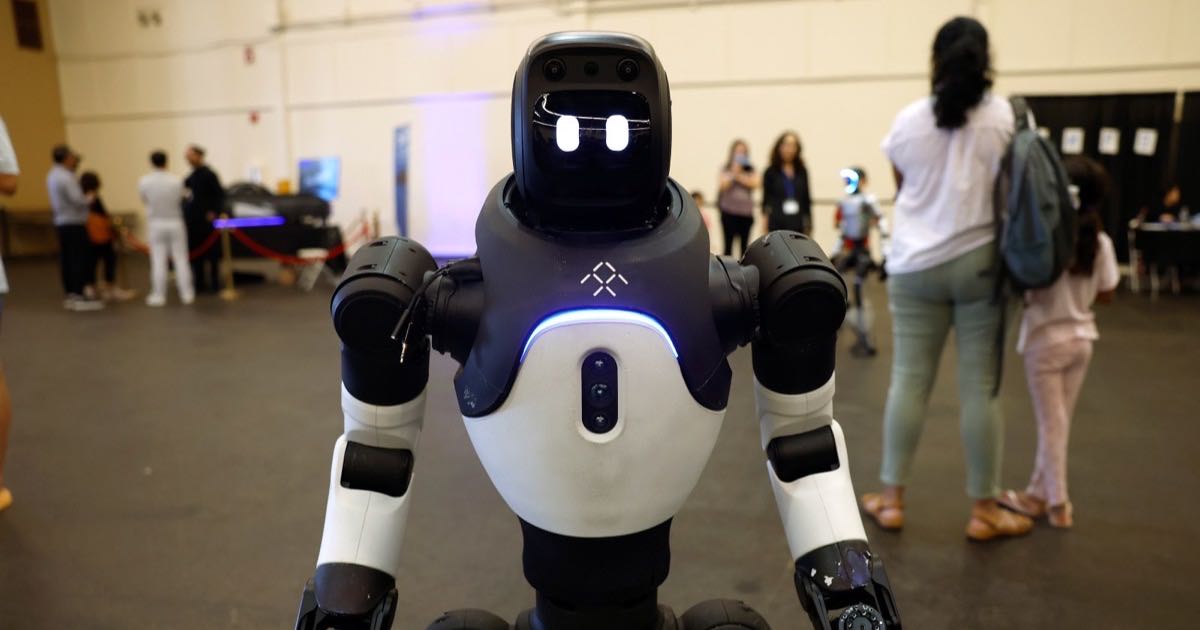
In August, San Mateo County floated an idea with no obvious precedent: make businesses get a permit before running autonomous robots in public. On Tuesday, the Board of Supervisors voted unanimously to do exactly that, adopting what officials describe as the first permitting system of its kind for autonomous, AI-controlled robots.
From mid-October, any business in unincorporated San Mateo County that wants to run a robot in public spaces will need a county permit first — if that robot uses cameras or sensors, can operate at least partly without a human at the controls, and runs on a rechargeable lithium-ion battery. That description covers a lot of machines: delivery bots, service humanoids, cleaning robots, the lot.
The paperwork is heavier than a form and a fee. Applicants must file the robot’s manufacturer and safety records, plus proof of compliance across battery safety, accessibility, privacy and food-safety requirements. County staff get a file to review; the public gets a register of who is operating what.
The provision getting less attention — and arguably the more consequential one — is about jobs. Businesses must file a job-impact report, and if a robot displaces employees, the ordinance offers two paths: redeploy those workers at equal pay, or give them 60 days’ notice and a severance package equal to four weeks of pay. That is a labour standard attached to a machine permit, which is a combination nobody has shipped before.
Ray Mueller, the supervisor who introduced the ordinance, framed it as proportionate rather than punitive: “I don’t think it’s too much of an intrusion to have these requirements … and on this new type of worker coming into the work force.”
Ken Goldberg, the UC Berkeley robotics professor, argued the timing is the point. “We want to be thinking ahead about what could go wrong and how we can build up processes and policies to avoid anyone getting hurt.” His case is sequencing — write the rules before the robots are commonplace, not after the first incident.
And the robots are coming. A 2025 World Economic Forum report found 58 percent of employers expect robots and autonomous systems to transform their businesses by 2030. The deployment is already visible up the road: in San Francisco, residents can hire humanoid robots from Tau Robotics to clean their homes for US$30 an hour, supervised by remote human operators.
Labour’s read is broader than robots. Julie Lind, executive officer of the San Mateo Labor Council: “Everybody is worried about the impact of AI, not specific to robots per say, but how these advancements are going to impact the workforce at large.”
This is a development of the story we covered in August, when the county first moved toward robot permits — the severance-and-redeployment provisions are new since then. It’s also a third way between the other responses on file. The US federal answer to untrusted humanoid hardware was to ban it outright; Agility’s answer was to build a humanoid that powers itself down when people get too close. San Mateo’s answer is neither a ban nor self-regulation: a permit, with employment strings attached.
The exportable idea isn’t the battery checklist. It’s the sequencing — rules before robots — and the job-impact provision, which turns “the robot took the job” from an abstract fear into a line item with a cost. Whether the four-week severance formula survives contact with real displacement numbers is the part worth watching.