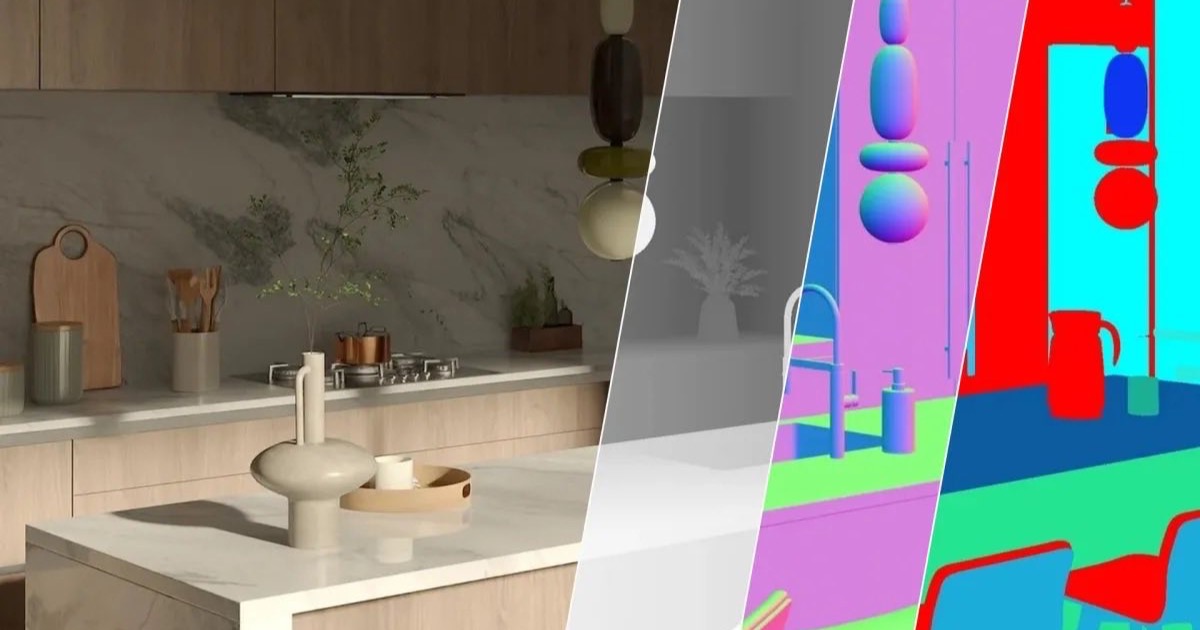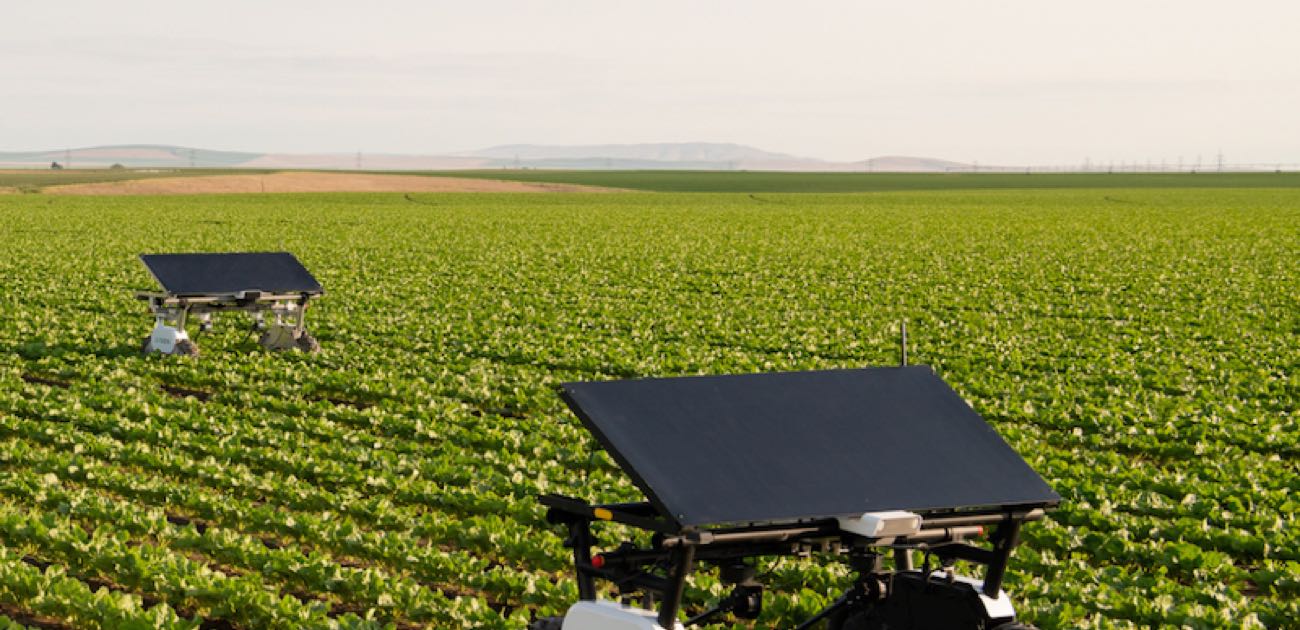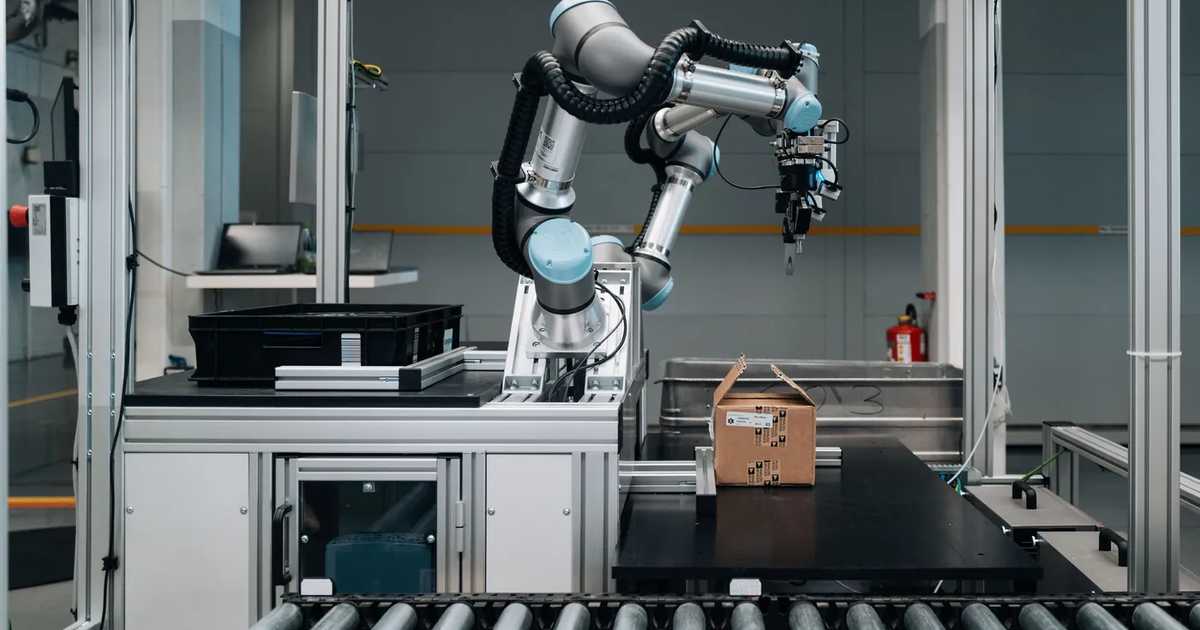
London physical AI startup Saturn Dynamics has built Arc, a world model designed to let robot developers test actions and evaluate their consequences in interactive virtual simulations before running them on physical machines. The announcement landed mid-morning on November 19 UTC — early Friday morning NZ time — and was reported by trade press Robotics & Automation News: the pitch is to cut the time and compute a robot needs to learn how the physical world actually behaves.
Saturn Dynamics was founded in 2025 and is one of a growing cohort of companies betting that robot training’s bottleneck is not compute alone but the absence of a usable, physics-grounded medium in which robots can fail cheaply. The company’s own site positions Arc as “generative simulation for embodied intelligence” — though the full technical overview sits behind an email gate, so the finer architectural details remain self-described.
Physics in the architecture, not just the data
What distinguishes Arc from approaches that lean mostly on video demonstration or conventional physics simulation, according to the company, is that it incorporates mathematical symmetries and physical principles directly into its model architecture. Rather than teaching a robot to recognise how objects look or move, the claim is that Arc models how objects behave when manipulated — including the unglamorous cases, like a drawer that sticks, an object that slips mid-grasp, or a production line where parts don’t land where they’re supposed to.
The company’s own framing via co-founder and CEO Elisa Seghetti: “A convincing demonstration is only a starting point. Robots need to cope when things don’t go to plan.”
The numbers, which are the company’s own
Saturn Dynamics reports two sets of results, and both come from the company’s own benchmarking rather than an independent evaluation.
The first: in benchmark testing, Arc achieved 73 percent greater trajectory accuracy than an Nvidia Cosmos model. The second is about speed rather than accuracy — running on Nvidia’s Jetson Thor edge hardware, Arc generated one second of simulation data in 0.6 seconds, against 23 seconds for Cosmos Nano and nine seconds for Cosmos Edge.
Real-time simulation on an edge device is a meaningful claim if it holds. Faster-than-real-time simulation is how synthetic training runs compound — a robot can rehearse thousands of variations of a task only if each variation is cheap. And doing it on Jetson Thor rather than a data-centre GPU matters for anyone training and testing in-house without hyperscale compute budgets.
A crowded field with the same shape
The world-model-for-robotics race has become one of the defining infrastructure contests of this phase of the industry. Nvidia has made Cosmos its reference platform and is bolting it onto Jetson-class hardware; World Labs is betting its Atlas world model on 3D-native visual reasoning, as we covered when World Labs’ Atlas world model emerged; Physical Intelligence raised $10 million in seed funding for synthetic-world training for robot manipulation, a thesis we examined when the synthetic-worlds seed round landed; and Google DeepMind’s Gemini Robotics 2 is betting on whole-body physical reasoning as a foundation skill, the approach we unpacked in our Gemini Robotics 2 coverage.
Saturn Dynamics, in other words, is a small and very early entrant against platforms with vastly deeper pockets — $4.3 million raised as of October 2026, per the trade coverage, from investors including Twin Path Ventures, Vento, Sequel and Portfolio Ventures. That’s pre-seed scale money in a field where incumbents are spending nine figures building simulation stacks.
But the small-entrant thesis is coherent in one specific way: if physics priors can be baked into architecture rather than learned from data, the data moat the big platforms enjoy matters less. The symmetric-models argument sits behind a wave of physics-anchored work now percolating through academia, and a startup that nails it doesn’t need Cosmos-scale training sets. The risk is the opposite one: physics priors are hard to get right, and a model that is too constrained produces simulations that are stable but useless — nothing surprises it, and nothing that surprises it teaches the robot anything.
What to watch
Two things. First, independent benchmarks. Every headline number in this story — the 73 percent, the 0.6 seconds — is company-reported against its own test setup, which is normal for a launch but not normal as proof. If independent labs or integrators reproduce any part of it, Arc becomes an interesting procurement option for warehouse operators and systems integrators; if not, it stays a demo. Second, whether any named robotics manufacturer or integrator actually deploys with Arc. Saturn Dynamics says it targets manufacturers, developers and systems integrators, but a named pilot would matter more than any benchmark.
As of publication, the announcement has not been reported outside trade press. The simulation-to-reality gap remains the industry’s hardest unsolved problem, and this is one more entrant claiming a route through it — early, self-measured and priced on that promise being provable.