One meeting at the G7 flipped Trump’s stance on Anthropic from national security threat to “behaved very responsibly.” The Commerce Department, the Pentagon, and a $965 billion IPO haven’t gotten the memo yet.
President Trump told Axios he no longer views Anthropic as a national security threat, reversing months of aggressive posture after a single meeting with CEO Dario Amodei at the G7 summit in Evian-les-Bains, France. Trump said Anthropic has “behaved very responsibly” and signalled he may ease restrictions on its Fable 5 model. The Commerce Department’s June 12 directive — requiring US approval before foreign nationals access those models — remains formally in place.
🔍 THE BOTTOM LINE
Trump’s G7 charm offensive with Amodei produced a political headline, not a policy reversal. The Pentagon’s supply-chain designation, the Commerce Department’s export control directive, and the threat of criminal charges from Secretary Lutnick are all still legally active. For Anthropic, the Axios interview is a sentiment win ahead of its roughly $965 billion IPO — but sentiment is not the same as regulatory certainty.
What Changed at the G7
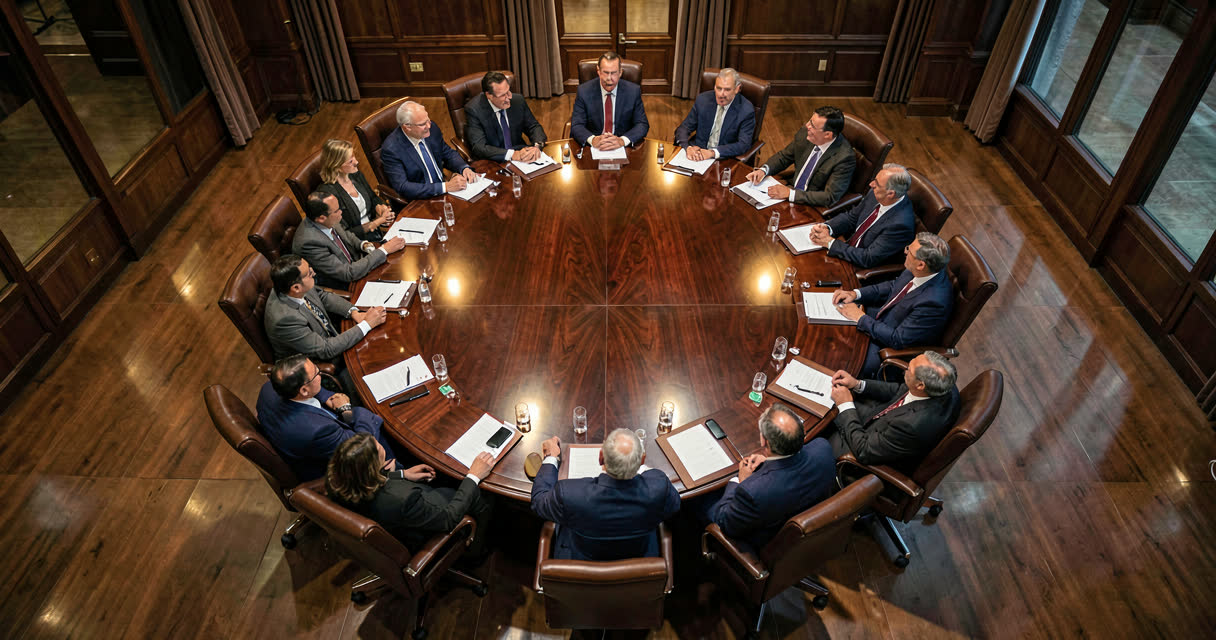
Trump met Amodei on Wednesday at the G7 Summit in Evian-les-Bains. The encounter appears to have shifted the president’s posture from adversarial to conciliatory. Asked whether he considers Anthropic a threat, Trump replied: “Well, not now. But a week ago, maybe.” He added that the company has “behaved very responsibly” and said he would consider easing the restrictions, telling Axios (via The Next Web): “I would, but I’m not sure I have to do that.” A WIRED investigation into the months-long feud between the White House and Amodei details how the confrontation built before the G7 handshake, and why a single interview was never going to unwind it.
The de-escalation traces back to March 2026, when the Pentagon designated Anthropic a supply-chain risk after the company refused to strip guardrails related to surveillance and autonomous weapons from products used by the US military. Commerce Secretary Howard Lutnick subsequently sent a letter threatening criminal charges. On June 12, the Commerce Department issued a formal directive requiring Anthropic to seek US government approval before foreign nationals could access Fable 5 and Mythos 5. That directive triggered crisis-level talks on Hacker News between Anthropic and Commerce Department officials — and the underlying technical discussion on Inner Loop’s export-control precedent thread remains the sharpest public map of where this is heading.
The IPO Calculus
The timing of Trump’s conciliatory tone is not coincidental. Anthropic confidentially filed for an IPO in early June, with a valuation that Fortune reported at approximately $965 billion. The ongoing federal restrictions cast uncertainty over the listing. Any signal of de-escalation from the White House stabilises investor confidence ahead of the offering.
But the market trades on sentiment and regulatory reality. The Pentagon’s supply-chain designation remains in place. The Commerce Department’s June 12 order has not been formally rescinded. Anthropic has not publicly indicated whether it plans to modify its guardrail policies to satisfy the military’s demands. Trump described the situation as creating “tremendous liability” for the administration — an acknowledgment that the crackdown drew backlash from both industry and allied governments, including the UK, which lobbied for exemptions.
What Hasn’t Moved
The Commerce Department operates with considerable independence on export control matters. Rolling back a formal directive requires bureaucratic steps that a single Axios interview cannot shortcut. Amodei has been working multiple channels: at the G7, he and Google DeepMind CEO Demis Hassabis jointly pitched a US-led AI coalition to G7 leaders, positioning Anthropic as a cooperative partner in American technology diplomacy. That strategy gave Amodei direct access to Trump at a receptive moment. But as Reuters reported, even Anthropic’s talent acquisitions — Nobel laureate John Jumper leaving DeepMind — are happening against a backdrop of unresolved regulatory tension.
The broader context matters here. As we’ve documented in the Fable export control crisis, the US government has a history of classifying AI models as munitions — and that classification has never held up against the physics of software distribution. The PGP precedent is instructive: encryption software was classified as a munition in the 1990s, and within years it was available on every Linux install CD. The same operational logic now threatens Anthropic’s frontier access — and the Mythos Discord breach earlier this year proved that determined outsiders don’t need Washington’s permission to obtain the model anyway.
NZ Angle
New Zealand sits inside the Five Eyes intelligence-sharing partnership. When the US restricts access to frontier AI models for foreign nationals, that doesn’t mean New Zealand specifically — but it creates friction for any NZ research institution or company that relies on Anthropic’s API for production workloads. The G7 AI summit already signalled that European allies want Anthropic’s models accessible without US veto power. NZ has been quieter, but the same logic applies: a model that requires Washington’s approval to use is a model you can’t build a business around with confidence.
The Other Side
Skeptics argue Trump’s conciliatory tone is a political PR move to keep the IPO pipeline moving, not a genuine regulatory detente. The underlying disagreement — Anthropic’s refusal to strip guardrails from military-facing products — has not been resolved. The Pentagon designated Anthropic a risk for a reason, and the White House’s quiet AI security drafting with Anthropic suggests the administration wants guardrails it controls, not guardrails Anthropic controls.
❓ FAQ
Does Trump’s statement lift the export controls on Fable 5 and Mythos 5?
No. The Commerce Department’s June 12 directive remains in force. Trump’s words are a political signal, not a legal reversal. Rolling back the directive requires formal bureaucratic action.
What does this mean for NZ companies using Anthropic’s API?
In the short term, nothing changes. The directive targets foreign nationals accessing the most powerful models, but standard API access for commercial use has not been explicitly restricted. The risk is that the political warmth doesn’t hold, and the directive widens.
Is the $965 billion IPO valuation contingent on regulatory certainty?
Partially. Regulatory predictability is a major factor in IPO pricing. Trump’s signal reduces uncertainty, but until the formal directive is rescinded or narrowed, the regulatory overhang persists in the prospectus risk factors.
Could the Pentagon’s supply-chain designation be removed?
Yes, but it requires a formal review process, not a presidential interview. The designation was issued under statutory authority, not executive discretion alone.
Did Trump and Amodei actually settle anything at the G7?
No substantive agreement was announced. The meeting produced a warmer tone and a Trump quote to Axios, but no joint statement, no formal concession from Anthropic on guardrails, and no sign-off on rescinding the Commerce directive. The WIRED reporting makes clear the underlying fight is unresolved.
🔍 THE BOTTOM LINE
Trump’s G7 diplomacy produced a headline that Anthropic’s investors wanted to read. But the machinery of export control — the Pentagon designation, the Commerce directive, the criminal threat from Lutnick — is still running. The Axios interview is a political signal, not a legal fix. For New Zealand and other Five Eyes partners, the lesson is the same one the PGP saga taught: don’t build your research pipeline around a model that one election cycle can lock down.
📰 Sources
- WIRED — The Trump White House Is Over Anthropic’s Dario Amodei
- The Next Web — Trump says he no longer views Anthropic as a national security threat
- Hacker News — discussion thread on the June 12 directive
- Reuters — John Jumper leaves DeepMind for Anthropic
- Inner Loop — PGP to Mythos: a history of US software export controls