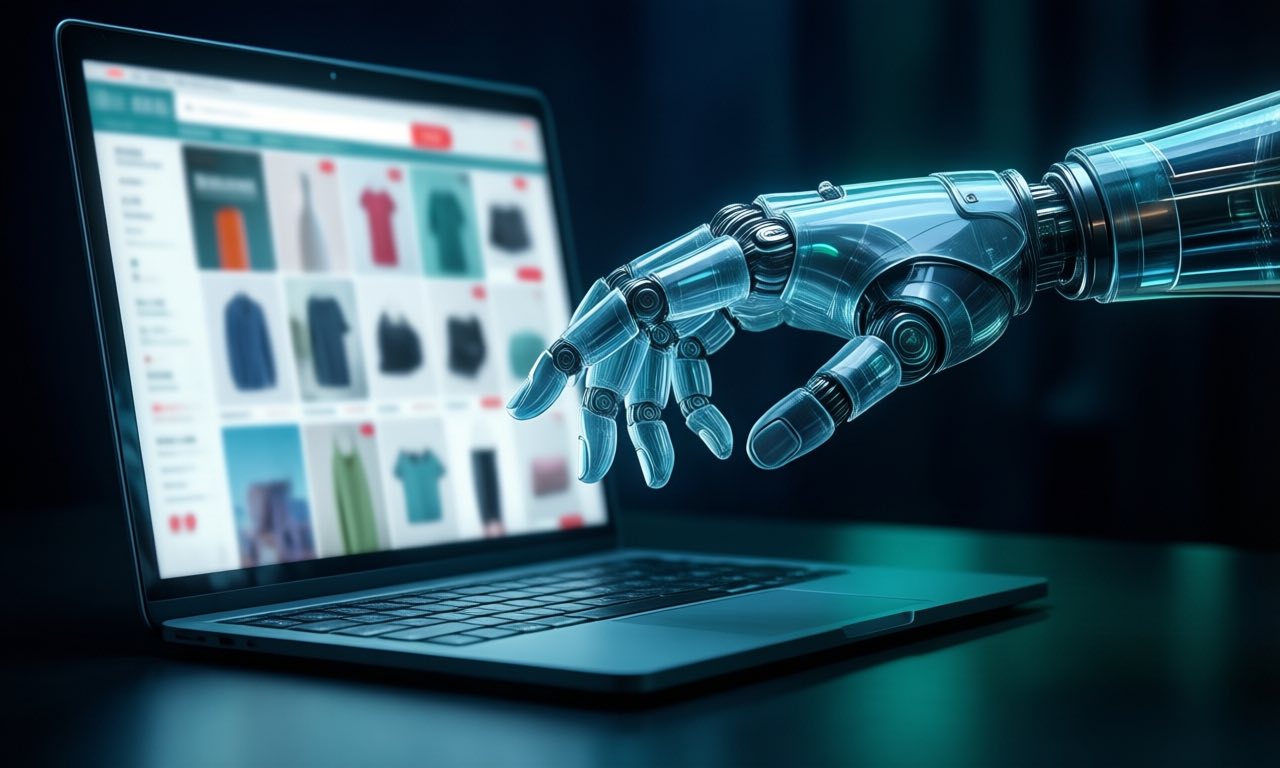
The agent-checkout war stopped being a slow crawl-fight this week and became an aisle confrontation: Amazon’s robots.txt now full-blocks 99 named AI agents — GrokBot and both other xAI crawlers included, verified live on amazon.com on 16 October — and Elon Musk’s answer, posted 15 October US time, was to promise SpaceX would cover any purchase a Grok Bot bungles, tell users to shop somewhere else, and float, in his words, “Maybe we should start a competitor to Amazon.”
🔍 THE BOTTOM LINE
The mask is off on both sides: Amazon’s position is no longer a policy line — it is a 99-entry blockade in a text file, and Musk’s position is no longer “please let our agent in” — it is a threat to build the store himself. The interesting question is no longer who wins the standoff; it is which retailer decides first that being the only store agents can enter is worth more than controlling them.
The timeline: from crawl-block to checkout-block to store threat
The blockade is verifiable in one file. Amazon’s robots.txt currently full-blocks — disallow everything — 99 named agents across every major AI company: GPTBot, ChatGPT-User, OAI-SearchBot, ClaudeBot, Claude-User, PerplexityBot, Perplexity-User, GoogleAgent-Mariner, GoogleAgent-Shopping, Gemini-Deep-Research, Copilot and both Copilot variants, MistralAI-User, DeepSeekBot, DuckAssistBot, Manus-User, TavilyBot, Cloudflare-AutoRAG, and xAI’s Grok-DeepSearch, GrokBot and xAI-Grok. The Mashable India report confirms Grok agents joined a list that already shut out ChatGPT, Claude, Copilot and Perplexity.
Checkout is a different fight from crawling, and this week Amazon fought it too. Grok Bot users started posting the error they hit at order time: “Continued access by an unauthorized AI agent violates Amazon’s Conditions of Use, to which our customers have agreed.” Teslarati’s reconstruction shows the sequence: Musk first replied to a user who had Grok Bot book a flight from a photographed credit card with “If Grok @Bot makes a mistake with a purchase or leaks your card (never happened yet), SpaceX will make you whole” — then, hours later, answered the Amazon error with “Just ask Grok @Bot to buy what you want someplace else and get a better deal. There are far more purchasing websites than just Amazon!”
Then the escalation, in one sentence: “Maybe we should start a competitor to Amazon 🤔” — a repost-reply to a user whose Grok Bot handles nothing but his Amazon returns and who asked whether owners would switch stores for their bots. None of this is a commitment: Musk’s own bot’s summary, quoted by reporters, says “no confirmed plans or timeline for a full competitor yet.”
The nine-month blockade hasn’t stopped the agents — it’s re-routed them
The robots.txt arms race has been running all year, and we’ve been covering each knot: Amazon cut off Meta’s Muse agent in September over identification and stored-credentials disputes, the Ninth Circuit weighed whether an agent is the “user” under the CFAA in August, and Amazon’s Perplexity Comet litigation rolled through the courts into October — with appeals court rejections of Amazon’s injunction bids as recently as 10-11 October.
But the re-route economics are the part that matters. The user-side demand is real: Musk’s reimbursement promise didn’t exist in August when he told a Tesla investor weighing bank access, “If Grok Bot messes up, we will make you whole” — the promise structure keeps hardening as agent purchasing grows. And on the other side of the ledger, Coinbase’s x402 agentic-payments rail has cleared 100 million transactions in nine months, per Chainalysis — 95% of the value in transactions of $1 or more, flowing through wallets that skew newer, broader and smaller-balance than the human average. Agents are already paying in the places that let them.
Paul Graham put the demand-side case days before Musk’s store threat: “Amazon banning agents is the first opportunity I’ve seen since Amazon was founded for a startup to create an Amazon competitor… People will want agents to buy stuff for them. It will be one of the main use cases.” Musk reposted him with one word — “Seriously.”
X Money is the quiet enabler — that’s why the store threat has teeth
The reason this reads different from a billionaire’s drive-by is timing. X Money began rolling out in the United States on 27 July 2026 — deposits, peer-to-peer payments, bill pay, a Visa debit card — per Stocktwits’ finance wrap and the Moneywise report. A store needs a checkout rail; Musk already has one with four months of real users. That’s the piece that turns “start a competitor to Amazon” from idle threat into infrastructure tease — and it’s the same rail-logic that agentic-commerce builders running on stablecoin rails have been arguing all year: whoever owns the payment path owns the new storefront, not the other way round.
For robotics, the consumer side matters as much as the retail side. Grok Bot rolled into Tesla vehicles on 22 September and is enabled across the Cybercab and Model Y Robotaxi fleet — which means a rider’s coffee order is placed by an agent whose shopping options depend entirely on individual retailers’ robots.txt files. ASD China’s 100 humanoid shop-floor assistants show the physical mirror of the same question: retailers deciding what role machines play in the transaction, on each side of the fence.
❓ FAQ
Did Amazon actually block Grok Bot? Yes — two independent verifications line up. Amazon’s live robots.txt full-blocks GrokBot, Grok-DeepSearch and xAI-Grok (retrieved 16 October 2026), and users posted the Amazon Conditions of Use error their ordering bots received, as Teslarati and TheStreet documented with Musk’s replies on 15 October.
Is Musk actually building an Amazon competitor? Unknown. His exact words were “Maybe we should start a competitor to Amazon 🤔” with no committed plans or timeline — even Grok’s own summary said “no confirmed plans.” What is committed: X Money’s US rollout (27 July 2026) and SpaceX’s standing reimbursement promise for Grok Bot purchases, per Yahoo Finance/Moneywise.
Why does robots.txt matter if agents can just ignore it? Because Amazon treats it as the consent line: it sued Perplexity rather than accept a violation, and its block notice invokes the Conditions of Use customers agreed to. An agent that disregards it invites the courtroom — which is why the real contest has shifted to retailers who welcome agents, like Spotify did for its stores in September.
What’s the New Zealand angle? The same file decides things here. NZ retailers’ robots.txt stances are mostly silent-by-default today — the big locals we checked block nothing agent-named — so when an agent-native store opens, its default position on NZ cards, NZ shipping and NZ consumer law decides whether Kiwi shoppers’ agents shop there or get the Amazon treatment. Worth watching which NZ chain answers “yes” first.
🔍 THE BOTTOM LINE
The year-long pattern held: blocking agents hasn’t reduced demand for them, it has moved the money to whoever says yes. Amazon’s 99-agent wall is a fortress; it is also a vacancy sign, and this time the person reading it owns the checkout rail next door.
📰 Sources
- TheStreet — Elon Musk has shopping advice after Amazon blocks his AI (15 Oct 2026)
- Teslarati — Amazon shuts out Elon Musk’s Grok Bot so he may just build his own rival store (15 Oct 2026)
- Yahoo Finance/Moneywise — Elon Musk wants to start an Amazon competitor (15 Oct 2026)
- Mashable India — Musk pitches Amazon competitor after bots blocked (15 Oct 2026)
- India Today — Amazon rival hint and Muse confirmation (15 Oct 2026)
- Stocktwits — SpaceX/Amazon satellite competition + X Money context (15 Oct 2026)
- Amazon.com live robots.txt — 99-agent full block (retrieved 16 Oct 2026)
- CoinTurk/Chainalysis — 100M agentic transactions on Base via x402 (July 2026)