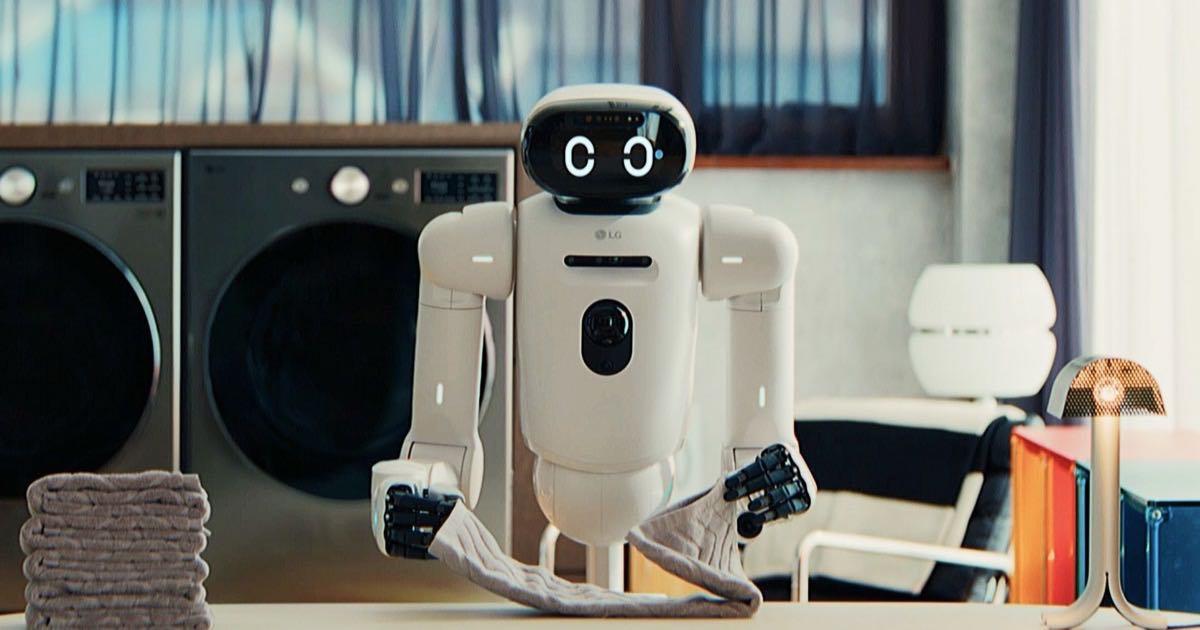
ASUS has entered the humanoid robot business. The Taiwanese PC and component maker introduced Gallop, a two-armed, fixed-base humanoid that is already training on a real workstation inside an ASUS group electronics manufacturing plant, as detailed in ASUS’s own technical writeup of the programme. Co-CEO S.Y. Hsu unveiled the robot on CNBC this week, and the company has set itself a target that reads like a quality manual rather than a keynote: pack 15 small motherboard accessories per board within 20 seconds, at 99.5 percent success — the same standard it holds a human worker to, as reported by Interesting Engineering.
🔍 THE BOTTOM LINE: ASUS is not selling a dancing demo. It is using the one asset most robotics startups have to rent — its own factories with real parts, real quality rules and consenting workers — as the training ground for a robot aimed at customer pilots in 2027 and market availability in the second half of 2028. The bet is that factory-floor data, not the robot chassis, is the scarce thing.
A robot built around one hard station
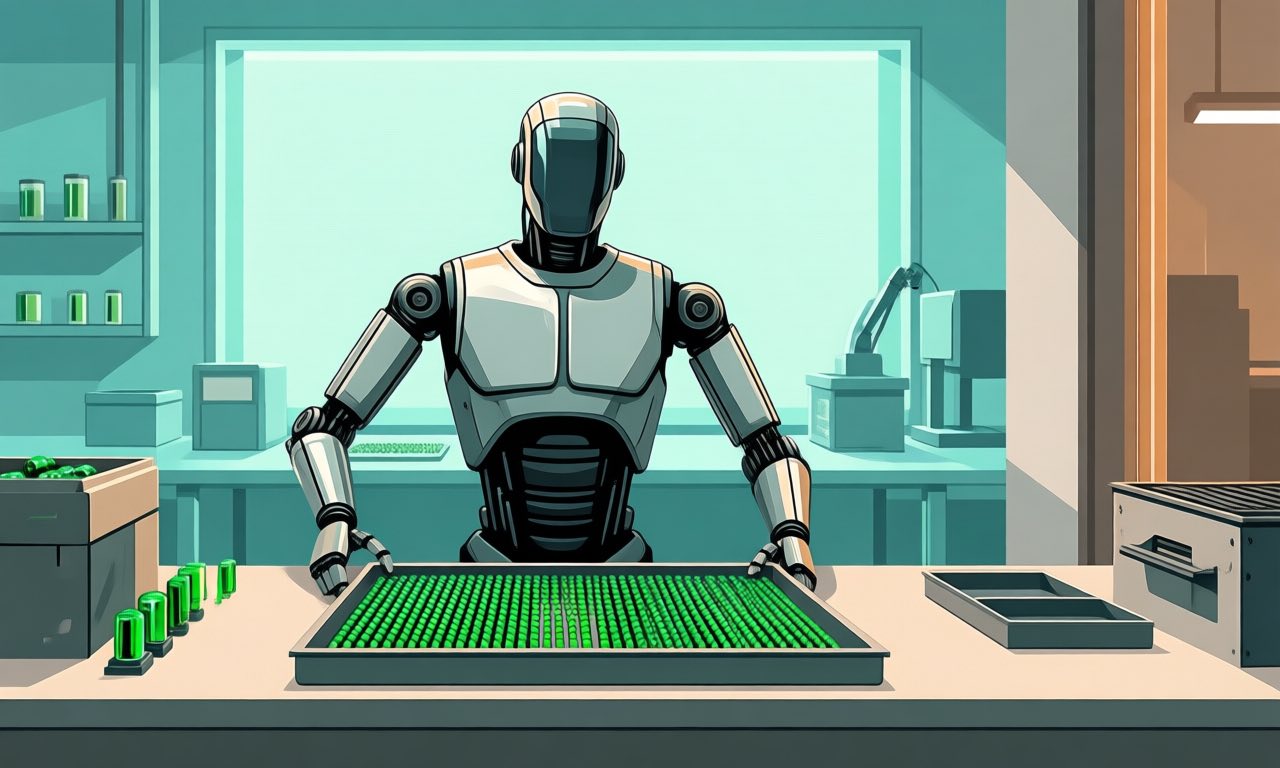
Gallop’s first job is deliberate: packing motherboard accessories at an EMS plant, a task with thin, clear plastic bags and small parts that defeat simple grippers. ASUS picked it because it is hard, and because progress against it is measurable. The station has a quantified bar — 15 parts, 20 seconds, 99.5 percent — and the company says the full teaching loop now works end to end: a person shows the task, the robot learns it, and it is tested on the line.
The design philosophy underneath is modular. A “planner” AI looks at the scene and breaks the job into steps; a second AI “supervisor” checks every step and re-plans on failure; a skills layer handles reaching, grasping and placing; and a control layer moves the arms and stops instantly on fault. The model stack runs on a single NVIDIA Jetson computer inside the robot — the same robotics edge-AI compute stack NVIDIA has been pushing industry-wide this year — and the fixed interfaces between layers mean a better AI model can be swapped in without rebuilding the robot. ASUS builds the body and the touch-sensing hand in-house and does not train its own foundation model; it starts from leading open models that already understand hands and objects.
That choice — borrowed brains, in-house body — mirrors what has worked elsewhere in the current humanoid wave. The hand is the part ASUS calls hardest and scarcest worldwide, so that is the part it kept.
How Gallop learns: watching workers, with consent
Training is closer to onboarding a new colleague than to running a datacentre. Experienced workers wear a small head camera, with their consent, so the robot can watch how the job is actually done. Simulation generates variations of each example so small line changes do not surprise it. An operator in a VR headset and gloves then guides the robot through the task on the same parts, with the same cameras as the real station. Once deployed, what the robot records feeds back into more training.
ASUS’s summary of the advantage is blunt: “our edge isn’t more data. It is the right data.” Most robotics companies have to rent that access; ASUS owns EMS plants and the quality rules inside them. Customer pilots are planned for 2027 and market availability targeted for 2H 2028, with a wheeled version of the robot coming after the fixed-base unit. The company is explicit that not every task needs a humanoid — it chose stations where two arms and dexterous hands work without rebuilding the line around the machine.
A crowded field, and a different kind of entrant
The announcement lands in a humanoid market already moving fast on capital and on Chinese volume. J.P. Morgan this week put the first Wall Street production forecast on the board — 400,000 humanoid robots a year in US factories by 2030. Agile Robots raised $500 million from SoftBank at an $8.5 billion valuation on the same humanoid-factory thesis. Chinese manufacturers shipped 97 percent of the world’s humanoids in the first half of 2026, with consumer-market pushes accelerating, as WAKHAN’s industry overview notes.
ASUS is a different species in that field: an incumbent manufacturer automating its own line, not a startup seeking a customer’s line. Taiwan’s electronics manufacturing base is exactly where the parts Gallop handles are made, which makes the training-data loop tight and cheap. The honest caveats are on the record too — ASUS says a robot has to take on most of a job to be worth anything, and that if a person still stands beside it all shift, “nobody gains anything.”
For New Zealand’s small manufacturing base, the interesting number is not the robot count but the compute: a whole humanoid stack running on one Jetson module means the per-robot intelligence cost is falling toward commodity-PC territory. The robot arrived; what got cheaper is the brain running it, as our earlier look at NVIDIA’s robotics edge hardware showed.
Whether Gallop clears its own 99.5-percent bar at human speed is the test ASUS has publicly set, and unlike most humanoid debuts, it has let us see the exam.