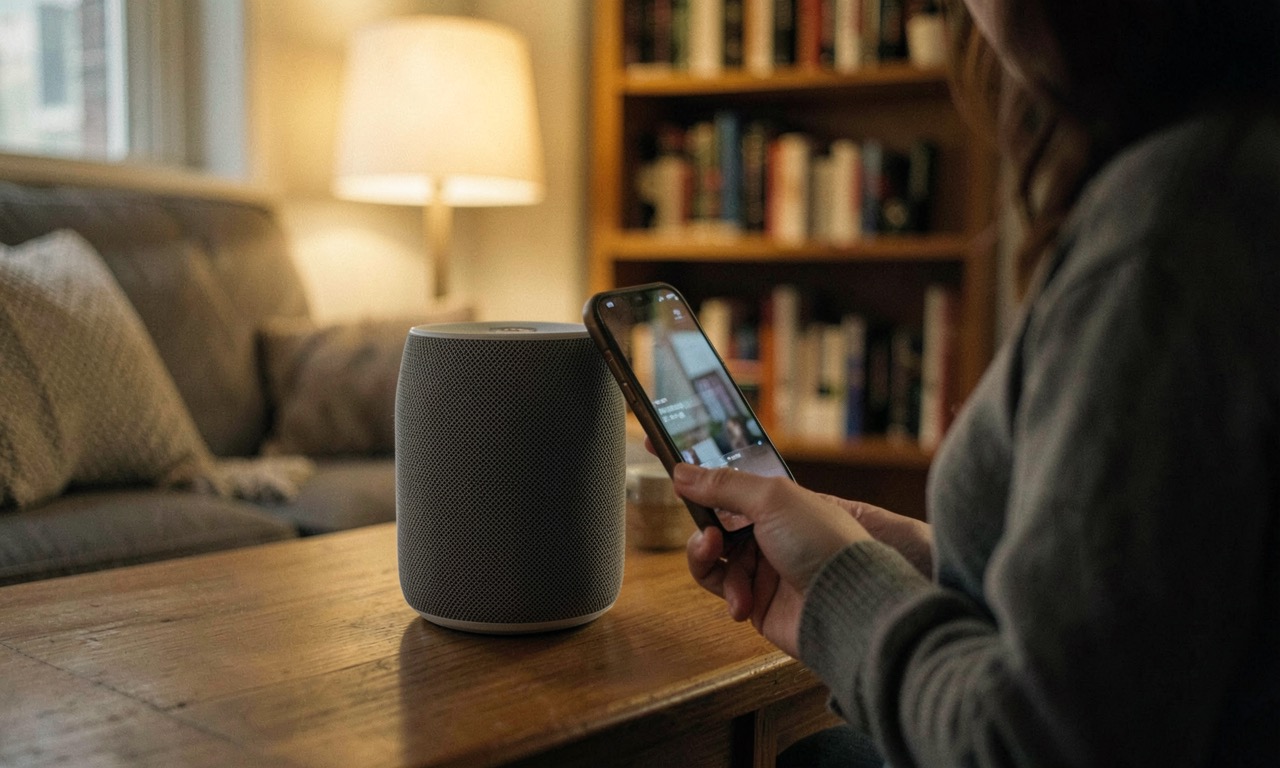
Amazon’s Alexa Finally Gets a Brain Transplant — LLM-Powered Reasoning Arrives
Amazon is rolling out a major upgrade to Alexa that embeds large language model reasoning directly into the voice assistant. The new Alexa can hold multi-turn conversations, understand context, and execute complex commands that would have baffled the old version — like “book a restaurant for four near Mum’s place next Saturday, send her the calendar invite, and order flowers for delivery that morning.”
The upgrade, available on newer Echo devices, is Amazon’s attempt to catch up with ChatGPT Voice Mode and Google Assistant’s Gemini integration. Early reviews say it’s genuinely transformed Alexa from a glorified timer into something approaching a useful assistant.
Why it matters: Smart speakers have been the most disappointing AI product category for years — great at turning lights on, terrible at actually helping. This upgrade might finally deliver on the promise. But it also means Amazon is now piping LLM inference through every Echo device in your home. Privacy implications? Significant.
NZ Takes a Swing at Copyright for the AI Era — Split Enz, Training Data, and Cameron Brewer
Commerce and Consumer Affairs Minister Cameron Brewer has announced sweeping changes to NZ copyright law that directly address the AI training data question. The reforms include:
- Extended protections for musicians and artists whose work is used in AI training
- A framework for licensing creative content to AI companies
- An explicit review of whether AI-generated works qualify for copyright protection
The announcement was illustrated with the song “I See Red” by Split Enz — a deliberately Kiwi touch that signals the government wants to protect NZ’s cultural IP from being vacuumed up by US AI labs without compensation.
Why it matters: NZ is entering the copyright-AI debate later than the EU and US, which means it can learn from their mistakes. But the risk is that NZ becomes a rule-taker — forced to accept whatever global norms the US, EU, and China negotiate. The Split Enz example is smart framing: if NZ’s cultural exports can train AI models without benefit to the creators, that’s a sovereignty issue, not just a copyright one.
What’s missing: The announcement doesn’t specify whether text and data mining for AI training will require explicit opt-in or whether a blanket licence will cover it. That’s the detail that will determine whether this reform has teeth.
AI-Native Browsers Are Here — and They Don’t Ask Before Summarising Everything
A wave of AI-native browsers — Arc’s successor Dia, Opera’s AI Browser, and new entrants like SigmaOS — are changing the fundamental relationship between people and the web. These browsers automatically summarise pages, rewrite content, and extract key points without the user asking.
The pitch is compelling: why read a 3,000-word article when the browser can give you three bullet points? But the implications for publishers are brutal. If no one scrolls past the browser’s AI summary, ad impressions crater and the economic model of web publishing breaks further.
Why it matters: The browser was the last neutral gateway to the web. AI-native browsers are not neutral — they’re intermediaries that transform content before the human sees it. This is the next great platform shift, and it creates the same tension as Google’s AI Overviews: the AI gets the traffic, the publisher gets nothing.
US Judge Rules AI-Generated Music Cannot Be Copyrighted — First Major Ruling
A US federal judge has ruled that music created entirely by AI cannot be copyrighted, in the first major court decision on AI-generated creative works. The ruling, which applies to a song produced without human creative input, says copyright requires “human authorship.”
The decision aligns with the US Copyright Office’s current position but creates a split with the EU’s more nuanced approach, which grants some protections to AI-assisted works based on the level of human involvement.
Why it matters: This ruling draws a line — but it’s the wrong line for mixed works. What about a human who writes lyrics and an AI that composes the music? Or a human who prompts a model and selects from 50 outputs? The binary “human vs AI” framing doesn’t match how people actually use these tools. Expect appeals and a messy legislative cleanup.
🔍 THE BOTTOM LINE
Two themes this week: who owns what AI produces (copyright in NZ and the US) and who mediates our interaction with technology (AI browsers, smarter assistants). Both questions come down to the same thing: in a world where AI generates and transforms content at scale, the old rules of authorship and intermediation don’t hold.