Microsoft has officially pivoted to independent superintelligence development — and the era of co-dependence with OpenAI is over.
Mustafa Suleyman has confirmed that the partnership between Microsoft and OpenAI has reached its natural conclusion. By launching their own proprietary MAI suite, Microsoft isn’t just diversifying its portfolio—it’s declaring independence from Sam Altman’s company. The partnership served its purpose as a bridge, but now Microsoft wants the keys to the kingdom without sharing them.
🔍 THE BOTTOM LINE (top)
Microsoft has transitioned from OpenAI’s primary benefactor to its most formidable competitor. By building their own models from the ground up, they’re reclaiming AI sovereignty—and setting up a head-to-head superintelligence race with their former partner.
💔 The Divorce is Final
For three years, the narrative was “Partnership.” Microsoft provided the cloud; OpenAI provided the brains. It was a symbiotic relationship that defined the first wave of the AI boom. But Suleyman’s comments suggest that the honeymoon period has ended because the stakes have changed. We are no longer just talking about chatbots; we are talking about superintelligence.
Suleyman’s move suggests that Microsoft realised they couldn’t own the future if they were just renting it from OpenAI. By building their own models from the ground up, they are reclaiming their sovereignty. In Kiwi terms: they’re tired of being the “big brother” who pays for everyone else’s toys; they want to build their own backyard.
The Verge captured the shift bluntly: “Microsoft and OpenAI broke up — now they’re ready to fight.” This isn’t a friendly separation—it’s a competitive realignment.
🏗️ The Rise of MAI
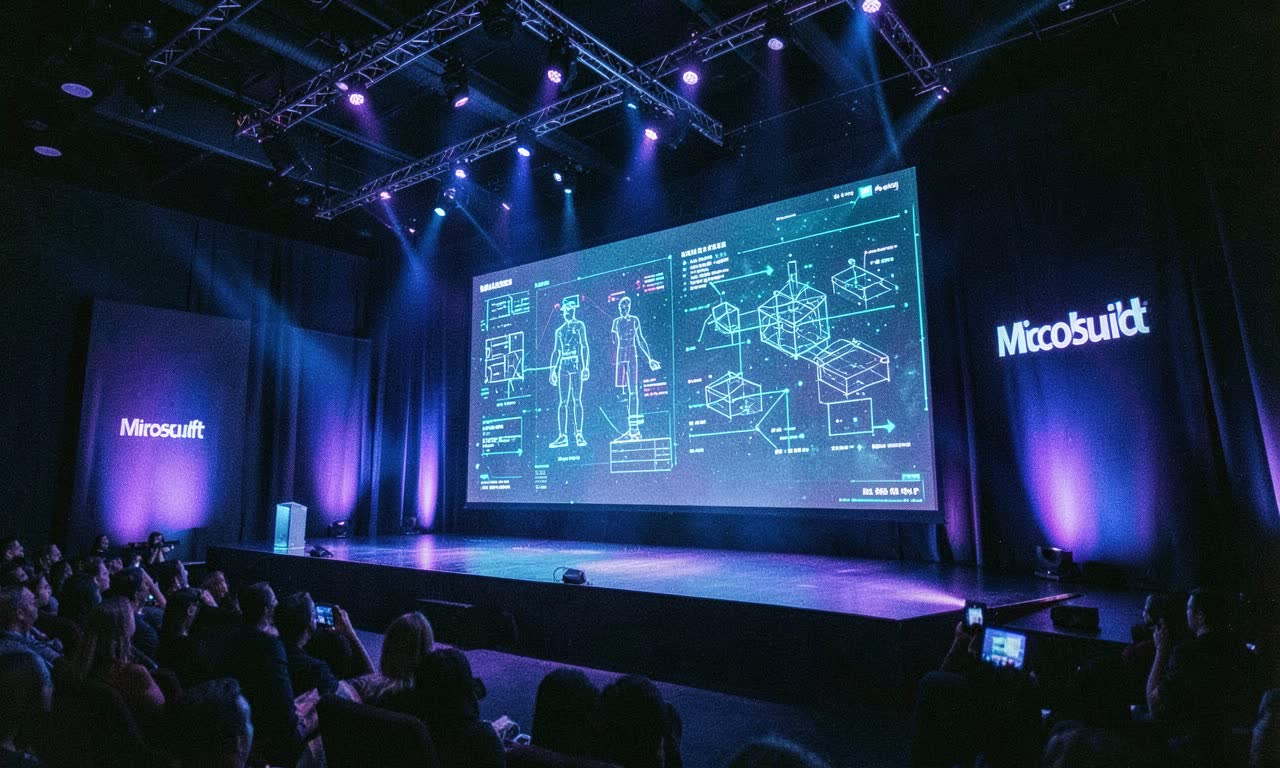
The unveiling at Build 2026 was a statement of intent. The launch of seven distinct MAI models marks a pivot toward specialised, high-reasoning architectures.
The crown jewel? MAI-Thinking-1. This isn’t just another LLM; it’s a reasoning model designed to mimic human-like problem-solving cycles. While OpenAI’s “o1” series was the first step in that direction, MAI-Thinking-1 is Microsoft’s attempt to leapfrog the competition by integrating deep logic directly into the inference process. They aren’t just predicting the next word anymore; they are calculating the best path forward.
Per Microsoft’s official announcement: “Today we are introducing MAI-Thinking-1, Microsoft AI’s reasoning model. It is a medium-sized model that stands among the strongest models in its weight class.”
🏃 The Greatest Game of Catch-Up
Suleyman didn’t mince words when he called this “the greatest game of catchup ever played.” It’s a cheeky, honest admission: Microsoft knows OpenAI has a head start in brand recognition and early data moats.
However, by building their own infrastructure from the ground up, Microsoft is trying to bypass those hurdles with raw scale and integration. They are betting that their massive compute advantage can bridge the gap. It’s no longer about who started first; it’s about who can build the most robust “thinking” engine before the window for superintelligence closes.
VentureBeat quoted Suleyman directly: “We have to prove that we can do everything that we need to from the ground up.” That’s not partnership language—that’s competition language.
⚖️ The Other Side
OpenAI hasn’t formally responded to Suleyman’s “set free” comments, but the writing is on the wall. The company that once relied on Microsoft’s Azure exclusivity now faces a competitor with deeper pockets and more integrated hardware.
Sam Altman has reportedly dismissed the significance of Microsoft’s in-house push, noting that OpenAI’s lead in reasoning models and real-world deployment remains substantial. But the subtext is clear: OpenAI can no longer count on Microsoft as a guaranteed distribution partner.
🤔 The Bigger Picture
This breakup reshapes the entire AI landscape:
- Microsoft gains full control over model architecture, training data, and deployment—no more waiting on OpenAI’s roadmap
- OpenAI loses its primary shield and must compete directly with a giant that controls the cloud infrastructure
- Enterprise customers get choice between two competing superintelligence stacks
- The superintelligence race accelerates—two well-funded labs racing toward the same goal instead of one
For New Zealand, the implications are indirect but real. As Microsoft and OpenAI pour billions into competing infrastructures, the compute arms race intensifies. NZ data centre operators watching the Google/SpaceX $920M/month deal should note: every major AI lab is now building or renting massive GPU clusters. The question isn’t whether NZ will host AI infrastructure—it’s which players will want capacity here.
❓ Frequently Asked Questions
What does “MAI” stand for?
Microsoft AI. It represents the company’s internal initiative to build models independent of third-party licenses, replacing reliance on OpenAI’s GPT series.
Is OpenAI going out of business?
No, but they are losing their primary distribution advantage. They now have to compete directly with a giant that has deeper pockets and controls Azure—the very cloud OpenAI runs on.
What makes MAI-Thinking-1 different from GPT-4o?
While GPT-4o is optimised for versatility and speed, MAI-Thinking-1 focuses on “Chain of Thought” processing, prioritising accuracy and logical reasoning over instant response times. It’s designed for complex problem-solving, not chat.
Will Microsoft still host OpenAI models on Azure?
For now, yes—the existing partnership agreements remain in place. But new model deployments will increasingly favour Microsoft’s own MAI stack.
🔍 THE BOTTOM LINE (bottom)
Microsoft’s divorce from OpenAI isn’t just corporate drama—it’s a strategic necessity. In the race to superintelligence, owning the full stack matters more than early partnerships. Microsoft has chosen sovereignty over symbiosis. The question is whether catch-up speed beats first-mover advantage when the finish line keeps moving.
📰 Sources
- Microsoft AI chief says company was “set free” from OpenAI to pursue superintelligence — VentureBeat, June 5, 2026
- Microsoft and OpenAI broke up — now they’re ready to fight — The Verge, June 5, 2026
- Building a hill-climbing machine: Launching seven new MAI models — Microsoft AI Blog, June 2, 2026
- Microsoft’s AI chief on the greatest game of catchup ever played — Semafor, June 2, 2026