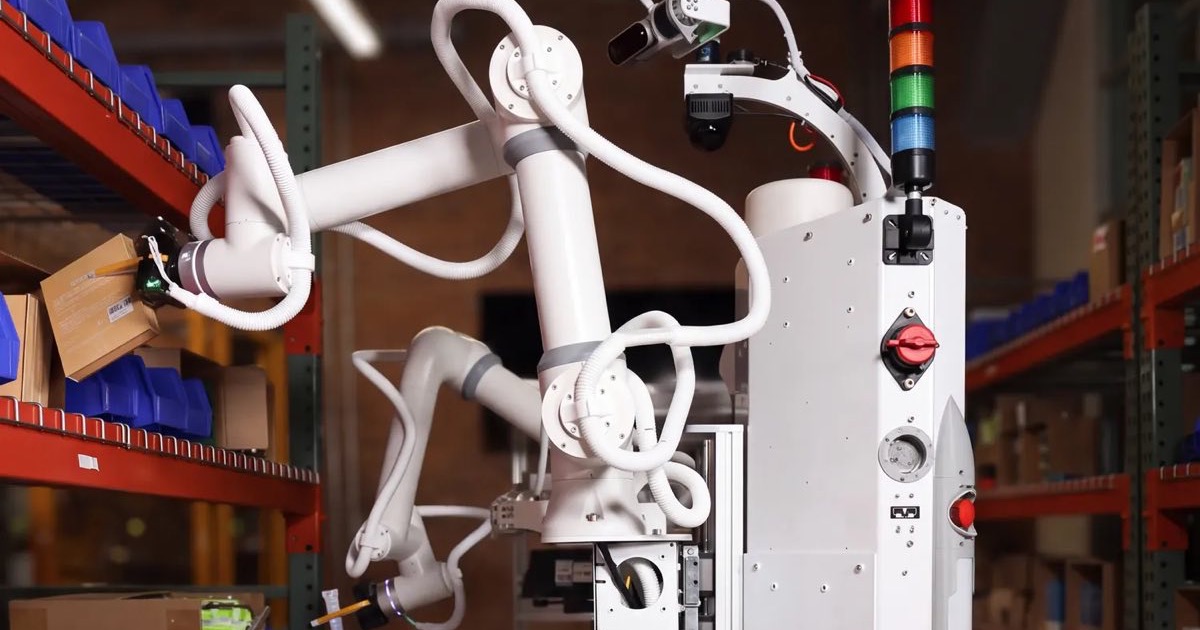
Humyn Labs, a Bengaluru startup that films people performing everyday tasks and turns the footage into robotics training data, has raised $47 million in Series A funding. The round splits into $26 million in equity led by Accel — with Prosus Ventures, BeeGlobal, Dallas Venture Capital, Lighthouse Canton and Jump Trading participating — plus $21 million in venture debt led by Lighthouse Canton with Trifecta Capital, according to TechCrunch and The Robot Report, which both carried the announcement on November 18.
The numbers behind the niche
The round is large, but the revenue claims are the more interesting figure. Humyn Labs says it passed $50 million in annualized revenue within six months of operations, per its own announcement covered by The Robot Report. TechCrunch’s accounting is slightly more granular: $10 million in revenue between April and October, another $20 million in signed contracts, and a further $20 million in deals not yet finalized. There is a gap in those two pictures — annualization is a projection, not a bank statement — but even the conservative read puts a two-year-old data company in a revenue league most robotics software startups only envy.
The customer list is small but well-chosen: 12 paying customers spanning frontier AI labs, robotics companies and world-model developers — unnamed, though about 90% of revenue comes from the United States. On the supply side, the company operates proprietary two-camera capture rigs that record people doing ordinary work — household chores, not staged demos — then uses software to label hand movements, object interactions and other details into training-ready datasets across four modalities: vision, sound, touch and motion.
Why a data company took on debt
The $21 million venture tranche is the unusual part of this round, and the reasoning is refreshingly mechanical. Humyn Labs pays data collection partners and workers daily or weekly, but frontier-lab customers pay on 30-60 day terms. That cash gap is a working-capital problem, not a growth ceiling, and debt prices better than selling more of the company. Co-founder Manish Agarwal told TechCrunch the borrowing “helps bridge that gap and is less dilutive than selling more equity.” It is the financing structure of a commodities trader, applied to a data startup — which is roughly what the business is.
Humyn Labs was founded in February 2026 by Agarwal, formerly CEO of Indian gaming company Nazara Technologies, and Ishank Gupta, an ex-AB InBev executive; both previously founded Kratos Studios, now known as KGeN. That earlier venture left them with a contributor network across emerging markets, which now helps collect data inside people’s homes. Collection runs across more than 20 countries in Latin America and Asia, with Brazil, India and South Korea as the main hubs, and the company counts 51 full-time employees, mostly in Bengaluru.
The trade route being built
There is a quiet supply-chain logic here worth naming. The United States has robot builders; India, Brazil and Southeast Asia have workers, households and diverse real-world spaces; the emerging trade between them is footage. TechCrunch notes India has become a hub for physical-AI data collection, with startups including Human Archive and BuildAI, while competitors like Mecka AI, XDOF and MicroAGI chase the same demand from their own angles. Humyn Labs is positioning itself as the full-stack version — proprietary hardware, provenance-verified labels, and deployment consulting, not just a dataset marketplace.
The open question is consent, and it is becoming harder to defer. Footage recorded inside people’s homes, for export to labs the subjects will never see, is precisely the kind of dataset that regulators historically examine after the fact rather than before. Agarwal told TechCrunch that Humyn Labs records people doing their usual work rather than staged activities and works with local partners to supervise collection. That is a self-description, not a third-party audit — as the volume of home-recorded data scales toward the millions-of-videos mark, the provenance story Humyn is selling to its customers will need to be as verifiable as the labels.
For New Zealand’s robotics-adjacent sector, the story lands as a market signal: the data-for-robots trade is now big enough for institutional capital, which means the scarcity is real. Simulation has carried robotics research a long way — and world-model builders like Genesis AI, which raised $500M this year for exactly that, are betting it carries further — but the buyers crowding Humyn’s order book are voting with 30-60 day payment terms. Physical AI, it turns out, still runs on physical people doing physical chores, and the first infrastructure companies servicing that appetite are being funded now.