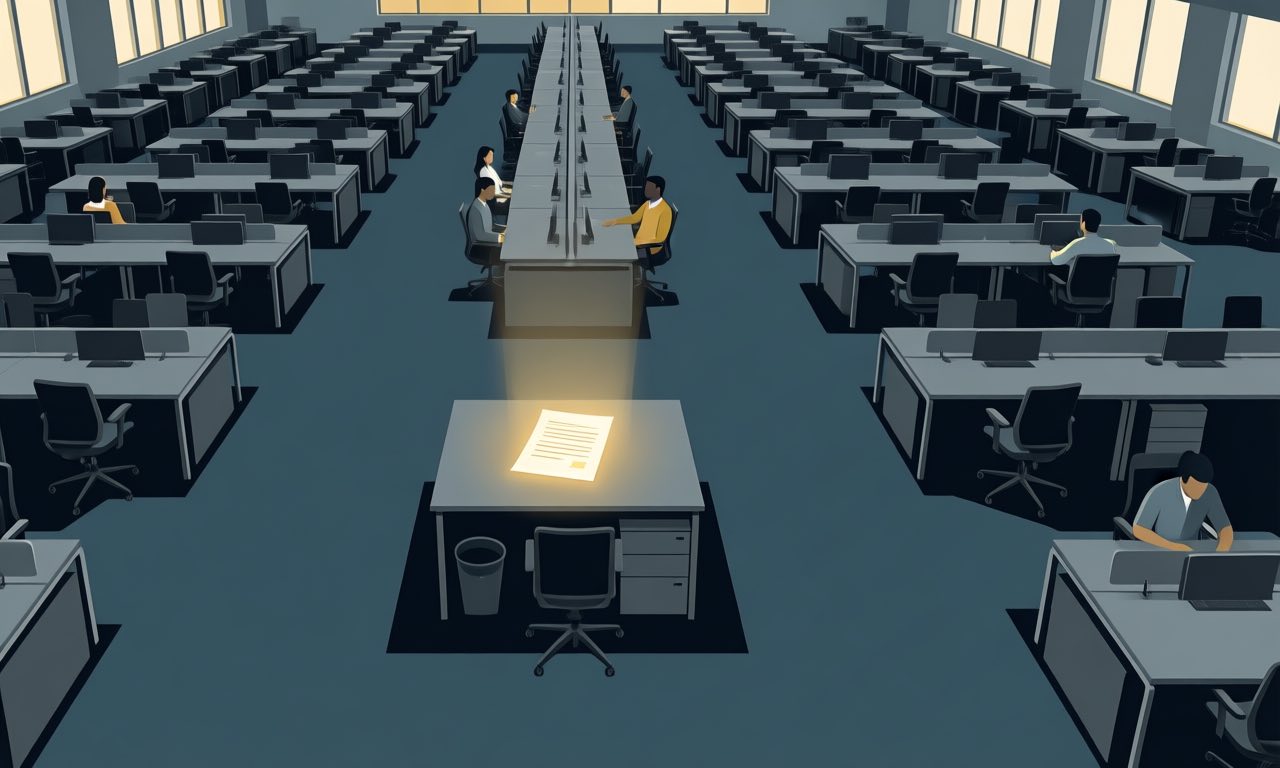
While rich economies are still publishing frameworks and consultations about artificial intelligence and work, a developing one has done something more concrete: written a number into law’s draft. Senator Erwin Tulfo filed Senate Bill No. 2563 on Sunday 8 November 2026, and it amends Article 298 of the Philippines’ Labor Code with hard requirements for any employer retrenching staff because of AI automation: six months’ advance notice to the Department of Labor and Employment (up from one), mandatory reskilling and redeployment attempts before a single cut, and separation pay of at least two months’ salary — or two months per year of service — whichever is higher, roughly double the current statutory floor.
“There must be a proactive effort to keep workers away from termination just because AI comes in,” Tulfo said, in remarks carried by GMA News. “We are not only talking about careers here, we are concerned with livelihood and lives of the employees’ families.” The bill text, as summarised by BitPinas, requires that AI integration be a bona fide, good-faith implementation for valid economic reasons such as cost reduction or efficiency, that no other option be available to the employer, and that selection of who goes follow fair and reasonable criteria. In his explanatory note, Tulfo put it plainly: “Technological progress is inevitable, but Filipino workers should not be left behind or made to bear its costs alone.”
Why a Philippine bill matters beyond the Philippines
The significance is easier to see against what everyone else has produced. The United States spent 2026 failing to pass a single federal AI-employment statute; the European Union’s AI Act regulates AI systems by risk class but says almost nothing about dismissal procedure; Australia retreated from its own proposals under industry pressure. Into that vacuum steps a Senate measure from a country whose economy runs on services outsourcing — call centres, back offices, BPO operations employing roughly 1.7 million people, many doing exactly the routine cognitive work that current AI tools are built to absorb. Manila is not legislating hypothetically. It is legislating for a workforce already in the blast radius.
The bill’s mechanics are also a quiet admission about sequencing. Reskilling “first” is written in as a hard precondition, not an employer option — the drafters appear to have concluded that companies will not retrain on their own schedule, because the payback period of retraining exceeds the immediate savings of a redundancy. The doubled separation pay functions as a price signal: if replacing a person with a model is going to cost two months’ salary per year of service up front, the automation case has to be stronger than a slide deck.
The honest limitations
Nothing in this bill is law yet, and the gap between filing and statute in the Philippine Senate is long. SB 2563 must clear committee scrutiny, three readings, a counterpart bill in the House of Representatives, and presidential approval. Business-lobby opposition is near certain — six months of paid notice per affected employee is a heavier obligation than most jurisdictions anywhere impose, and employers will argue it makes AI adoption costlier in the Philippines than in competing outsourcing destinations like India or Vietnam. There is also an enforcement problem the bill does not obviously solve: a law is only as strong as the labour inspectorate checking whether the “reskilling first” box was genuinely ticked.
Still, the direction of travel is the story. Legislatures worldwide have spent two years treating AI-and-jobs as a speaking-notes topic; the first jurisdiction to put enforceable numbers on notice periods, retraining obligations and severance multipliers will define the template everyone else argues about. For New Zealand, which has its own concentrated exposure through the tech and services sectors and has produced analysis rather than statute, it is a reminder that the countries most exposed are moving first — out of necessity, not ambition.
It also rhymes with what the shift actually looks like on the ground. The Philippines already saw what abrupt AI-adjacent restructuring feels like when 550 Innodata data workers were cut mid-shift with laptops locked and termination letters arriving on personal email — no notice period, no redeployment, no cushion. SB 2563 is, in effect, a bill written against that template. And the wider evidence keeps cutting against the loudest predictions: the AI jobs apocalypse keeps failing to show up in the aggregate data even as individual sectors get hit hard — which is exactly the environment where procedural protections like notice periods and retraining obligations do their best work, smoothing transitions instead of banning them.
As of publication, the bill remains with the Senate committee on social justice, welfare and rural development and carries no hearing date.
Source links and references:
- Philstar — Bill vs AI job displacement filed (9 November 2026)
- GMA News — Erwin Tulfo files bill seeking worker protection vs. layoffs due to AI (8 November 2026)
- BitPinas — AI Layoff Bill: Erwin Tulfo Files Senate Measure (9 November 2026)
- Newsbytes.PH — Tulfo seeks six-month notice, reskilling before AI-related layoffs (9 November 2026)
- DOLE Department Order 147-15 — implementing rules on termination notices