Amazon has assembled a new home-robotics team over the past several months and is hiring for what its own job postings call a “new-to-world robot product,” according to CNBC’s analysis of the listings, published November 8. One since-removed listing put the pitch plainly: “Robots are about to step out of the movies and into our homes,” describing navigation of “dynamic home environments” and “autonomous operation alongside family members.” The team sits inside a division called the Personal Robotics Group, and its foundation is a robot that already exists: Sprout, the kid-sized humanoid from Fauna Robotics, which Amazon bought in March.
🔍 THE BOTTOM LINE
Amazon’s last home robot was a commercial failure, and the company is trying again anyway — this time with an acquisition instead of a moonshot. The job listings describe a machine meant to live with families, not just patrol for packages, and the Fauna-tagged roles hiring a UX designer, a cloud engineer and a field repair engineer say the team is building for launch scale, not a lab demo. Whether Amazon has actually solved the living-room problem or is about to learn the same lesson twice is the open question.
The Fauna-tagged listings are the tell
CNBC’s read of Amazon’s jobs site found listings that tie the mysterious product to the acquired startup. A Principal UX Designer role (job 10457186) is asked to “define what it feels like to live with a Fauna robot” — how it earns a household’s trust, signals what it is doing and conveys personality. A Senior SDE listing (job 10583588) covers cloud services connecting “a growing robot fleet” to customer experiences, including high-frequency telemetry with privacy and security trade-offs. A Field Support Engineer posting (job 10573916) is the one nobody hires for a prototype: remote diagnostics, on-site repair handoffs and root-cause resolution as “the customer fleet grows.” Unite.AI’s coverage of the postings makes the same observation: together, the roles span trust, fleet software and post-sale support — the operational shape of a product meant to ship in volume, not a research project.
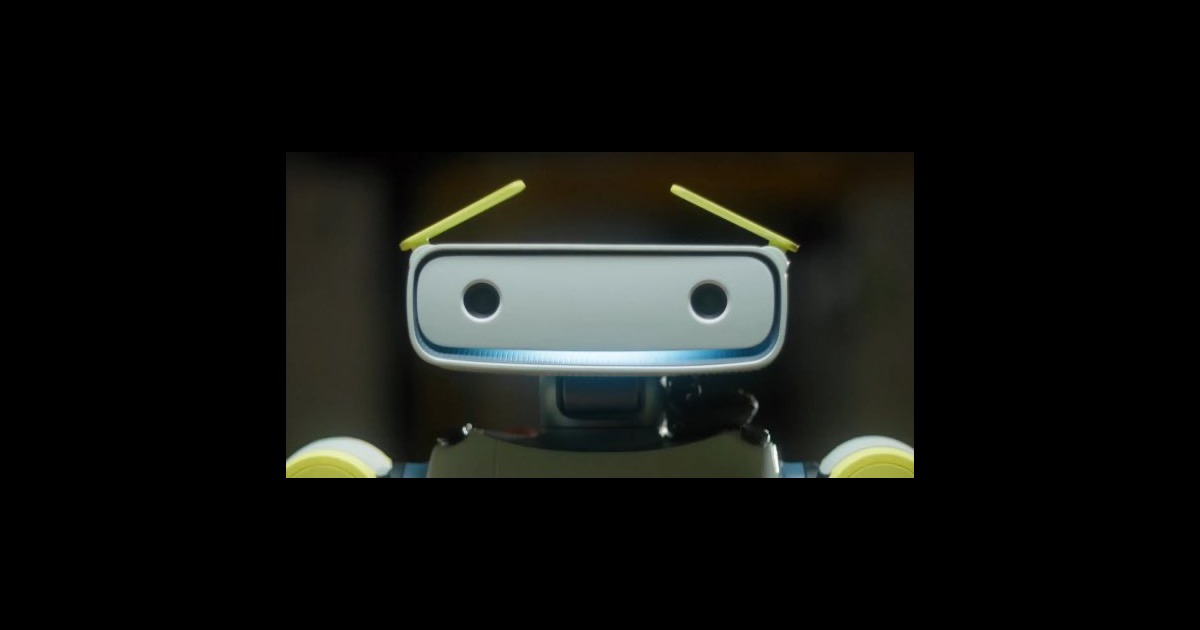
The hiring follows Fauna’s announcement on March 24 that it had “officially joined Amazon”, promising to keep selling its Sprout Creator Edition robots as “Fauna Robotics, an Amazon company.” Sprout is a 1.07-metre, 22.7-kilogram humanoid built around an expressive display face — a glowing light strip that curves like a mouth and yellow antenna eyebrows. CNBC reported the team absorbed the startup and became the Personal Robotics Group, staffed partly by veterans of Amazon’s secret Lab126 devices lab.
History says Amazon has tried this before
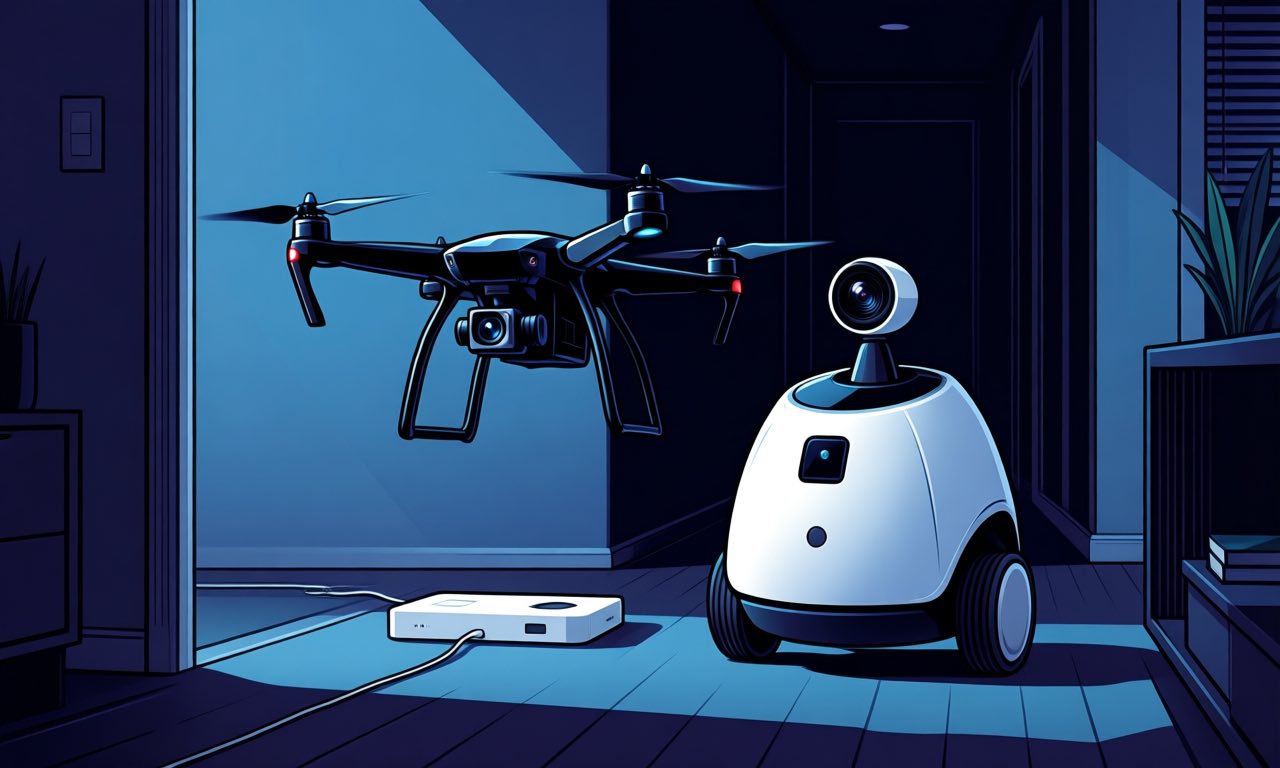
The reference points are not encouraging. Astro, Amazon’s first home robot, launched in 2021 at $1,450 on an invite-only basis, shipped to a few thousand customers and its business variant was sunset within about a year. CNBC, citing internal skeptics and unnamed ex-employees, describes Astro as “destined for the trash heap” in the headline framing of its November 8 story. That robot rolled on wheels and mostly watched for intruders; the new effort is a humanoid designed with expressiveness at its core, which is either the fix or just a new way to be wrong.
Amazon is not pretending the category is easy. Spokesperson Brad Glasser told CNBC that the company is “committed to tackling the challenges that can unlock the personal robotics category” while acknowledging “a substantial gap” between lab demos and living-room capability. Meanwhile the market context has shifted under everyone’s feet: Barclays forecast in January 2026 that the humanoid robot market, valued at $2-3 billion now, could reach roughly $40 billion by 2035 — with an optimistic case near $200 billion. Jassy’s 2025 shareholder letter called AI and robotics the “biggest inflections of our lifetime” and noted Amazon already runs more than a million robots in its own warehouses.
Why the biggest robot fleet on earth keeps aiming at your lounge
There’s an irony worth pausing on: the company that operates the most successful commercial robot fleet in history — over a million drive units moving inventory — has never made money on a robot in someone’s house. Astro is exactly the product you’d expect from a logistics optimiser: a patrol camera with a personality mode. Fauna approached from the opposite end — build the expressive face first, the trust layer first, and make the robot something a family would actually want in the room. That’s also the bet Flourish made when it opened preorders for a chore-learning home robot at $3,555, and Weave’s when it launched a $7,999 laundry-folding Isaac 1 — the consumer humanoid market is crowding with startups selling emotional design before Amazon even has a product on the table.
For New Zealand readers the consumer angle is thin for now — nothing here is shipping to homes anywhere, let alone NZ, and no local pricing exists to report. What matters is the pattern: research groups keep showing humanoids closing the gap on real household tasks, and when the company with the world’s deepest robotics operations bench decides a “new-to-world robot product” is worth a dedicated division, the timeline for robots in ordinary homes gets shorter whether this specific product survives or not. Amazon’s structure — UX, cloud telemetry, field repair — is the tell that this time it’s planning for a fleet that stays sold. Astro’s failure looks, in hindsight, like tuition. The Stanford Homebody benchmark showed a GPT-level brain still needed a Unitree body to do a kitchen run — the hardware exists, the trust design exists, and what was missing was the company willing to fund the boring middle. That may be what the Personal Robotics Group actually is.
❓ FAQ
Does Amazon have an official product to announce? No. CNBC’s report is based on job postings and the spokesperson’s statement; form factor, price and launch timing are all unspecified. The Fauna-tagged listings suggest a consumer-scale program rather than a research project.
What is Fauna’s Sprout? A 1.07-metre, 22.7-kilogram humanoid with an expressive digital face — glowing light strip, yellow antenna eyebrows — launched in January 2026 as a Creator Edition for researchers and developers, acquired by Amazon on March 24, 2026.
What happened to Astro? Released in 2021 at $1,450, invite-only, it reached only a few thousand customers. A business version launched in 2023 was discontinued within the year; CNBC characterises the whole program as heading for the “trash heap.”
How big is the home robot market expected to get? Barclays forecast the humanoid robot market at $2-3 billion now, rising to about $40 billion by 2035 — with an optimistic scenario near $200 billion.
🔍 THE BOTTOM LINE
The job listings describe everything Astro never had — an earned-trust design brief, fleet telemetry, field repair — which means Amazon is building for the world where robots stay in houses instead of being quietly withdrawn. Sprout’s expressive face is the design philosophy Astro lacked, and the acquired team, not a skunkworks, is doing the work. It’s the strongest signal yet, from the company with the most to prove in consumer robotics, that the category finally has industrial backing. Whether a ‘new-to-world’ product or a second Astro emerges, the pattern for the next few years is set: Amazon has committed money, staffing and hardware to the living room, and the category moves on Amazon’s timetable now.
📰 Sources
- CNBC (primary)
- Unite.AI
- Fauna Robotics (primary)
- Interesting Engineering (March 2026 acquisition coverage)
- Barclays forecast (via CNBC)