Amazon’s Ring announced a new brand, Ring Robotics, on 10 November 2026 with its first two products: the Drone Cam, a 165-gram indoor security quadcopter at US$249.99, and the Rover Cam, a US$999.99 wheeled patrol robot for businesses — the latter rebuilt from the chassis lineage of Amazon’s Astro home robot. The Rover Cam launches first, shipping 16 December, with the Drone Cam following 27 January 2027.
🔍 THE BOTTOM LINE: The interesting engineering decision is not that the flying camera exists — it is where the intelligence lives. Ring moved AI navigation off the vehicle entirely: the drone streams video to Ring’s cloud, where a custom “AI Pilot” agent decides where to fly. It makes the drone cheap and light, and it makes every home flight a round trip through Amazon’s servers, with everything that implies for privacy.
What was announced
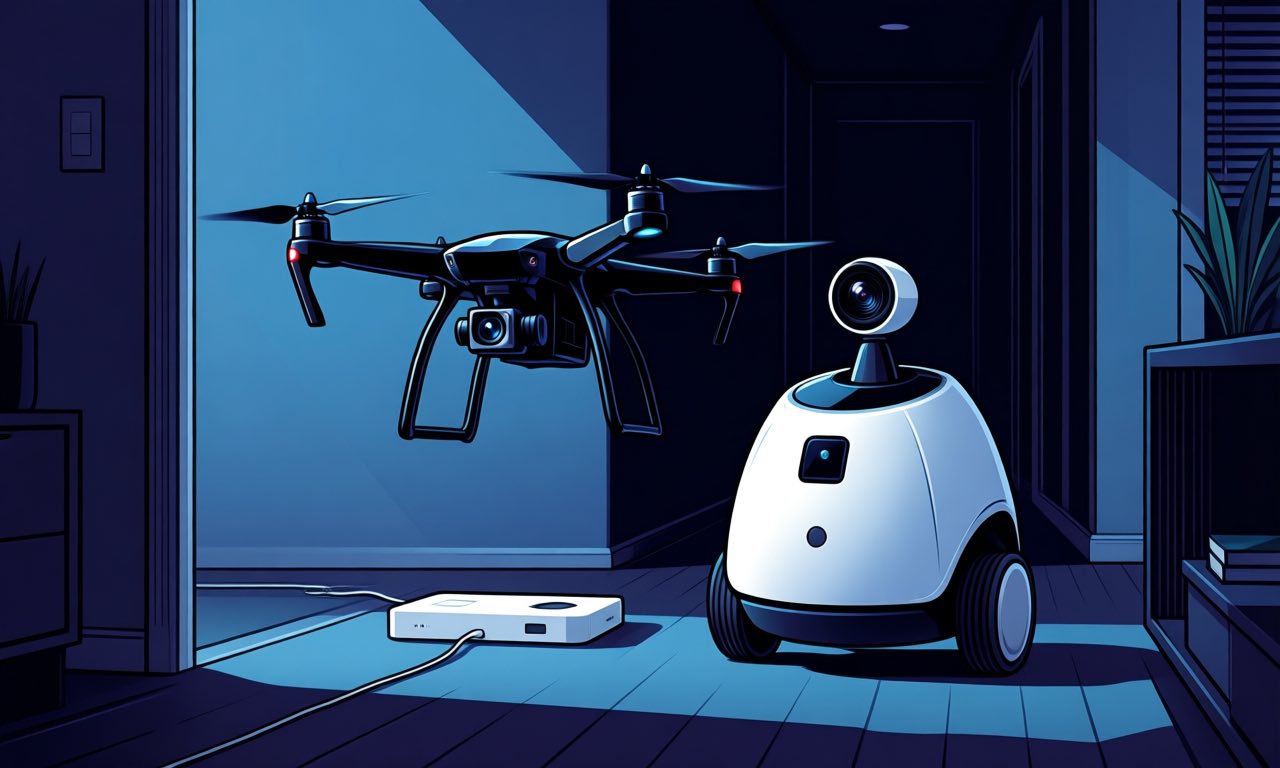
The Drone Cam sits docked, camera off, until a schedule, an app command, or an alarm from another Ring sensor dispatches it. It flies preset routes built from a floor plan the owner creates by carrying it through the house, suggests spots worth checking, and streams a first-person view to the phone — WIRED’s hands-on describes it lighting a dark hallway with spotlights as it climbs a stairwell autonomously. Ring founder Jamie Siminoff told WIRED it flies roughly five to eight minutes per charge and cannot leave the home, since it depends on in-house Wi-Fi. It is assembled in Texas, under the FCC’s 250-gram threshold, so no FAA registration is required.
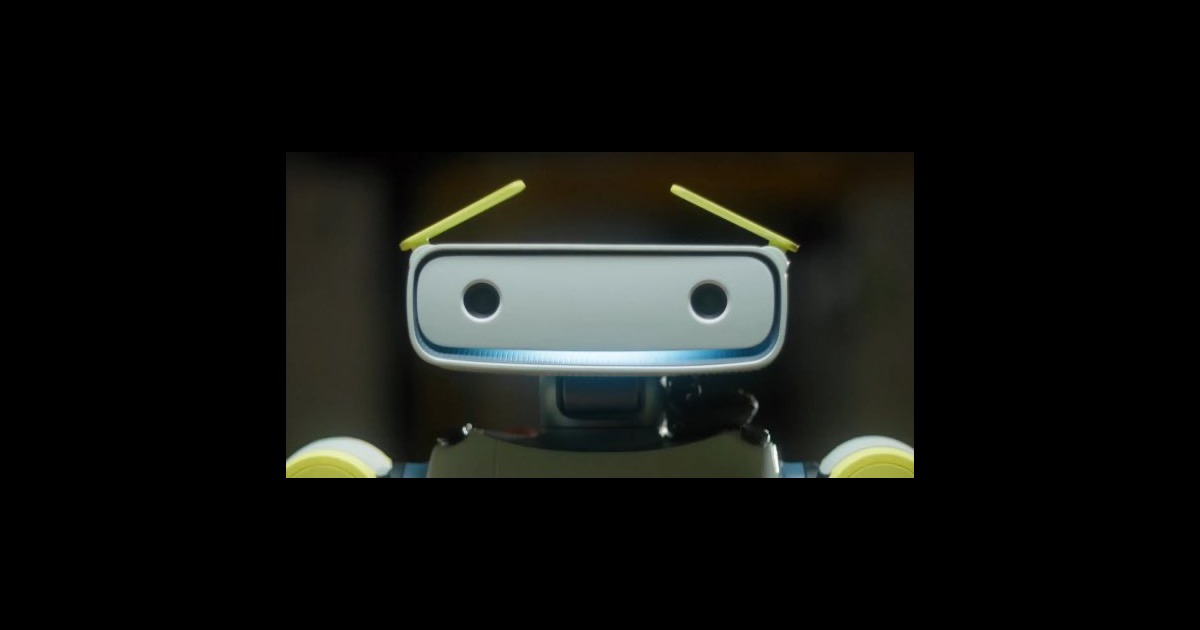
The Rover Cam is the business half of the brand: a wheeled robot with a 4K telescoping periscope camera, a siren tower and a blue ceiling-projected ring of light, as The Verge details. It patrols stores and warehouses on scheduled routes, auto-dispatches when a Ring alarm triggers, and records continuously en route. It is a descendant of Astro for Business — the $2,349 robot Amazon launched in 2023 and discontinued within a year. At $999.99 it costs less than half as much, and both devices run on Ring’s “AI Pilot” system for mapping and obstacle avoidance. GeekWire notes the fine print: scheduled patrols and recorded-video review require a Ring Protect subscription.
Why it took six years
Ring showed the original Always Home Cam in September 2020 at the same $249.99 price, then never sold it generally — years of invite-only limbo. Siminoff’s explanation to WIRED is a stack of compounding constraints: more sensors for edge cases meant more compute, which meant more power draw, heavier batteries, and harder flying. The fix for the 2026 model is architectural, not incremental — push the intelligence into the cloud and keep the airframe dumb. The drone needs connection only enough to land safely if the internet drops; the “AI Pilot” agent runs server-side and pilots the vehicle from Ring’s servers.
That trade is the story inside the story. A cloud-piloted camera drone is cheaper, lighter and smarter than anything on-board compute could deliver at $250, but the flight path, the video feed and the decisions all transit Amazon infrastructure. WIRED’s reporting flags that Ring’s TAKE encryption rotates keys every few minutes yet briefly gives Ring’s servers the key to run cloud AI features — a window the EFF has already criticised as not real end-to-end encryption. Siminoff’s own counter-argument is disarmingly physical: the drone is loud on purpose, so nobody can snoop silently. Ring’s history of handing camera footage to police without warrants is the reason that argument lands sceptically.
The pattern behind the launch
Zoom out and the Ring Robotics launch is Amazon admitting which of its home-robot bets survived contact with the market. The chatty humanoid-style Astro home robot remains invite-only after five years; GeekWire reports Amazon redeployed much of the Astro team and acquired humanoid startup Fauna in March 2026 for a new Personal Robotics Group. What actually ships is the boring, bounded version: a camera that flies, a cart that patrols, both scoped to surveillance tasks with clear pricing. It echoes the lesson from other home-robot efforts we have tracked — general-purpose household robots keep receding, while narrow task-bounded machines ship on schedule.
The competitive frame matters too: GeekWire notes Ring is entering commercial security robotics against Knightscope and Cobalt AI, while flying indoor cameras for homes remain almost a one-company category. Amazon also kept the failed Astro for Business customer base — refunded, robots shut off — as market research for the $999 sequel, which is a defensible way to treat an expensive failure, assuming the subscription-attached unit economics hold this time.
New Zealand angle: the Rover Cam and Drone Cam will launch in the US first, and neither Ring nor Amazon has announced NZ availability — and NZ drone rules treat indoor flight differently from outdoor Civil Aviation Authority rules, so a cloud-piloted indoor camera sits in a regulatory grey zone CAA has not had to consider. If Ring Protect pricing converts the Rover into a recurring-revenue security robot, expect the same pitch to reach Australasian channel partners within a year.
🔍 THE BOTTOM LINE
Ring’s second attempt at the flying camera works because it stopped pretending the drone was smart: the airframe is a payload and the intelligence is a cloud service. That is the honest architecture for consumer robotics in 2026 — and it hands Amazon’s cloud the flight plans, video and patrol schedules of every home that buys one.
📰 Sources
- About Amazon — official Ring Robotics announcement
- WIRED — hands-on with Siminoff interviews (syndicated copy; original paywall-soft)
- The Verge — Rover Cam details, Astro lineage
- GeekWire — competitive context, FCC fine print