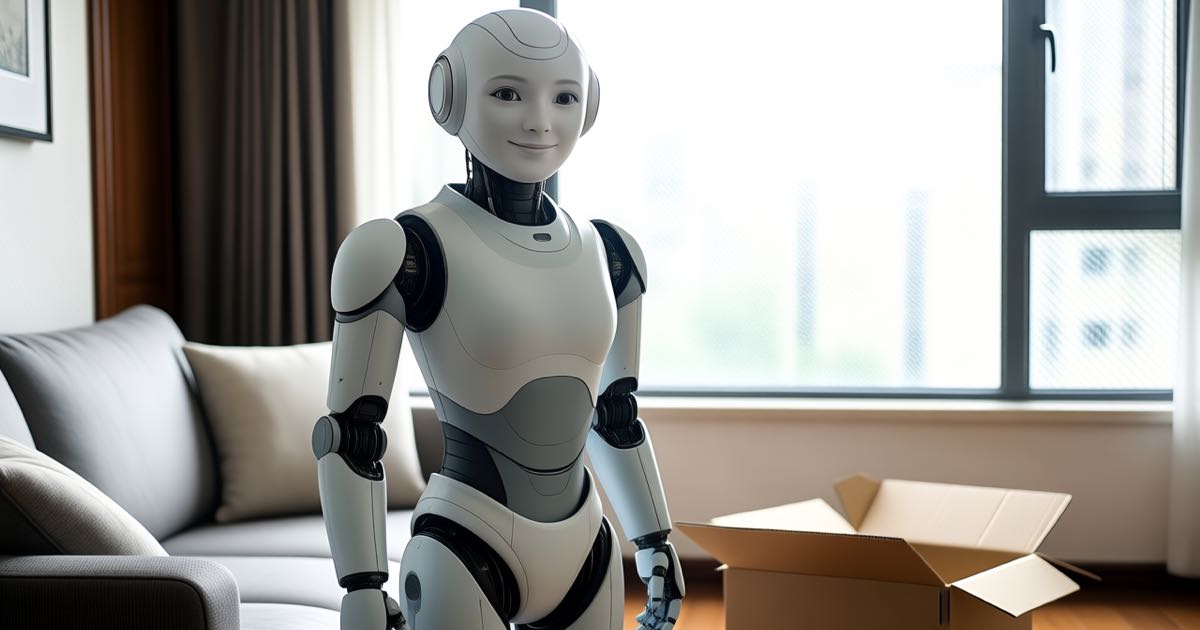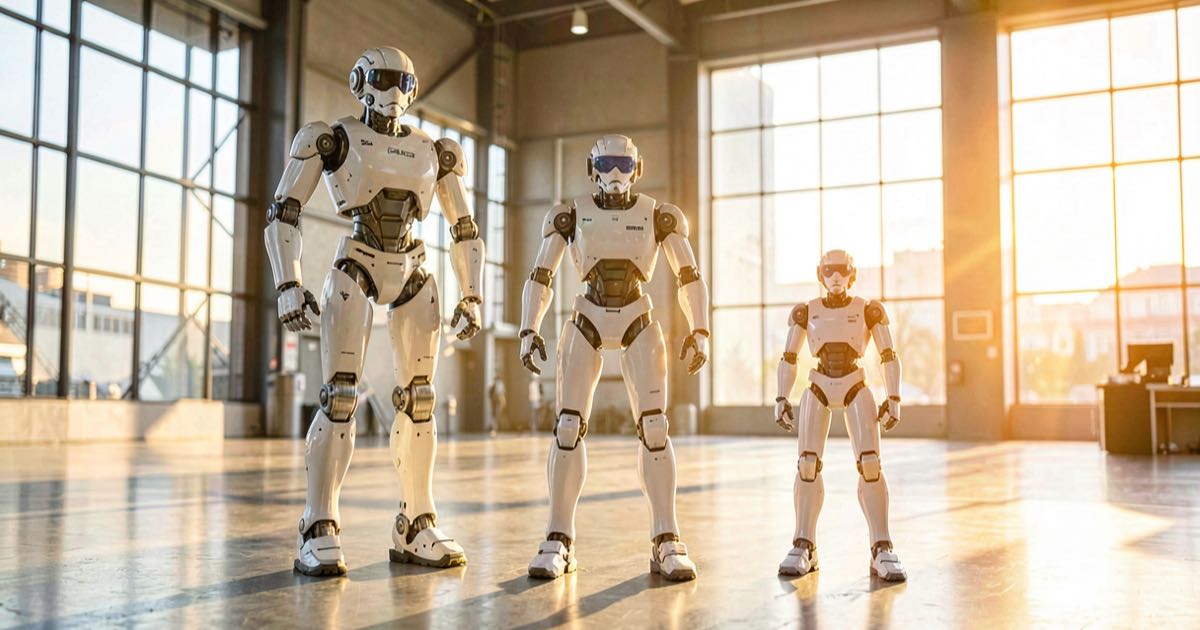
Realbotix announced on 4 November 2026 that its flagship humanoid platform — launched just ten days earlier, on 26 October, as “Echo” — would henceforth be called Realbotix Series 1. The company framed the change as avoiding trademark concerns and putting its flagship products directly under the brand name. Nothing else about the robots changed, according to the company’s own announcement: same specifications, same prices, same four characters, same ordering process.
So why cover a name change? Because the paperwork around it, pulled together by Unite.AI and New Atlas, amounts to the most complete consumer price sheet yet published by a US-based humanoid maker — and the terms attached to that sheet say a lot about where the companion robot business actually is.
What the money buys
The Series 1 line comes in two configurations. The Tabletop, at US$11,950, is a desk companion with 17 degrees of freedom, about 25 pounds of hardware, and Realbotix’s silicone synthetic skin on the face and neck. The Full Body, at US$59,950, steps up to a full humanoid form with 39 degrees of freedom, roughly 88 pounds, and skin extending over the forearms and hands. Both run conversation in more than 100 languages with what the company says is native integration of ChatGPT, Claude and Gemini, and both can be equipped with an optional Vinci computer-vision upgrade that handles face recognition, emotion cues and gaze tracking entirely on-device.
Neither version walks. New Atlas was blunt about this: these are, in the tabletop case, “armless torsos but with great hair.” That is not a knock so much as a design philosophy — Realbotix has decided that conversation, not locomotion, is the product, and that skipping legs is how a consumer humanoid gets down to a four-figure price instead of the six-figure tags attached to ambulatory machines like Unitree’s or Agility’s.
The part that isn’t the sticker price
The first production run is small — 225 Tabletop units and 25 Full Body units — with a US$199 deposit reserving a place in the queue and delivery scheduled for the second half of 2027. New Atlas reads the company’s materials as pointing to fulfilment beginning in early 2027; the company’s own terms say the second half of the year. Either way, that is a long wait on a deposit for a product category with no delivery track record at all.
Then there is the subscription, and this is where the model gets genuinely unusual. Operating either robot requires a monthly Realbotix Robot Configuration App subscription starting at US$19.99 — and per New Atlas’s read of the tiers, the base plan meters conversation time at roughly 10 hours a month. A US$39.99 tier lifts that to 40 hours with more expressive voices and accents; US$199 buys 100 hours and custom character building. You would not think the ability to talk to a product you already own, in your own home, could be capped — but this is effectively a mobile-phone plan for a person-shaped appliance.
The real signal: what the name change tells you
A rebrand ten days after launch reads first as a trademark stumble, and it probably is. But it also compresses the branding story: one company name, plastered on the product, doing the work that “Echo” — a word Amazon has its own opinions about — previously carried. For a company trying to become the household name of home humanoids, the flag follows the robot.
The substance underneath is the two-sided bet. On one side, US$11,950 is a startlingly low entry point for a lifelike machine with on-device AI, and CEO Andrew Kiguel’s framing (via Unite.AI) is pointed: “These are not remote-operated machines. They think, decide, and interact independently, with their own personalities, on-device intelligence, and the ability to respond in real time.” That is a direct shot at the teleoperation-heavy demos that have dogged the industry. On the other side, metered conversation hours on a $12,000 device is a reminder that the hardware is the hook and the relationship is the product — a razor-and-blades arrangement for the loneliness economy, and one where the company controls the tap. The stated aim, per the company’s materials, is addressing “the global loneliness epidemic in an affordable way.”
A 250-unit first run is the third telling number. That is a pilot batch, not a production line, and delivery is more than a year out. Realbotix has essentially pre-sold a promise — the same promise, more or less, the whole humanoid sector is selling. The difference is the price of admission to find out whether daily life with a synthetic conversationalist is worth having. At $11,950 plus $19.99 a month, that experiment just got cheap enough for a mainstream customer to actually run it — with a 2027 wait and 20-hours-a-day of conversation presumably still on the buyer’s side of the ledger.
New Zealand relevance is thin for now — Realbotix is taking reservations through its website with volume enquiries from 10 units up, and shipping terms for outside the US are not yet published. But the pricing signal travels: if the top half of a humanoid is enough to matter to people, the price of companionship hardware just dropped into used-car territory, and every full-body humanoid maker watching CES will have noticed which half of the body got priced first.
As of publication, neither outlet’s reporting nor Realbotix’s announcement has been contradicted by any party; delivery-window phrasing differs between the company’s terms (H2 2027) and New Atlas’s reading (early 2027), and is stated as each source frames it.