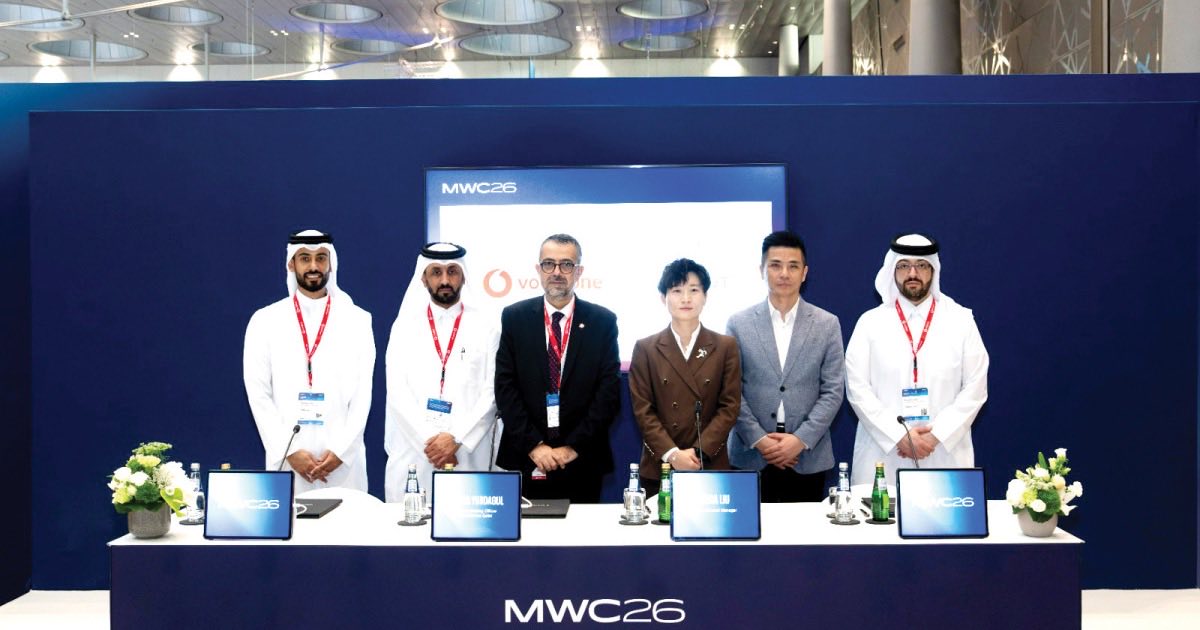
Vodafone Qatar and AGIBOT have signed a memorandum of understanding to explore embodied AI robotics across Qatar’s public, enterprise and education sectors, The Peninsula reported on 9 November 2026 (10:22am local). The agreement was signed by Vodafone Qatar COO Baran Yurdagul and AGIBOT Qatar general manager Vera Liu. As of publication, no terms, timeline or pilot sites have been disclosed — this is an exploration framework, not a deployment contract.
Why it matters: AGIBOT is the world’s largest humanoid robot maker by shipment volume, and this is its first reported Middle East telco pairing. Telcos have spent two years looking for revenue beyond connectivity; robotics-as-a-service is emerging as the candidate.
What the MoU actually covers
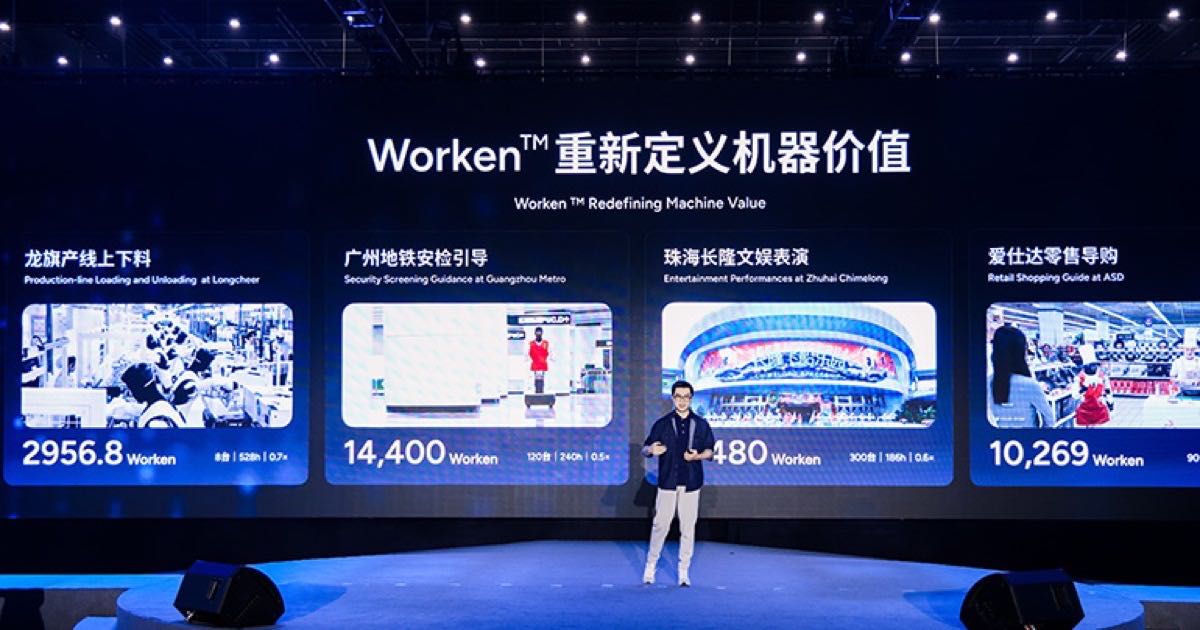
Under the agreement, the two companies will assess how Vodafone Qatar’s connectivity can support deployment of AGIBOT’s embodied AI systems. AGIBOT’s stated portfolio spans humanoid robots, quadrupeds, dexterous systems and commercial cleaning solutions, with capabilities that range from foundation models and data infrastructure to simulation and deployment. The Robot Report documented the breadth of that portfolio at WAIC 2026, where AGIBOT showed four embodied AI products aimed at real-world operations.
Both executives framed connectivity as the missing link. “Reliable connectivity plays an important role in enabling advanced robotics,” said Yurdagul, adding that Vodafone Qatar is “committed to helping businesses and government entities adopt emerging technologies with confidence.” Liu went further: “The future of robotics goes beyond intelligence — it is about connectivity, accessibility, and real-world impact.”
It is a familiar script. Every robot MoU announcement sounds like this one. The substance question is what gets piloted, where, and whether anyone measures the results.
From Shanghai shelf-stacking to Gulf pilot programmes
AGIBOT’s most concrete public test to date was the 24-hour convenience-store trial we covered in October, where six G2 robots completed 1,730 tasks in a Shanghai shop. That trial is the credible floor under announcements like this one: the company has demonstrated machines that work a shift, not just a stage.
Qatar is a sensible next step. Gulf states are spending heavily to import robotics expertise — Saudi Arabia’s LEAP conference and MWC Doha have become the region’s matchmaking venues for exactly this kind of deal. For AGIBOT, a Gulf telco partnership offers a reference customer in a market that pays premium prices and buys at government scale. For Vodafone Qatar, it offers a robotics story to sell enterprises while rivals sell AI chatbots.
The honest read: education-sector deployments are the interesting wildcard here. Humanoids in Qatari classrooms would be a genuine first for the region, whereas quadruped site inspection is already commodity work.
The telco-as-deployer pattern is real, but unproven
There is an emerging pattern worth naming: telcos positioning themselves as the deployment layer for embodied AI, on the theory that robots need reliable low-latency connectivity the way smartphones needed 4G. Japan’s SoftBank reached the same conclusion when it took control of ABB’s robotics business this year — the largest telecom in Japan now owns a major robot maker outright.
The Vodafone Qatar AGIBOT MoU is a much earlier-stage version of that bet. Nothing here commits capital. But the direction of travel is consistent: whoever owns the network pipe wants to own the robot fleet attached to it, because the fleet is where the recurring revenue lives.
New Zealand angle: no NZ telco has announced anything comparable, and Spark’s enterprise arm remains focused on IoT and private 5G. If embodied AI deployment does become a telco product category, the question for this market is whether local operators partner early or wait for the Gulf trials to settle the business case.
Sources: The Peninsula Qatar (primary, 9 November 2026); the same MoU was carried by Qatar Tribune on 9 November 2026 (Google News listing, direct article not yet indexed); AGIBOT portfolio context from The Robot Report.