Xiaomi posted a video of a full-size humanoid robot sorting centre-console side covers at its car factory for eight hours straight — and the quietly remarkable part is what didn’t happen. No handlers hovering. No tethered power cart. No cut when the shift hit hour six.
The clip went up on Xiaomi Tech’s official X account overnight (posted 3 November NZT, Interesting Engineering’s write-up followed about eight hours ago). The company says the robot can “autonomously detect and correct anomalies while coordinating with the production line system” at its Center Console Side-Cover Sorting Workstation. In plainer terms: the machine isn’t just repeating a canned motion — it notices when something is wrong, fixes it, and keeps talking to the line’s control system the whole time.
What was actually demonstrated
The task itself sounds mundane on purpose. Sorting plastic console covers is exactly the kind of work factories give to trial robots: repetitive, voluminous, and punishing to anything with sloppy repeatability. Eight hours of it at production pace is a stamina test, not a publicity stunt — most humanoid demos run for minutes, precisely because nobody wants to show what happens at hour five.
Notably, Xiaomi did not publish the numbers that would let anyone score the shift. No sorting throughput. No intervention rate — how many times a human touched the workstation. No detail on how battery changes or charging were handled across the eight hours. Interesting Engineering flagged that same gap: the demonstration video arrives without the performance figures that would make it comparable against anyone else’s line trials.
That omission matters because “8-hour shift” claims in this industry have a history of resting on generous definitions. A humanoid that pauses for supervised battery swaps, or runs at half production speed, has still done something real — but it isn’t the same thing as covering a human worker’s full shift at line rate.
The March groundwork, and the plan behind it
This is not Xiaomi’s first factory experiment. In March, CNBC reported Xiaomi had put humanoid robots onto its EV production line for parts-sorting trials — earlier footage showed shorter runs, with the company positioning the machines as interns rather than replacements. Back in November last year, founder Lei Jun laid out the intent plainly: humanoid robots would enter Xiaomi’s factories “at scale within five years,” per Gizmochina.
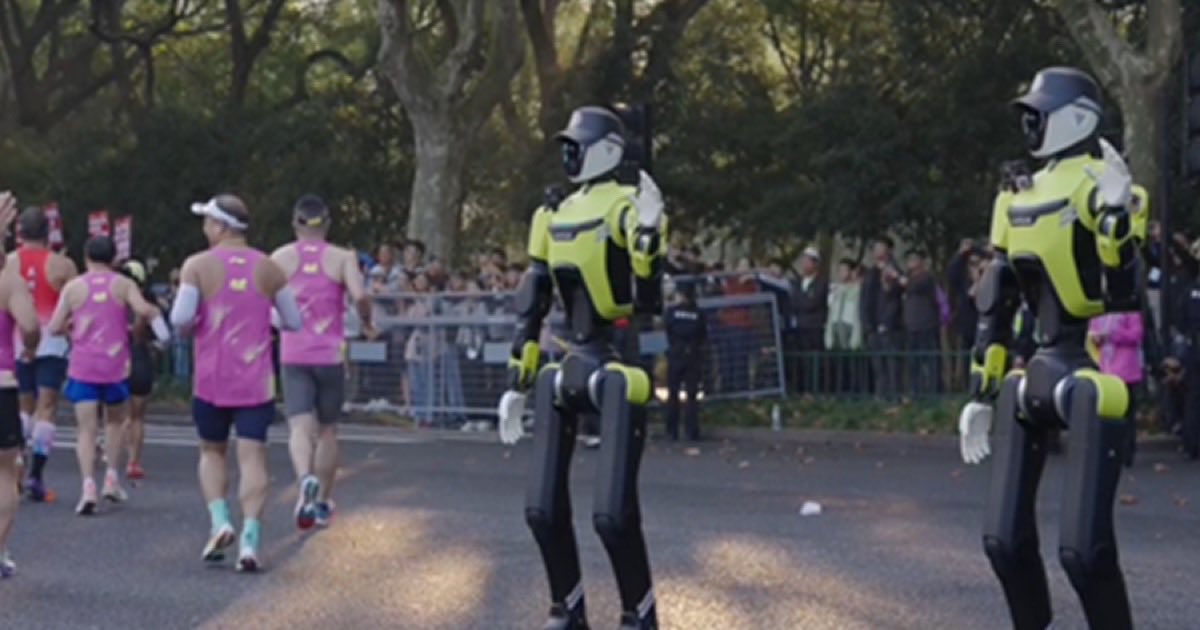
Seen against that timeline, the 8-hour shift is checkpoint two of a ladder Xiaomi has been climbing in public: short demo, then a shift, then multi-robot coordination, then scale. The company is also unusual among the humanoid crowd in that it owns the factory it is testing in. Xiaomi’s version of the same bet comes with a captive EV plant: early this month a state-run competition sent humanoids racing up Mount Tai’s 3,100 stone steps as China’s most public reliability test yet, Agility cleared its Nasdaq listing last week on the promise of exactly these line jobs — and unlike its western rivals, Xiaomi has its own car factory, its own line software, and a consumer-electronics supply chain to absorb the cost.
Why the missing numbers are the real story
The industry pattern here is worth naming. Chinese humanoid developers — Xiaomi, UBTech, Unitree, AgiBot — have shifted their public proof points from “look what it can do” to “look how long it worked.” UBTech’s Walker fleet logged carrier deliveries at BYD and Foxconn plants; AgiBot publishes monthly shipment counts; Xiaomi now has an unbroken-shift video. Duration is becoming the KPI because it is the axis investors and factory managers actually price. AgiBot’s own productivity framing (covered here in September) made the same move: measure what the robot did per hour, not what it can do on stage.
The missing throughput and intervention data, in that light, cut both ways. Xiaomi is confident enough in the shift-length claim to put it on video — but not yet ready to have it benchmarked. That is a rational position for a company mid-crawl toward Lei Jun’s five-year scale target, and it is also the gap between a milestone and a product.
For the humanoid market broadly, the signal is straightforward: the bar for “real deployment” is moving from minutes to shifts, and the Chinese manufacturers are the ones publishing the receipts. The western entrants — Figure, Tesla, Boston Dynamics’ new Stretch generation — are mostly still on the other side of that line, demonstrating capabilities rather than logging hours.
As of publication, Xiaomi has not responded to requests — or published — the throughput and battery-management details behind the 8-hour figure. When those numbers appear, they will be worth more than the video.