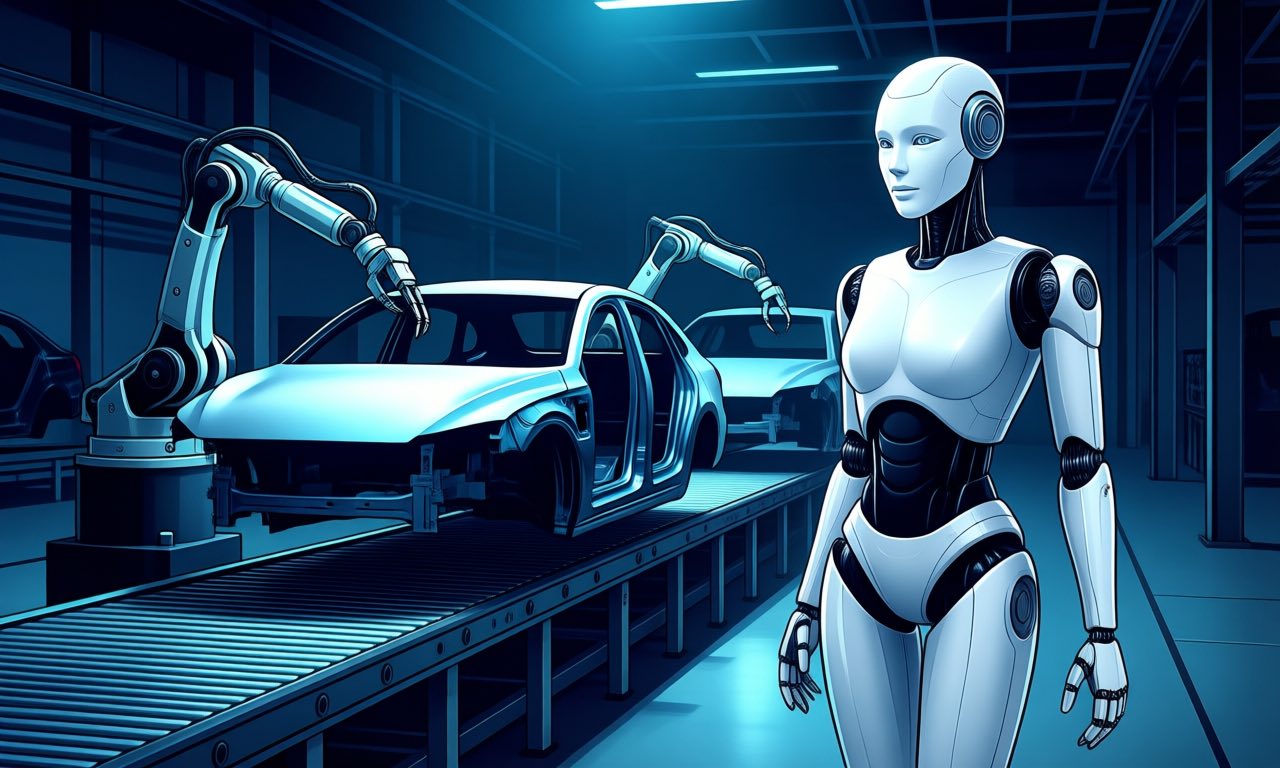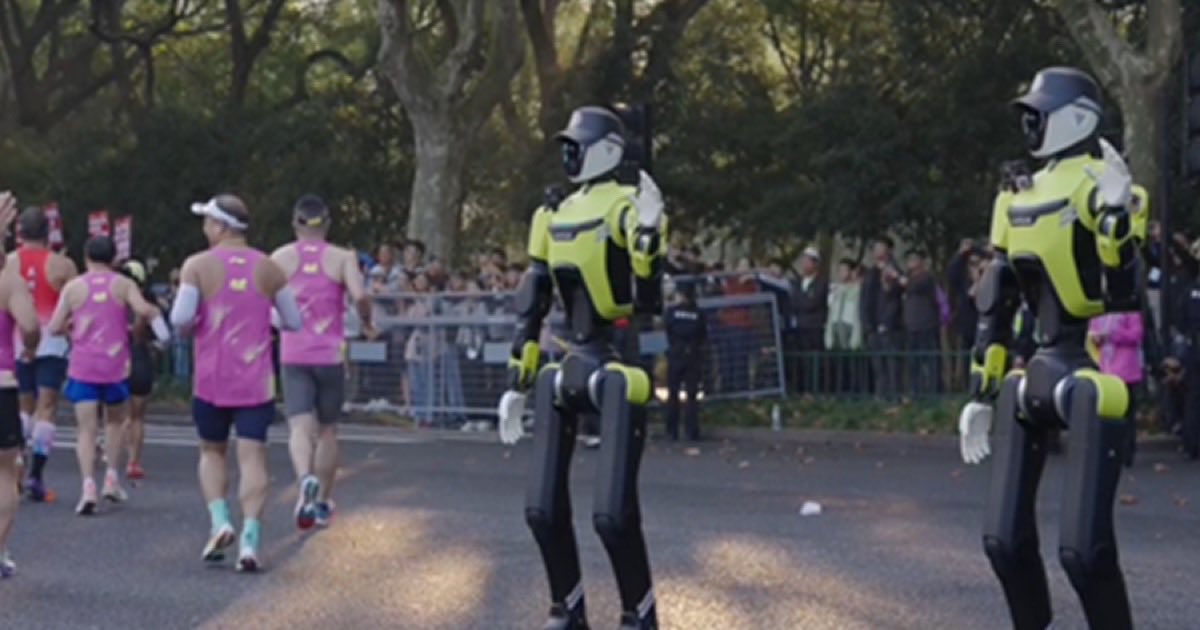
XPeng’s humanoid robot program has hit a component milestone ahead of the robot itself: the company says solid-state batteries designed for its Iron humanoid have begun rolling off the production line in small batches, while the robot remains before its official start of production. CnEVPost reported the disclosure from XPeng vice president Gu Jie, made Wednesday at the Society of Automotive Engineers of China’s annual conference. Xpeng plans to mass-produce Iron by the end of 2026, with deployments in stores and other commercial settings from 2027.
Humanoids Daily’s read of the same remarks is more cautious: the battery milestone “should not be read as confirmation that IRON has reached full production,” and no energy density, capacity, runtime, cycle life or production-volume figures were published alongside it. Yicai’s brief confirms the core claim in one line: the Iron robot’s solid-state battery is in small-batch production and offline, with the robot itself in the pre-SOP (start of production) stage.
Designed for a cramped torso
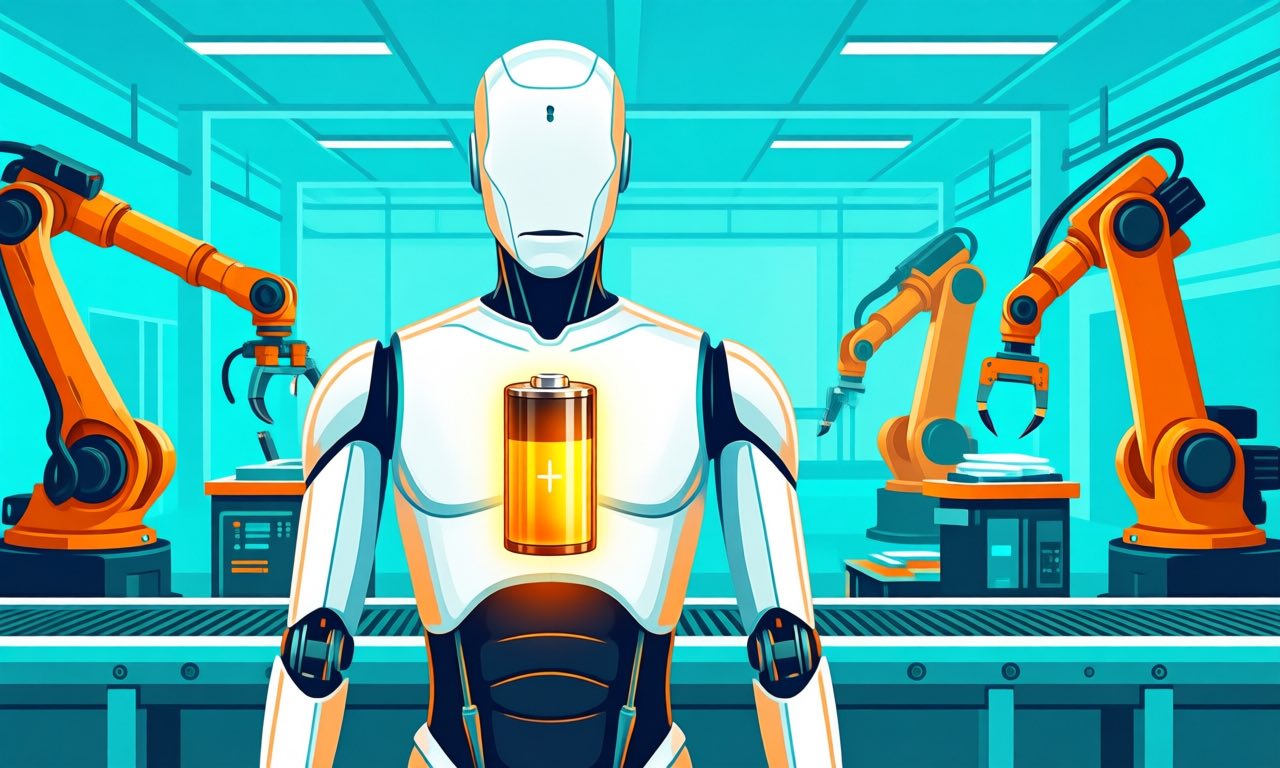
The battery specification that stands out is the packaging constraint. Gu told the conference the dedicated solid-state pack uses a high-energy-density design to fit the robot’s limited internal space — a different set of trade-offs than a car floor pan, where an EV battery can sprawl. Per the reports citing IT Home, the pack incorporates measures to stop thermal runaway from spreading cell-to-cell and is rated to survive impact and nail-penetration tests, the two abuse tests that matter most for a battery wrapped inside a machine that is meant to fall over, get bumped, and work near people.
That safety framing is not incidental. A humanoid battery that vents or burns during a fall is a liability claim waiting to happen, and XPeng is clearly building its consumer story around an automotive-grade safety case — the same quality system it says it applied when it commissioned Iron’s production line in September, complete with automated final assembly and a robot that walked off the line on its own.
Which chemistry is actually inside?
The open question is what “solid-state” means here. When XPeng unveiled the new-generation Iron in November 2025, it said the robot would be the industry’s first with all-solid-state batteries. But by early September, reporting sourced from Jipian Lab indicated the production version of Iron had shifted to a semi-solid, solid-liquid hybrid design because all-solid-state commercialization could not keep pace with the robot’s schedule. Wednesday’s disclosure used the term “solid-state battery” without resolving which chemistry is actually rolling off the line — and, per CnEVPost, doesn’t clarify the supplier relationship, after a September report said XPeng had picked a second-tier Chinese battery maker as its main supplier.
The gap between the promise and the disclosure matters more than it looks. All-solid-state cells swap the flammable liquid electrolyte for a solid one — the genuinely step-change safety and density story. Semi-solid hybrids keep some gel or liquid in the cell and are far closer to today’s lithium-ion in behavior. Both are legitimately marketable as progress, but only one is the headline XPeng announced last November.
The battery bottleneck is now the visible constraint
This same-day pairing with Unitree’s first post-IPO earnings is coincidental timing but a coherent signal: China’s humanoid push has entered its component-industrialization phase, and the batteries are where the physics bites. XPeng redefined its battery standards specifically for robotic applications — vibration, thermal spread, puncture — because a humanoid is an EV crashed 10,000 times by design. Whoever solves the robot battery pack at volume holds a bottleneck position in the whole category.
It also extends the EV-to-humanoid industrial logic we’ve tracked all year on this site: XPeng started as a carmaker, and its robot program is a direct re-export of automotive manufacturing discipline — an automotive-grade quality system, a production line commissioned in September, and now battery cells flowing before complete robots. Gesture-interaction VLA work on Iron shows the intelligence layer progressing in parallel, but component supply is the slower clock.
For anyone tracking whether the 2026 humanoid timelines are real, the honest read is: cells in small batches is a genuine ramp signal — batteries are historically the part that slips — but the missing numbers are equally telling. No density, no capacity, no volumes. When XPeng publishes those, the year-end mass-production claim gets testable. Until then, the IPO-crackdown scrutiny hanging over China’s humanoid sector applies here too: demos are cheap, disclosure is the discipline.