The biggest industrial automation company on earth just spent money on the kind of robot most coverage ignores. On November 18, Rockwell Automation (NYSE: ROK) announced it has signed a definitive agreement to acquire AGILOX, an Austria-based maker of autonomous mobile robots whose products are driven — in the company’s language — by self-developed artificial intelligence and swarm networking technology, per Business Wire via Yahoo Finance. The deal, announced at Rockwell’s Automation Fair in Boston, will more than double Rockwell’s AMR business and is expected to close in the second quarter of Rockwell’s fiscal 2027, subject to regulatory approval.
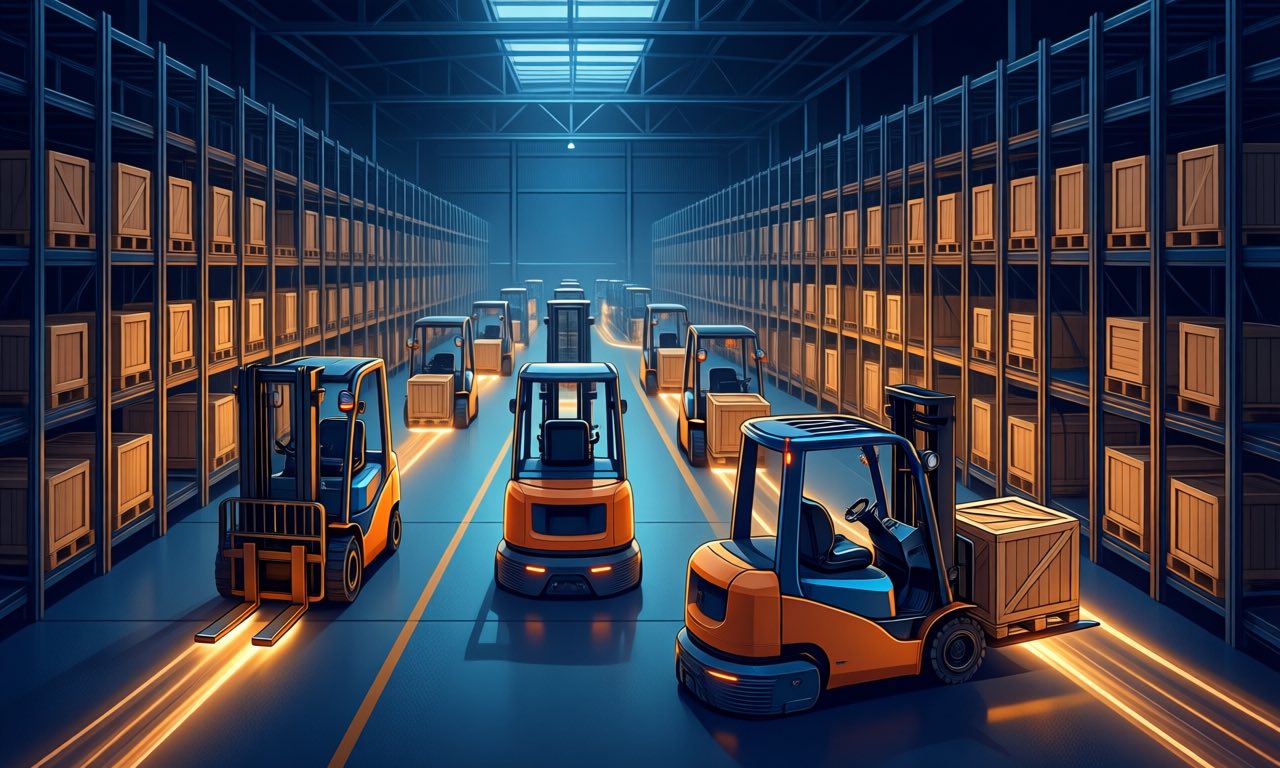
AGILOX, founded in 2017 in Neukirchen bei Lambach, makes forklift-style AMRs for warehouse transport and production logistics, with more than 2,500 robots deployed according to the company’s own materials and the acquisition notes circulated by Investing News Network. Its customers sit mostly in automotive, third-party logistics, food and beverage and pharmaceuticals; it employs more than 250 people across Europe, the USA and China.
Two fleets, one thesis
The strategy in the paperwork is explicit. Rockwell already operates the OTTO flatbed AMR platform — built on the Clearpath Robotics acquisition reported by The Robot Report in 2023 — with a strong North American base. AGILOX brings the European footprint and the forklift form factor. The combined pitch, in Rockwell CEO Blake Moret’s words, creates “a best-in-class technology platform, bringing together complementary capabilities to set a new standard for autonomous material movement.” AGILOX’s co-CEOs Dirk Erlacher and David Niedermaier called it “the scale and market reach that we couldn’t build on our own.”
The press release’s own tagline is the more interesting sentence: the deal “accelerates our physical AI strategy.” Rockwell — a 27,000-person firm that mostly sells the control systems running factories — is buying AI-driven fleets, not model developers. The AI that matters here is the fleet software that lets hundreds of forklift AMRs negotiate space around each other, which is AGILOX’s swarm networking speciality.
Why the quiet form factor keeps winning
Humanoid robots take the headlines, but the units factories actually purchase in volume still have wheels. We saw this pattern at the World Robot Conference: wheeled platforms beat legged ones on the metrics procurement cares about — uptime, payload-per-dollar, compatibility with existing racking. AGILOX’s 2,500-deployment base is measured, operational evidence of the same thing. Warehouse robot complexity is scaling faster than the humanoid marketing cycle, as Walmart’s peak-season fleet operation showed earlier this year.
Consolidation is the logical next step: fleet autonomy needs someone accountable when a plant’s entire material flow runs on it. Rockwell is positioning itself as that someone, and the acquisition also hands AGILOX access to Rockwell’s customer relationships in consumer packaged goods and life sciences — exactly the verticals where a formal interoperability standard for mobile robots is starting to matter.
One caveat from the paperwork: the deal is explicitly subject to regulatory approval, and robotics deals have died on that step this year — remember when China’s regulators blocked SoftBank’s move for ABB’s robotics division? With subsidiaries in Austria, the USA and China, AGILOX’s footprint gives the deal two jurisdictions of approval to clear, not one.
For New Zealand, the practical signal is subtler: much of the country’s manufacturing base buys through integrator ecosystems, and Rockwell’s is one of the biggest here. When fleet-level AI consolidates under the automation giants, the buy-in path for a plant in Tauranga or Hamilton gets shorter — one vendor, one fleet contract, one escalation path — while the alternatives to that single stack thin out.
Further reading: how AMR fleets are being standardised for interoperability, what peak-season robot fleets reveal about warehouse complexity, and the regulatory risk that killed another robotics deal this year.