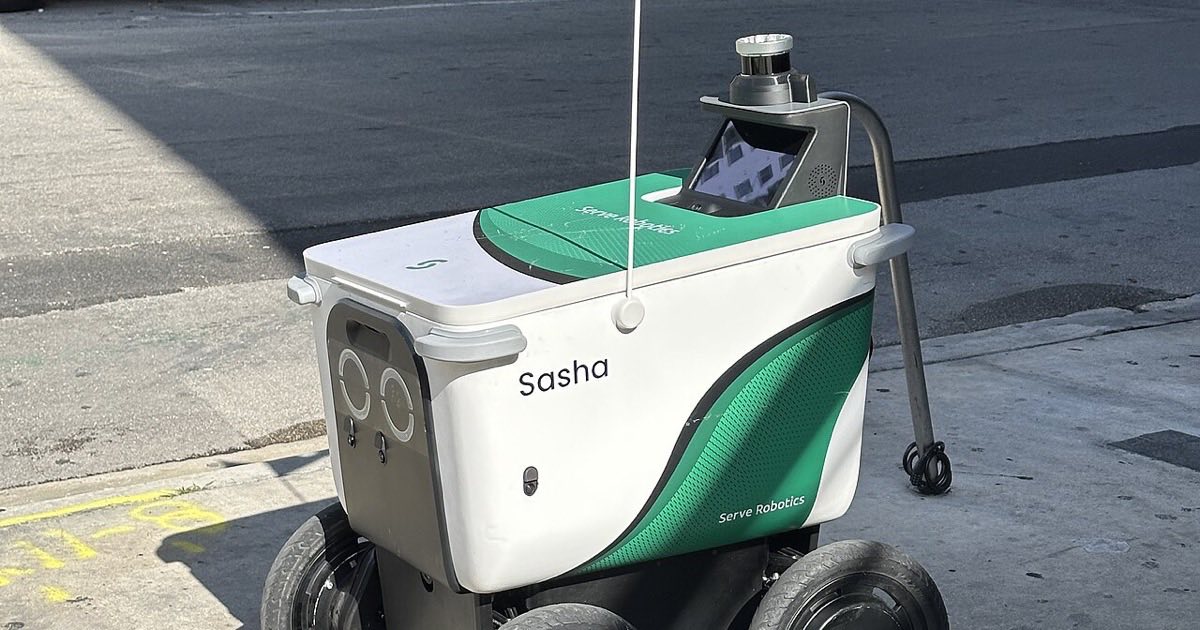
Serve Robotics opened its robot delivery network to outside developers yesterday (11 November), launching the AV Delivery Developer Portal with a public API. Anyone from a business to a hobbyist to an AI assistant can now programmatically summon the company’s autonomous sidewalk robots, and a sandbox environment lets applications be built and tested against simulated deliveries before they ever touch a live robot. Access to the real fleet remains subject to Serve’s approval.
“You shouldn’t have to start a robotics company to build something useful with robots,” said Ali Kashani, Serve’s co-founder and CEO, in the launch statement. “We’ve spent years figuring out how robots can navigate neighbourhoods. The people who live and work there will have needs we haven’t thought of. Opening our fleet gives us an opportunity to serve those needs.”
No more delivery-app gatekeeping
The Verge’s interview with Kashani makes the strategic arithmetic explicit. Until now, the same robots were reachable only through large third-party delivery platforms, chiefly Uber Eats. The new portal lets a small business dispatch robots directly without paying delivery-app markups — pay per delivery, or reserve a robot by the hour. Kashani pitches that as “a fraction” of the cost of human-powered delivery for small merchants.
The mechanics read like any other cloud API. An application or AI agent requests a pickup and dropoff, confirms the details, and tracks the robot until completion; Serve handles dispatch, routing, navigation and remote supervision. Constraints are the practical ones: deliveries run inside Serve’s active service areas during operating hours, and the cargo needs to fit the robot’s compartment. The company says the sandbox can simulate delivery workflows and rehearse edge cases — the portal and documentation are live for developers who want to go beyond it.
Kashani also framed the open fleet as load balancing for the economics of food delivery. “Food is generally very picky,” he told The Verge. “So you have lunch, you have dinner. But then there are times in between. So again, having that diversification helps.” And on whether enterprise customers get priority over a local shop’s API call: “There’s no preferential treatment at the end of the day. Until the robot is on a delivery, it doesn’t have a commitment to anybody.”
A platform week, not just a product launch
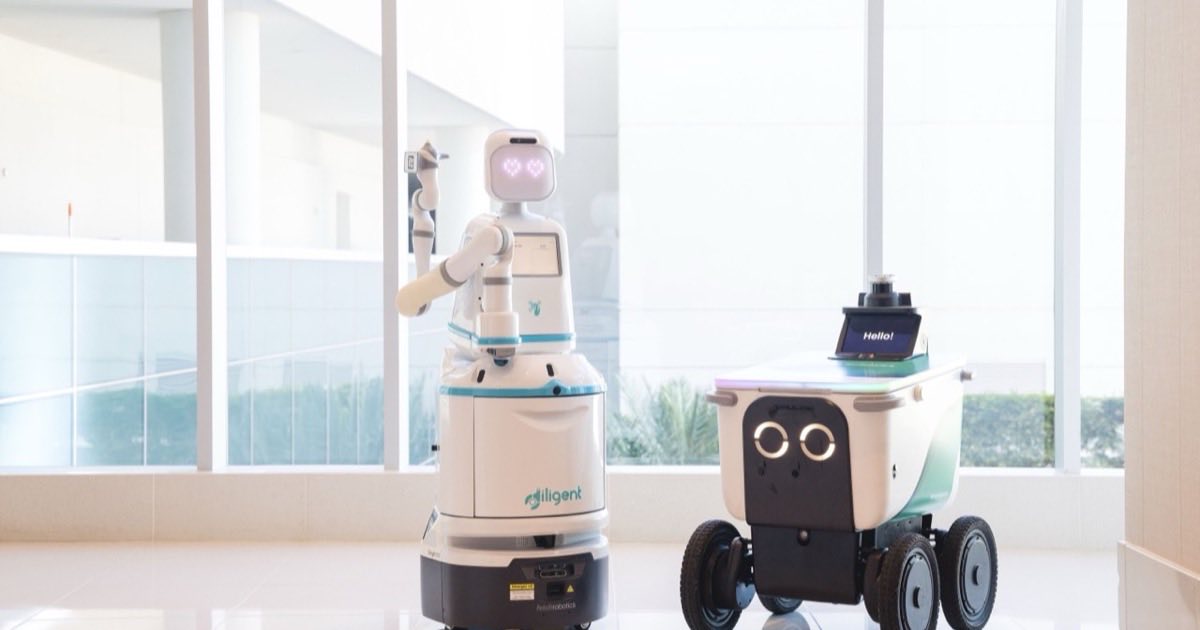
The timing matters. The portal is the second opening Serve has made in a week: on 5 November it launched Serve Physical AI Services, selling the connective tissue behind its own fleet —Serve Link for robot-to-datacenter connectivity, Data Curator for surfacing useful training moments, and a real-world foundation-model data catalog drawn from sidewalk deployments — to other physical AI companies, with Bedrock Robotics among the first customers. TechCrunch’s framing of that earlier announcement stuck: Serve wants to be the AWS for robots. The scale behind the pitch, per the company: more than 2,000 robots deployed across the US and Australia, reaching around 3 million people and serving more than 4,000 restaurants, plus hospital service robots via the Diligent Robotics acquisition earlier this year.
This is the same platformisation pattern playing out across robotics this week — and it is Serve’s second opening in days. We covered the first one when the company launched Physical AI Services to become the AWS of robots; the developer portal is the consumer-facing half of that platform bet. It also rhymes with Nvidia’s GR00T 2 launch, which turned a world action model into an open industrial platform with a simulator and benchmarks attached. Serve’s version is more modest but more immediately mundane in the best way: it is selling utilisation. Robots that idle between lunch and dinner can now earn their keep on a hardware-store run or an office-internal shuttle, dispatched by a two-line script or an AI agent acting on a user’s behalf.
The AI-agent angle deserves the attention it is getting. A fleet with a public API is the first physical infrastructure these agents can address the way they already address cloud services — “request a pickup” becomes just another tool call. That is a genuinely new interface layer between software and the physical world, and Serve is the first at scale, with hundreds of thousands of completed deliveries across roughly 150 neighbourhoods and 20-odd US cities behind it.
Across the Tasman, already
For New Zealand readers the story is not abstract. Serve and DoorDash launched Australia’s first footpath delivery robots on the Gold Coast in late October, starting in the Gold Coast Health and Knowledge Precinct — the closest deployment to home, and the first taste of how the robots handle a footpath culture shaped like ours. An open API quietly changes who gets to participate: a NZ developer can now build against Serve’s sandbox without being DoorDash, and when a fleet eventually lands in a local market, the app layer around it becomes a business anyone can enter. The same consumer-robotics ground shift we tracked with Ring’s camera rovers moving from doorsteps to driveways is now reaching the last-mile cargo robot — not as a new device, but as a new way to command the existing ones.