This morning’s coverage reads as three clocks running at once. Anthropic’s IPO prices revenue that arrives in 2030 and trades within days. Nvidia’s robot model learns fifty tasks from a demonstration apiece and ships between quarters. Korea’s youth jobs streak enters its fifth year. Capital moves fastest, capability compounds in public, the labour ledger closes over years — and the gap between those speeds is where this economy gets decided.
🔍 THE BOTTOM LINE: The repricing of AI runs on a fast clock while its proof runs on slower ones: markets settle Anthropic’s $1.4 trillion (or a fully-diluted $1.0 trillion) within a week of November 19, robot capability compounds demo by demo in the open, and the labour ledger closes over years — Korea just logged 48 straight months of youth employment decline. Where the clocks clash, the companies that bridge timing honestly — disclosure, open weights, rehiring — set the terms.
The capital clock: a decade of revenue, a week of trading
Anthropic’s roadshow is the fastest clock on the board: 825 million shares at $70 to $78, ticker ANT, trading expected Thursday November 19 after pricing Wednesday night. On a fully diluted basis the company is being counted nearer a trillion than the $1.4 trillion headline. Goldman Sachs’ projections reach $600 billion of revenue by 2030 — more than 130 times 2025 sales — with losses near $40 billion in 2027 on the way. Markets vote within days of November 19; the evidence — whether $600 billion revenues materialise — arrives over years.
The clock clash is sharpened by who supplies the backing. The private placement draws in the company’s own suppliers: AMD, Broadcom, Google, Micron, Microsoft, Nvidia, TSMC — chip vendors directly financing the buyer of the chips, a circularity pattern already flagged in the Series H coverage. Capital has moved the fastest around AI, in other words, because it is pricing 2030 outcomes as if they were 2026 facts.
The capability clock: compounding in public, demo by demo
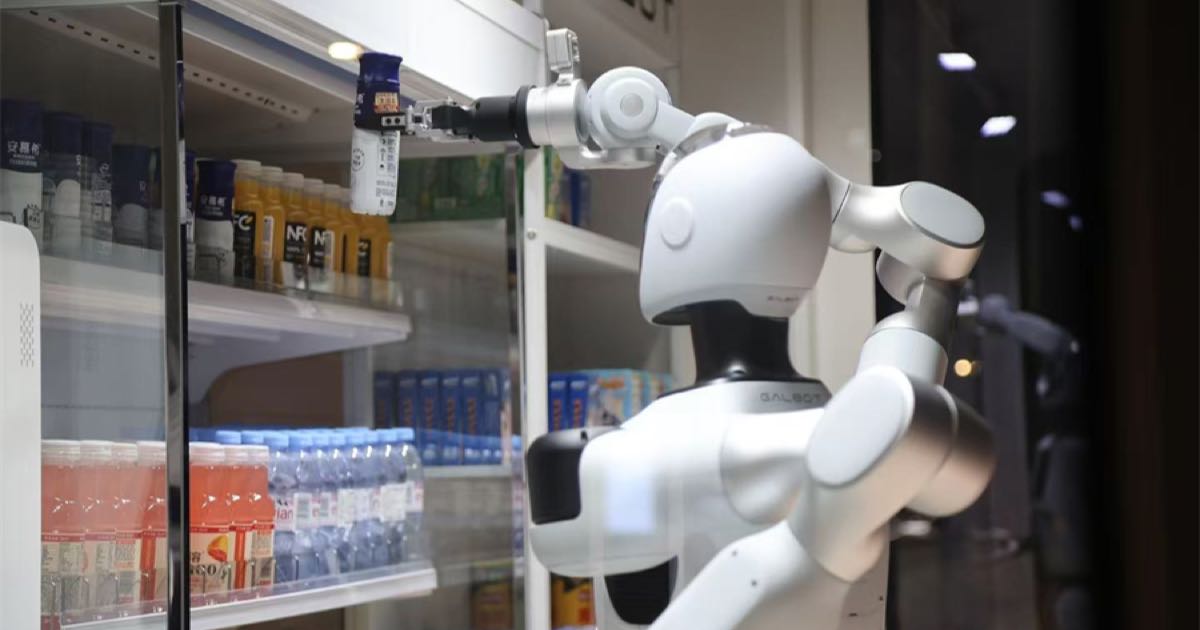
Nvidia’s GR00T 2, announced at CoRL in Austin on November 9, is the middle clock: 40 of 50 household tasks completed with no task-specific demonstrations at all, 71 per cent average success from one demonstration each, 95 per cent with five. The deep pull: the open repo behind it shows 8,354 stars and commits as recent as November 10, 2026 — a foundation model in open iteration, not a proprietary reveal, though its GitHub description still carries the earlier N1.7 label.
The interesting signal is who has already moved: Foxconn is applying GR00T 2 to server manufacturing, Siemens is evaluating it, and days earlier DeepMind reported a 96 per cent factory pilot at Mercedes-Benz. Capability is compounding publicly, with fewer exclusive moats than the capital story assumes — which, on a 12-to-24-month horizon, is what the open-weights play is designed to guarantee. Its clock speed differs too: capability lands between quarters, with a lag for physical integration.
The labour clock: years, and the ledger is just opening
The slow clock carries the most weight. Korea’s youth employment has now fallen for 48 consecutive months into October — the longest streak since the GFC — with AI and employers’ preference for experienced hires narrowing the fast track. The counterweights there are sectoral: entry-level semiconductor hiring up 47 per cent, systems-integration firms hiring as companies rebuild around AI.
Korea is the visible extreme, but the mechanism travels. New Zealand’s youth unemployment sits at 15.2 per cent, the Reserve Bank has warned about AI blunting the graduate ladder, and Korea’s streak shows what an unresolved mechanism looks like after years of running — while the RBA’s hiring-gate evidence and the rehiring boomerangs say adjustment arrives in years, not quarters.
What the clock gap reveals: who is bridging which gap
Read today’s coverage as a single system and company strategy sorts into two moves. Nvidia is bridging capital’s fast clock to capability’s quarterly cadence, betting open distribution beats proprietary margins. Ford is on the record rehiring after AI quality tools fell short — the slow-clock correction, where the fastest movers are those who tried to skip it.
Anthropic’s IPO makes its bet public rather than private: quarterly disclosure, mandatory deprecation announcements, an audit trail where private signals once moved quietly. The 12-to-24-month consequence: more open-weights plays, more audited-deployment claims from robot vendors, and labour-clock corrections increasingly visible as survey houses turn reversal data from anecdote into bracket.
What it means for New Zealand
The clocks run through Wellington too. On capital: NZ investors can buy the ANT order book on November 19 — direct exposure to a company priced on 2030 revenue and $900 billion of committed compute, per the Goldman model. On capability: GR00T 2 is open-weight on commodity GPUs, so NZ manufacturers can pilot without licensing fees — a procurement decision rather than a research project. On labour: if the Korean mechanism holds here — AI at the hiring gate, employers waiting on experience that entry roles no longer build — the correction will take years, so the intervention worth funding is a bridge: apprenticeships, not avatars. The lesson is timing, not technology; the companies to watch are the ones engineering honest bridges between the clocks.
❓ FAQ
What are the “three clocks”? The capital clock — public-market repricing of an AI lab within days (Anthropic trades November 19); the capability clock — robot model progress compounding quarter to quarter (GR00T 2, Gemini Robotics 2.5); and the labour clock — workforce adjustment over years (Korea’s 48 straight months of youth employment decline).
Why does GR00T 2’s open repository matter? 8,354 stars and commits as recent as November 10, 2026 — a frontier robot model iterating from a public repo rather than as a private demo. Evidence the capability clock compounds publicly.
Is the $1.4 trillion Anthropic figure real? It is the top-of-range headline; fully diluted, the same deal is counted nearer $1.0 trillion. The distinction shows how loosely trillions are counted at the fastest end of the capital clock.
What should a New Zealand worker or employer take from this? The hiring-gate effect is real and slow: Korea’s 48-month streak is a preview of an unresolved mechanism compounding over years. The rehiring cases (Ford, Klarna) show the labour clock does eventually correct — and the returners are negotiating terms.
Is the circular financing a concern or a design? Both readings are available: chip vendors financing the chip buyer stabilises demand from one view and concentrates systemic risk from another. Public-market disclosure from November 19 makes the structure auditable as private markets never were.
🔍 THE BOTTOM LINE
Three clocks are running at once, and the story of the next year is not which clock is right — all three are ticking in today’s coverage — but who bridges the gaps between them. Anthropic steps into public-market daylight on November 19; Nvidia’s open bet makes the capability gap a public compound curve; Korea’s 48 straight months are the labour clock’s ledger. Capital prices decades, capability promises quarters, workers absorb years — and the companies that bridge those clocks honestly, by disclosure, open distribution or rehiring, set the terms for whoever moves next.
📰 Sources
- Anthropic — IPO roadshow launch (November 10, 2026)
- ZeroHedge — Anthropic IPO terms and Goldman projections (November 11, 2026)
- Nvidia — GR00T 2, Isaac Lab 3.0 and CoRL robotics advancements (November 9, 2026)
- GitHub API — NVIDIA/Isaac-GR00T repository stats (stargazers, pushed_at, accessed November 12, 2026)
- KED Global — Korea entry-level hiring data (November 11, 2026)
- Associated Press (via Akron Legal News) — AI-related rehiring (November 10, 2026)
- The Robot Report — GR00T 2 launch (November 9, 2026)