SoftBank has completed its acquisition of the Robotics and AI Institute from Hyundai Motor Group, The Robot Report has confirmed — the closing move in a reshuffle that took months to arrange and hands one of America’s most quietly influential robotics labs to Masayoshi Son. Financial terms were not disclosed, and SoftBank declined to comment when the outlet asked.
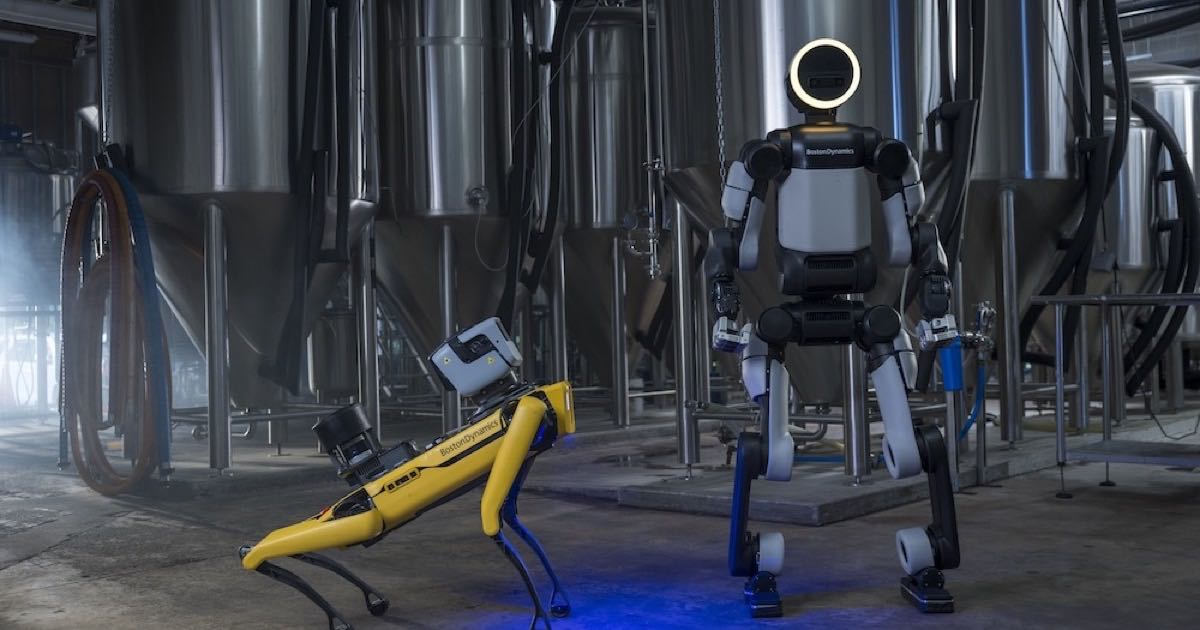
The institute, better known by its abbreviation RAI, does not sell robots in any volume. It was founded in 2022 by Marc Raibert, the man who built Boston Dynamics while it passed through MIT,Google and SoftBank’s earlier ownership, and it exists to work on “fundamental challenges” — mobility, manipulation, perception, intelligence — at a research pace that a company shipping commercial products usually cannot afford. Hyundai backed it at founding with more than $400 million, presumably on the theory that whatever the institute figured out would eventually flow into Hyundai’s own robot ambitions. That is what remio’s analysis of the deal flags as the thing that changes: ownership now splits the research tier of robotics away from the company that was commercializing it.
How the swap lines up
The exchange logic is the part worth staring at. On one side, Hyundai has just bought out SoftBank’s remaining 9.65 percent stake in Boston Dynamics — a transaction reported at $325 million in June — which gives Hyundai and its executive chairman complete, undiluted ownership of the robot company it has controlled since 2021, when it bought the stakes in a deal that valued the firm at $1.1 billion. That closed out SoftBank’s long run as an owner of the most famous robot company on earth, a tenure that started when SoftBank bought Boston Dynamics from Alphabet’s holding structure in 2017.
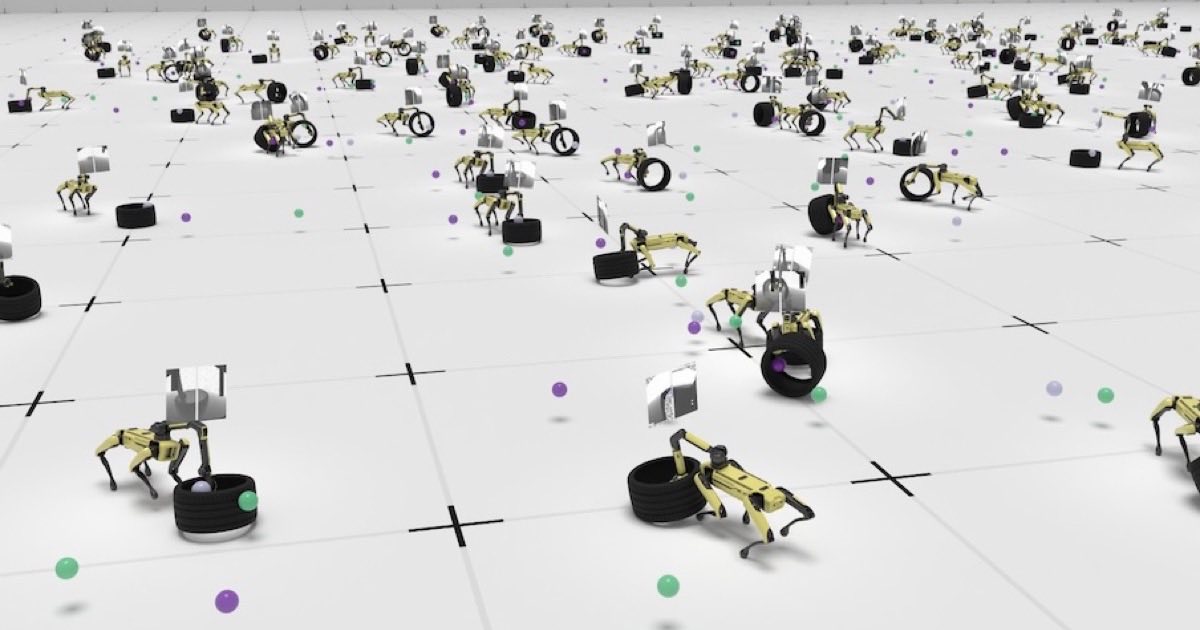
On the other side, SoftBank takes the institute itself — the researchers, the simulation infrastructure, the freedom to pursue questions that do not close in a quarter. It is nearly a perfect asset-swap of philosophy: Hyundai, an automaker in a hurry to put robots into cars, factories and logistics, decided it wanted total commercial control. SoftBank, which has never been able to buy enough robotics exposure, decided it wanted the research.
Rereading that trade in the other direction explains both parties.
What SoftBank is actually collecting
RAI is not a trophy; the institute currently lists 24 open positions across Cambridge, Massachusetts and Zurich, covering robot learning, manipulation, simulation, navigation and hardware engineering. Raibert’s team remains in place, and The Robot Report notes neither company has said whether SoftBank’s ownership will steer the institute’s priorities or whether it keeps operating independently.
The institute slots into a portfolio that already includes 1X Technologies, Agile Robots, AutoStore, BALYO, Berkshire Grey, Brain Corp, Skild AI and Symbotic. TheRobot Report points at two of those names for the obvious synergies: Skild AI’s general-purpose robot “brain” is the kind of software a research institute like RAI would collaborate with rather than compete against. Whether that kind of cross-pollination actually happens inside a holding company is the open question SoftBank has yet to answer.
SoftBank’s robotics appetite also explains why the timing matters. Its $5.375 billion bid for ABB’s robotics division was blocked by Chinese regulators this year — a deal kill we covered in detail — which left the firm’s most direct path into industrial robotics stuck. Owning a research institute is not a substitute for an operating robotics business, but it keeps the firm’s story moving at a moment when the alternative was stagnation.
The other angle is the founder reunification. Raibert and SoftBank have history from 2017-2021, and there is a reading in which SoftBank bought back its relationship with the single most credible figure in American legged robotics — a person who left Boston Dynamics’ commercial machine as a whole cohort of veterans peeled away, and whose new institute kept the parts of Boston Dynamics that made it famous: the researchers. Hyundai’s own management reset at Boston Dynamics, installed when a new CEO took over, has been about shipment schedules, not blue-sky questions.
The question nobody has answered
Every robot research lab that gets eaten by a holding company faces the same fork, and the honest answer is that no one knows which way RAI goes. Institutes can survive new owners comfortably when the owner wants exactly what the institute produces and is patient about it — but SoftBank’s investing record shows a strong preference for companies that converge on something sellable. RAI’s value to date has been its independence: the lab could take the five-year view on manipulation and sim-to-real because no quarterly product deck depended on it.
There is also the less comfortable reading for Hyundai: the automaker funded the institute for four years, watched it become a flagship for physical-AI fundamentals, and then let it go in exchange for clearing up Boston Dynamics’ cap table. If Hyundai believes the commercial gains from fundamental robotics research are further out than it wants to wait, that tells you something about the state of robot science — that even a company with the balance sheet to fund it would rather own a shipping product than a question mark.
For everyone watching from smaller markets, the shift is a reminder that the research tier of this industry is being consolidated fast, and that who owns a lab increasingly determines what it is allowed to find out.
As of publication, completion reporting rests on The Robot Report’s confirmation, with same-day write-ups from MLQ.ai and Wisevoter circulating via Google News syndication. We have cross-linked the trade’s context from our Boston Dynamics ownership coverage.