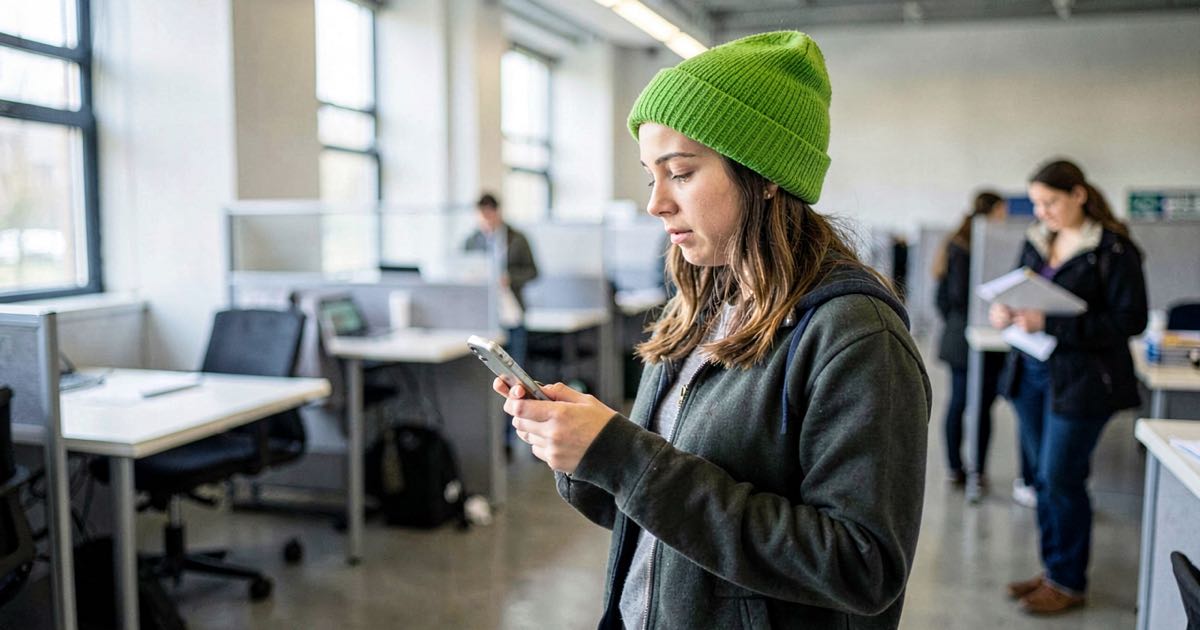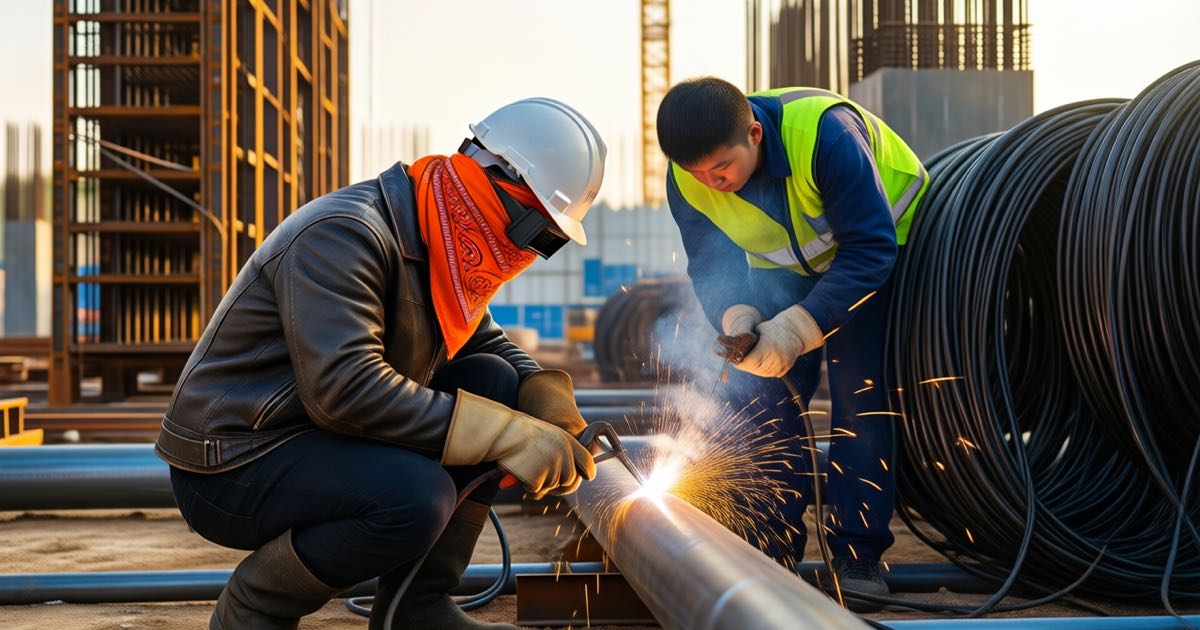
Four stories landed on this site before morning tea, and taken singly they point in four directions. AT&T’s chief executive says the AI boom cannot fill 200,000 hands. Bloomberg’s reading of 10 million job postings says AI-exposed work is vanishing fastest. Nestlé is wiring robots and sensors into food factories. And a mathematician shipped a claimed proof of the Riemann hypothesis as code no human being has read. The connection is a single sentence: the AI economy is now split into two floors, and it is hiring on one while compressing the other.
🔍 THE BOTTOM LINE
Where AI needs the physical world — fibre, farms, factories — it mints durable, degree-free jobs. Where AI produces symbolic output — postings, paperwork, proofs — headcount thins first at the entry rung, and the work’s extreme case is now an artifact a machine checks and no human reads.
The floor that cannot fill its jobs
AT&T’s CEO John Stankey told the Business Roundtable’s podcast that telecom needs roughly 200,000 additional construction and technician workers by 2032, driven by data centres that must be physically connected to everything else. The numbers behind his version are unromantic: about $800 billion of US data-centre spending expected in 2026, a $250 billion multi-year AT&T fibre plan, and an arithmetic gap AT&T itself can’t close — as our morning coverage laid out, the company’s 10,000 recent hires and 3,000 planned for 2026 cover around 1.5% of the industry-wide 200,000-worker gap. These jobs pay near $70,000, and only about 5% of AT&T’s roles require a four-year degree.
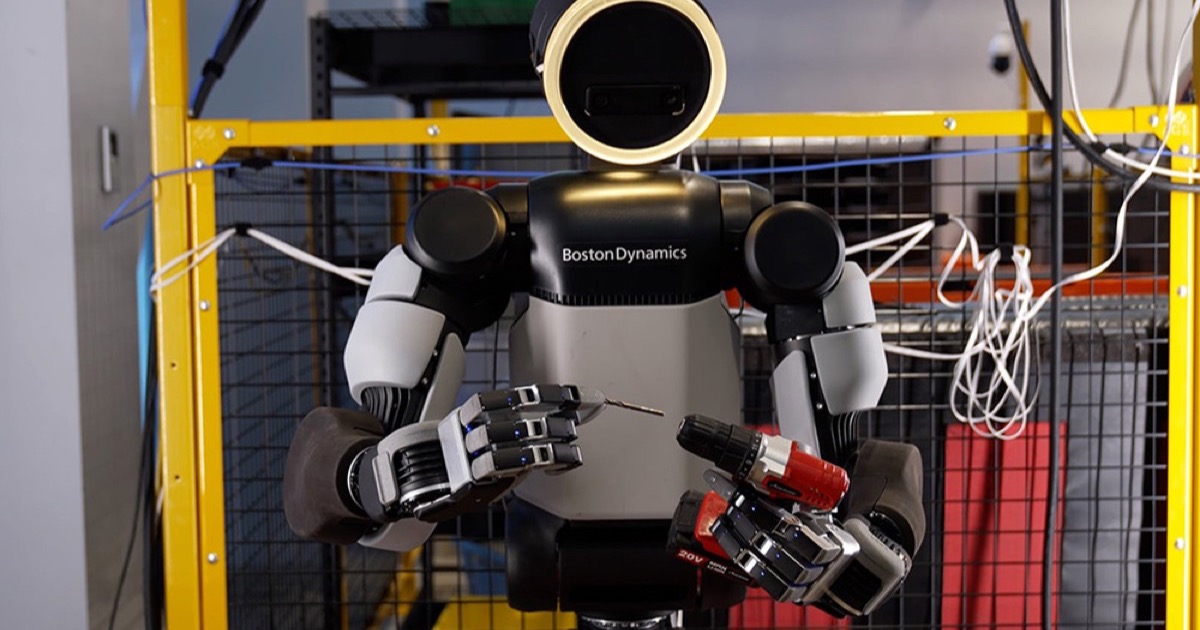
Nestlé showed the same floor from the buyer’s side. On November 20 the Wall Street Journal reported two partnerships with Microsoft and Boston Dynamics centred on a new Deep Tech Center in Orbe, Switzerland — with Spot-class inspection robots already running hourly routes at Nestlé Purina, per Boston Dynamics’ own case study, and coffee machines as the second tier. We documented the detail this morning: the deal extends a year in which Boston Dynamics put Atlas through a GlobalFoundries chip fab and Rockwell began consolidating factory robots into fleets. A retrofit wave of this shape does not create jobs fast — plant upgrades move at shutdown pace — but it creates them durably, which is why a telecom CEO and a food giant are effectively competing for the same hands.
The floor where postings go quiet
Bloomberg spent four years counting the opposite floor. Across nearly 10 million Chinese online postings from July 2021 to June 2025, listings for the most AI-exposed occupations fell about 10 percentage points further than less-exposed roles, with total postings halving in the three years after June 2022. A ShanghaiTech analysis of 116 million ads puts the AI-caused net loss in new hires at 5.2%, concentrated on people with one to three years’ experience — our write-up of the dataset is here.
Read the caveats before the fear, because Bloomberg does: the AI effect cannot be cleanly separated from China’s slump, and the cuts were quiet enough that Xiaomi, Meituan and Alibaba’s Fliggy denied mass layoffs even as employees reported department losses up to 30%. But the mechanics Bloomberg surfaced matter more than any verdict: job ads themselves advertise the compression — programming, design and testing combined so one person with AI tools could do the work of up to six, and new titles like Tencent’s “AI Design Engineer” that describe a human directing agent teams. New titles forming around supervision, while totals fall, is exactly what a floor converting doing into checking looks like.
The extreme of the desk floor: work nobody reads
On Friday, November 20, the desk floor showed its endpoint. Levent Alpöge, a number theorist who left Harvard for Anthropic, posted a four-page note claiming he and Claude have proved the Riemann hypothesis — and the entire argument ships as Lean proof code, compressed into 14 archives he estimates would run past 250,000 pages if rendered into human-readable prose. No independent check has been reported, as Scientific American notes; the claim rests on a proof assistant that verifies internal consistency, while humans must still trust the encoding. We covered the claim and its verification gap this morning.
That is what the symbolic floor ends as: the product is an artifact, the reading is mechanical, and the human role is auditing whether the artifact says what it claims. The infrastructure underneath that role is active — the Lean ecosystem’s public repos show mathlib pushing commits hours before this piece, its host language at 10,080 stars. The pattern repeats what this week’s METR report on Anthropic’s self-acceleration measured and what OpenAI’s Erdős claim started: claims of consequence now arrive as unrefereed artifacts, and the burden has moved to whoever runs the checks. Verification is becoming the named job of the floor where the work itself stopped being readable.
What the floors mean from New Zealand
Both floors run through this country. New Zealand’s AI hiring has more than doubled in a year, but the composition follows the split: young Kiwi workers have been leaving digital careers for hands-on crafts since at least September, which is the trades floor reading the same signal Stankey is. A fibre splicer in Hamilton or a maintenance crew at a Waikato dairy plant sits on the floor where machines need hands; a graduate applying to a content team sits on the floor where Bloomberg’s data says the rungs are thinning. The practical read is not an anti-AI argument — it is a placement argument. Apprenticeship trades gain pricing power as the buildout accelerates, and the surviving desk entry point is learning to audit what machines produce, not to produce at their speed.
❓ FAQ
Is the AI boom creating jobs or destroying them? Both, on different floors. It is minting demand for physical infrastructure trades — fibre technicians, factory retrofit crews, robot maintenance — while compressing AI-exposed symbolic work hardest at entry level.
Does the Bloomberg China dataset prove AI caused those job losses? No. Bloomberg itself says the AI effect cannot be isolated with certainty from China’s broader economic slowdown, and the underlying studies are estimates. Treat the dataset as a directional signal, not a verdict.
Why would fibre installers be safe from AI? Their work is physical, outdoor and unstructured — trenching, splicing and maintaining lines at buildout speed, a task set Stankey argues algorithms cannot do from a server rack. Durability here is about the work’s physics, not its prestige.
What is Lean, and why does it matter in the Riemann claim? Lean is a proof assistant that mechanically checks every logical step in a formalised argument. It makes a claim verifiable at machine speed, but humans must still confirm the code states what it claims — the audit layer the whole episode now depends on.
🔍 THE BOTTOM LINE
The 12- to 24-month forecast is already priced in today’s evidence: infrastructure trades gain pricing power as the buildout accelerates, the AI-exposed entry rung keeps thinning in the world’s first large-scale job dataset, and the durable desk job of the symbolic floor is checking what the machines ship — on a factory line in Orbe or in a Lean repository.
📰 Sources
— CJ Murden, editor of Singularity.Kiwi. Former digital technologies teacher, author of AI-focused books. Writing with a New Zealand focus.