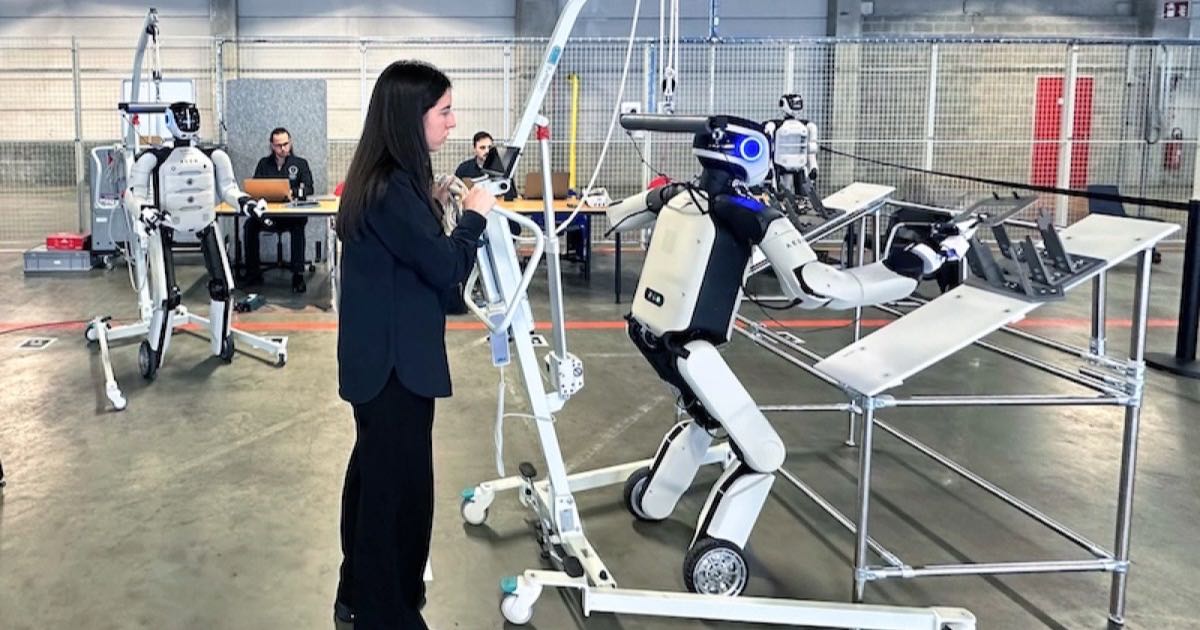
Volvo Cars has begun training and testing Hexagon Robotics’ AEON humanoid robots at its manufacturing plant in Ghent, Belgium — the first Volvo factory to take the machines on — with the aim of moving them into production operations by mid-2027. The account comes from Robotics & Automation News and Automotive World, both published November 26.
The training is unusually hands-on for a customer programme. Volvo’s own manufacturing team works with Hexagon’s robotics division using imitation learning — the robot learns tasks by watching and copying human demonstrations. The first task is placing components into two fixtures with a high degree of precision; later stages add handling multiple components, navigating the plant, and interacting with automation already on the floor. That progression mirrors the AI-robot unpacking work Siemens is trialling inside its own Erlangen factory, where the unglamorous, variable tasks are the target rather than the already-automated ones.
Volvo’s framing of why it wants them is about ergonomics, not headcount. Magnus Nilsson, the company’s chief manufacturing officer, said: “AEON’s humanoid design means it can fit into our production as it is today, alongside our teams and existing automation.” The follow-up claim from the company is “to take on some of the most physically demanding tasks and help make work more ergonomic for our people.” Arnaud Robert, president of Hexagon Robotics, put the vendor side plainly: “The purpose of humanoid robotics is to deliver business value to our customers.”
A wheeled humanoid, on purpose
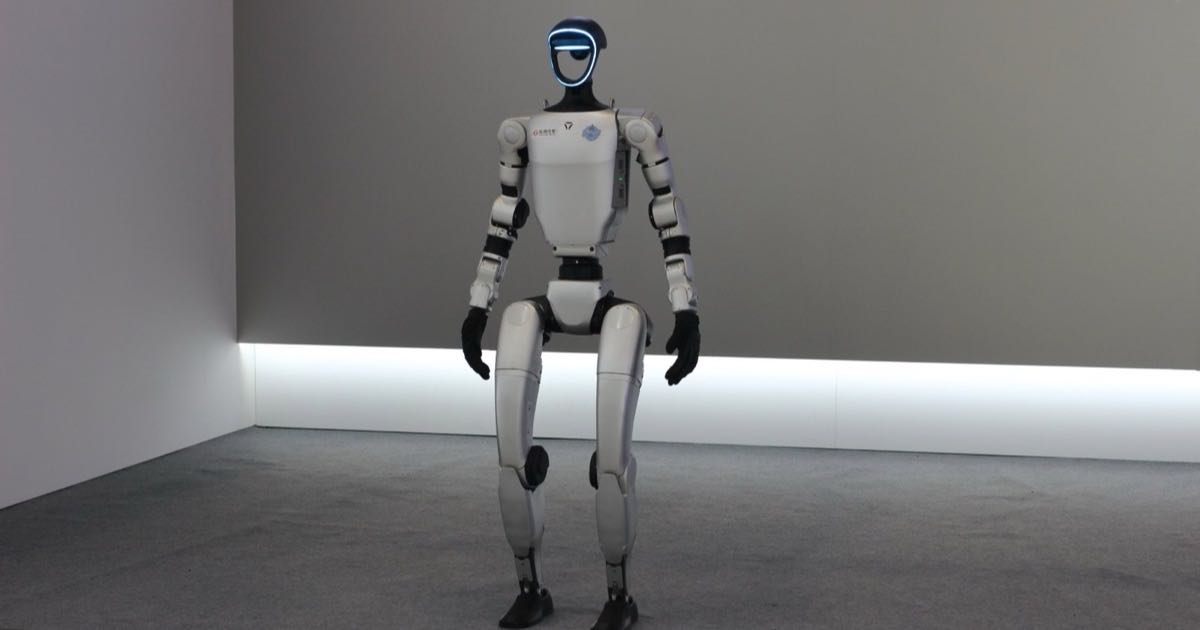
AEON is a deliberate oddity in the humanoid field: it rolls rather than walks. The robot stands 1.65 metres, weighs 60 kg, and travels at up to 2.4 m/s on wheels, reading its surroundings with cameras and sensors. Its payload sits around the 10 kg mark in the two detailed accounts, though Hexagon’s own product page lists 15 kg short-term and 8 kg sustained — the kind of gap that shows how early “spec sheet” language still is for this industry. Either figure confines AEON’s first jobs to light components.
A bigger robot would move more; a walking one would leave the floor. Volvo’s Ghent halls are flat, dense with equipment, and were designed around people — wheels cover that environment faster and more cheaply than a bipedal gait ever will. The bipedal glamour race between Tesla, Figure and the Chinese newcomers is competing in a different arena than the one Volvo actually works in.
What it changes, and what it doesn’t
The industrial logic here is the brownfield argument, stated well by Automotive World: humanoids promise automation “without rebuilt lines.” Fixed arms have handled stable, repetitive work in fixed positions for decades; the humanoid’s pitch is flexible work in a factory as-built. That is why automakers keep turning out as the natural customer class rather than laboratory curiosities — Volkswagen is testing UBTECH’s humanoids alongside the same logic, and the physical-AI investment wave keeps finding industrial niches. Volvo is notable for choosing the customer seat: buying a Hexagon robot rather than developing one in-house, the opposite of the vertical playbook XPeng is betting on.
The timeline deserves as much attention as the robot. More AEON units are due at Ghent for a wider pilot in the first half of 2027, and Automotive World’s dry observation is the honest scorecard: with the first task only now under way, the mid-2027 target gives Volvo about seven months to move from validation to production. Automakers’ dates routinely slip by quarters; treat this one as a plan, not a schedule. Two things would make the evidence real: a named production task running end-to-end on the line, and a stated rate — how many units, at what uptime, doing how many components per hour. Neither is on the table yet, and until one is, this is a promising training programme with a deadline attached.
Sourcing note
Automotive News first reported the story at 11:00 UTC on November 26; its full text is paywalled and was not readable for this article. Robotics & Automation News and Automotive World carry the detailed accessible accounts and are cited above. The Next Web, InsideEVs, Auto123, Motor Illustrated, autoevolution and Cision News published on the story the same day, confirmed via the Google News index; as of publication no outlet has independently audited the programme’s technical claims beyond what the companies have said.