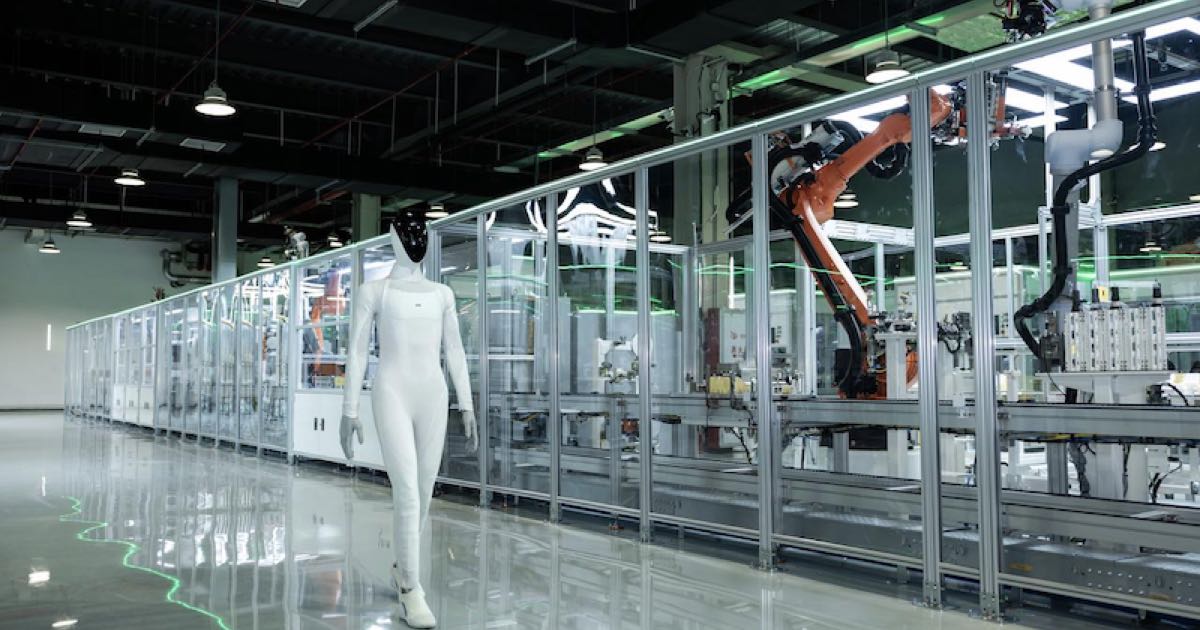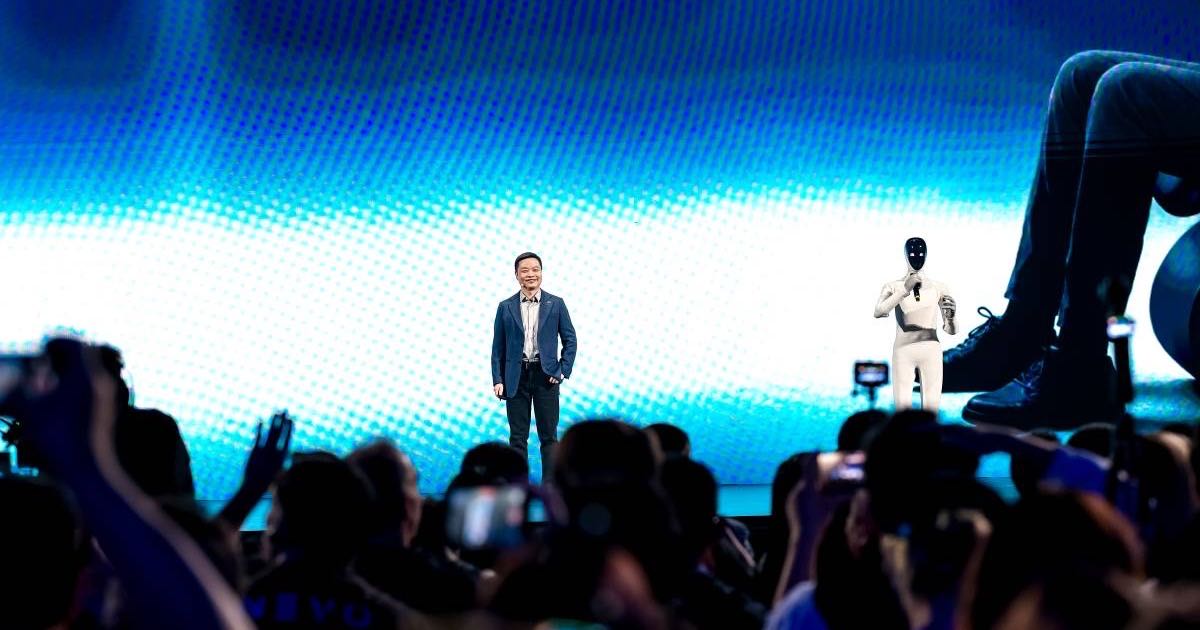
XPeng says mass production of its Iron humanoid robot is scheduled to begin in January 2027, with the company positioning the robot for commercial deployment — and its first job will be customer-facing. Iron is training as a store assistant in XPeng retail stores from the first quarter of 2027, doing customer reception and product guidance. The details come from the company’s release carried on GlobeNewswire (syndicated at The Manila Times) and from Interesting Engineering’s coverage of the robot’s debut at the company’s eighth AI Day in Guangzhou on November 25. We previewed that show ahead of time: Iron, VLA and the physical-AI bet.
Chairman and CEO He Xiaopeng framed the moment as an industry threshold: “Humanoid robotics is reaching the point where the industry must move beyond demonstrations and prove that robots can create value in the real world.” It is a line aimed squarely at a field where most humanoid footage is still a demo reel, and it doubles as a statement about what XPeng will be judged on.
The robot the line will make
The Iron heading into production is the one shown at AI Day: 76 degrees of freedom across the body, a 21-degree-of-freedom dexterous hand, more than 1,500 tactile sensing points, and 3D vision with 360-degree perception, according to the release. Iron OS runs on three of XPeng’s proprietary Turing AI chips, which the company rates at 2,250 effective TOPS for onboard models and whole-body motion control. Interesting Engineering’s account of the Turing Physical AI Architecture describes three systems stacked at different speeds — a hardware layer, a VLA-driven environment layer, and a higher-order planning layer — feeding a loop where physical actions inform the next decision.
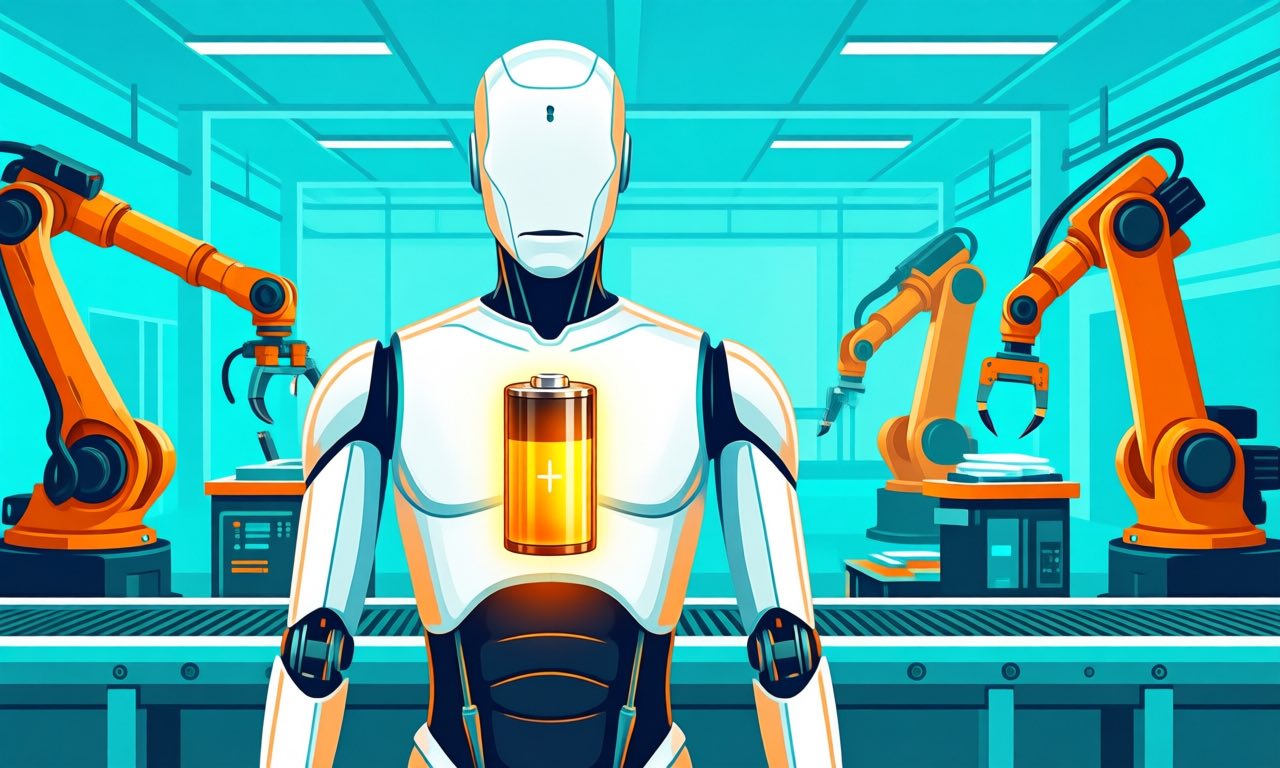
The supporting infrastructure is the less glamorous half of the claim. XPeng says its purpose-built Robot Data Factory spans 50,000 square metres and covers more than 250 scenarios across 15 job categories — the data engine the company says keeps the robot improving after the line starts. The company’s production story already has a paper trail beyond the press release: the robot’s solid-state battery small-batch ramp preceded it, and the $900 million robotics raise funded the scaling push behind it.
A modest first job, deliberately
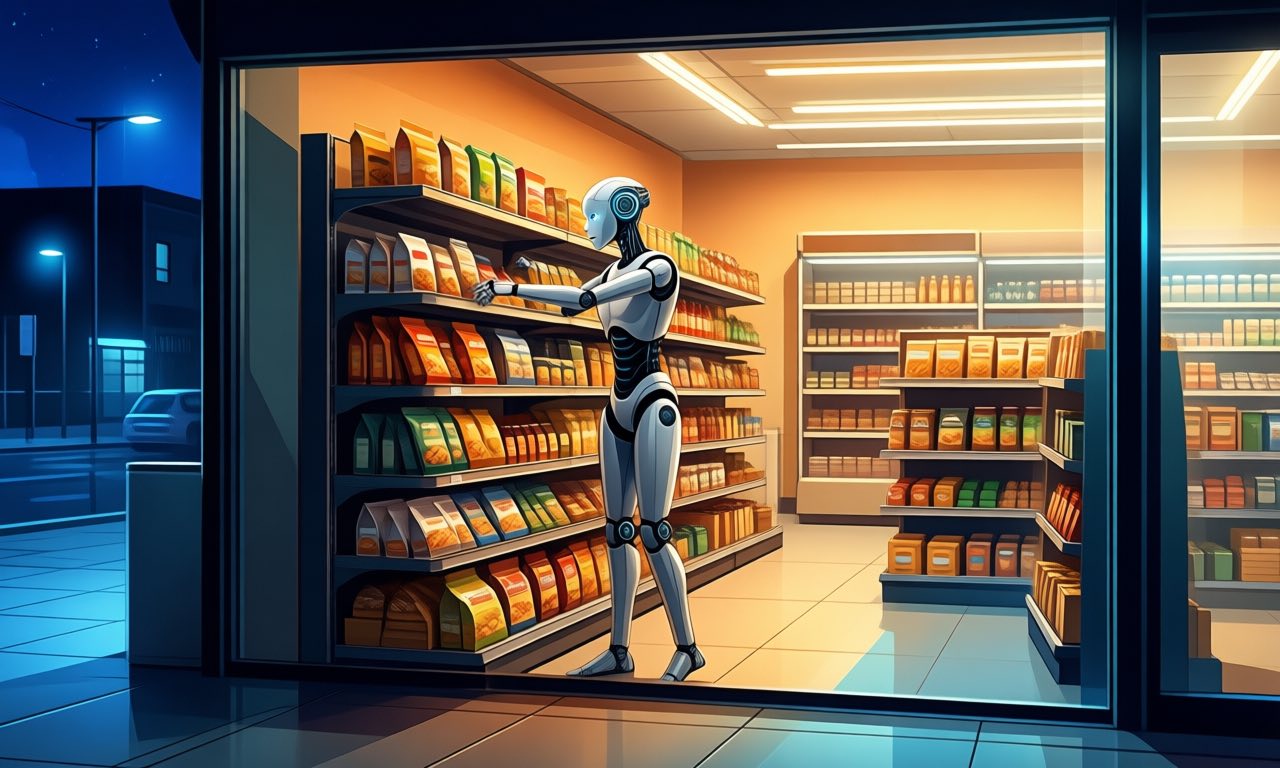
The notable choice in the announcement is the first deployment: not a factory line, an exhibition cameo or a security patrol, but store assistance in XPeng’s own retail shops. It is controlled, repeatable, brand-compatible work — and it puts the robot in front of customers every day, which is either a goodwill masterstroke or a public way to be embarrassed by a glitch, depending on how well January’s line start goes. Service deployments are where the market is finding its footing for now: a hotel concierge robot with real bookings shipped this year, and Agibot has been pushing humanoid volume past Unitree on the industrial side.
Our read: the store role is the honest tell from a company that just promised real-world value. A humanoid guiding customers through an EV showroom with 1,500 tactile points and 360-degree perception is being measured on reliability in public, daily — a harder and more meaningful test than another trade-show demo. The claims to watch next are production cadence (“mass production” without monthly numbers means little), the store rollout count, and whether the January date holds for both the line and the shops. XPeng has now given two dates and a role; shipments, not slides, settle it.
Sourcing note
The January 2027 line start, the Q1 store deployments and the hardware figures are from XPeng’s own release (GlobeNewswire, syndicated at The Manila Times, with further pickup at Autocango); Interesting Engineering independently covered the robot’s debut and architecture. Bloomberg, CNBC, TradingView, Yahoo Finance and Business Insider picked up the release the same day, confirmed via the Google News index. The production timeline and TOPS ratings are company claims not yet independently audited by a third party.