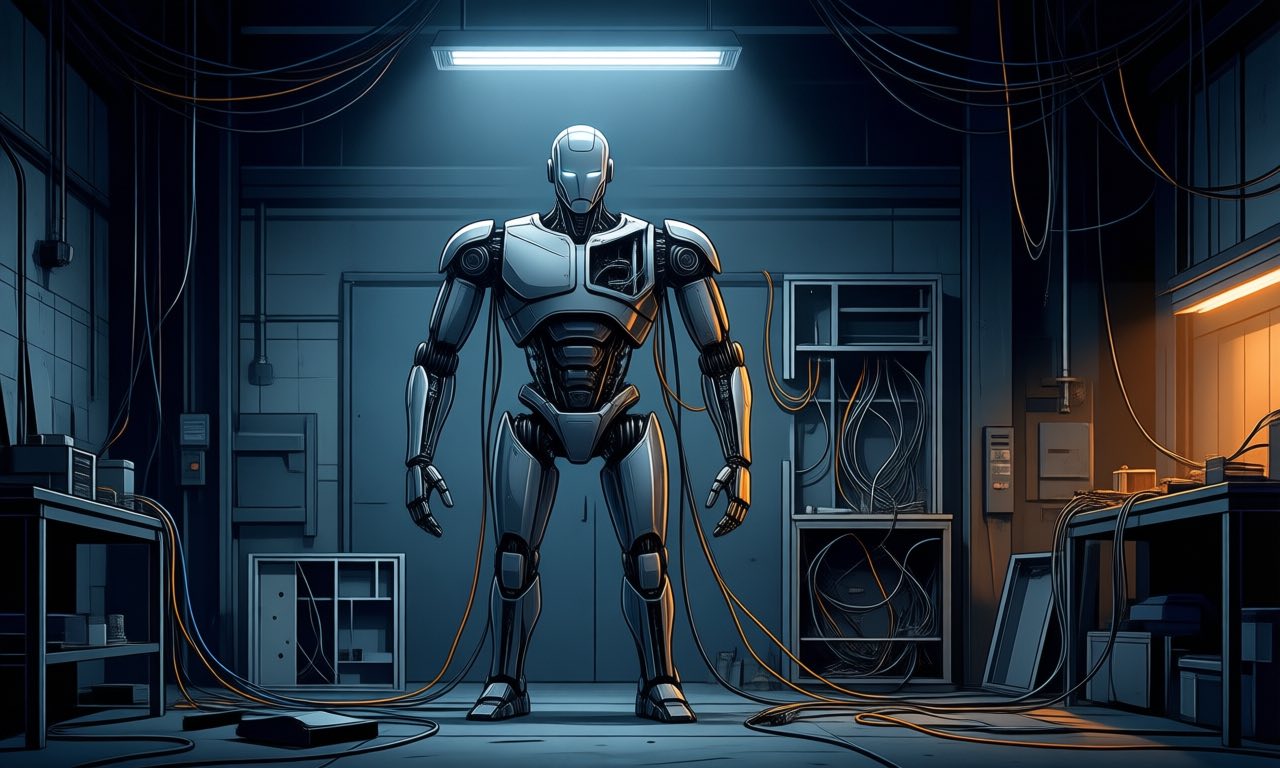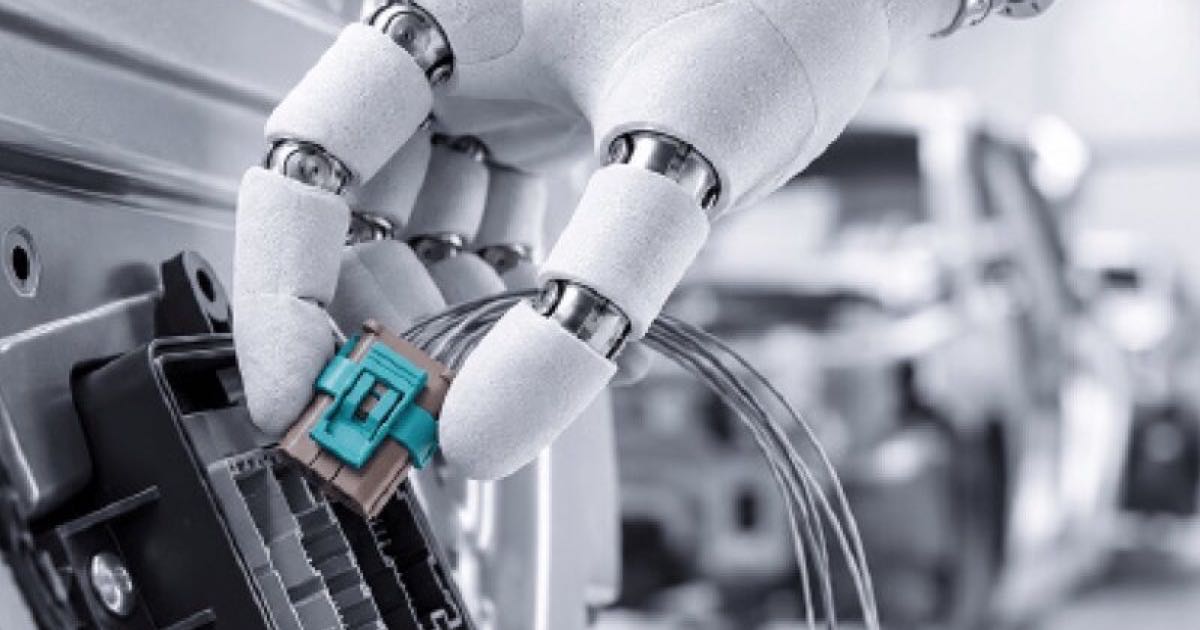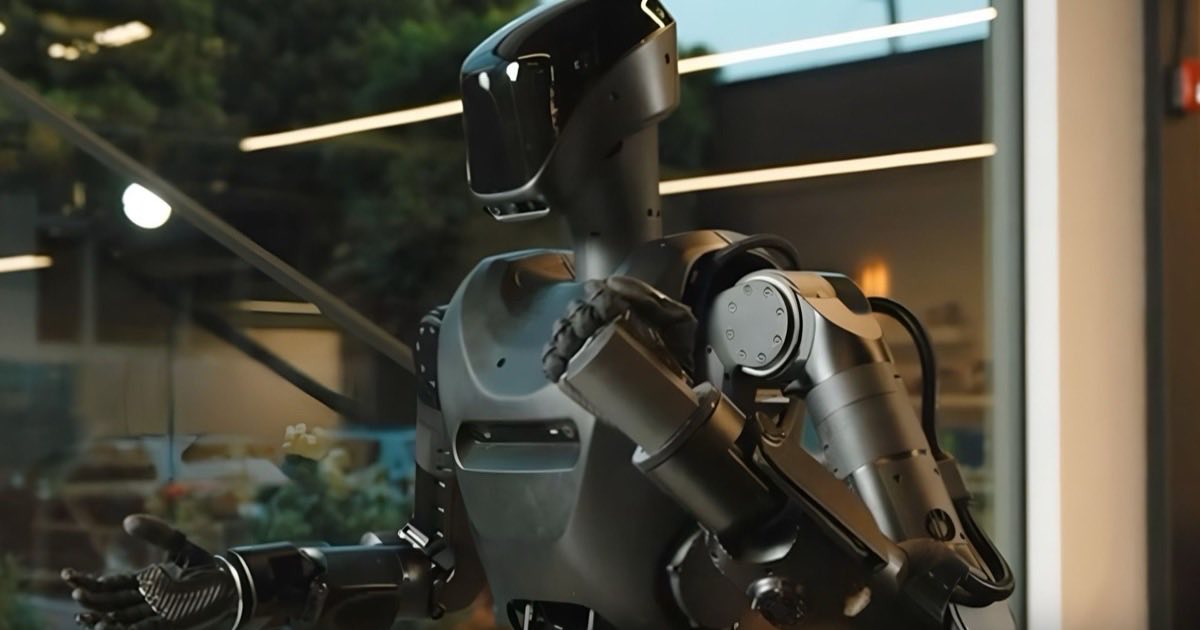
Foundation Future Industries has revealed the Phantom MK2, the second generation of the humanoid it once marketed as a robot soldier, in an eight-minute launch video that doubles as a rebrand. The San Francisco startup advised by Eric Trump claims the bipedal machine can carry up to 90 kilograms (200 pounds) while walking through rain, snow, and dust — figures that would put it near the head of the humanoid field if they hold up, according to Interesting Engineering. The debut arrives at a precarious moment: CNBC reported that the company has not paid its employees since missing its Oct. 30 payroll, and the $150 million lifeline CEO Sankaet Pathak told staff was incoming has so far only been “considered” by its would-be backer.
The rollout was a staggered one: a Pathak interview with Fast Company on Nov. 18, the launch video over the weekend, and coverage from trade watchers in between.
What the company says the MK2 can do
Per the company’s materials, the Phantom MK2 stands 183 centimetres, weighs 88 kilograms and carries 29 degrees of freedom. If the payload claim is accurate, it beats any major contender in the humanoid race aside from China’s NeodraDynamics Neo1, as Mike Kalil notes — though his read of the video is that the MK2 walks with a load but is never shown lifting it. The IP67 rating, meaning the housing resists dust and water ingress, is rare among humanoids; the DEEP Robotics DR02 from Hangzhou is the only other modern machine claiming it, and that company’s footage shows DR02 directing traffic in the rain. Foundation says the MK2 runs 4 to 6 hours per charge.
The interesting half is the software story. Cortex II, the company’s upgraded control system running on AMD Ryzen X100 Series processors, is built to learn tasks by watching human demonstrations — Kalil reports as few as 60 examples for some operations — and to take natural-language instruction. Foundation also envisions a centralized command system coordinating up to 1,000 robots that share what they see. Pathak claims the simplified assembly halves the robot’s bill-of-materials cost, and Interesting Engineering’s account of the Fast Company interview says the redesign directly targets what MK-1 field trials exposed: battery runtime, waterproofing and lifting capacity.
Production is slated for early 2027 in the San Francisco Bay Area, with Kalil reporting a target of thousands of units by the end of that year at roughly $75,000 to lease annually. He adds the necessary caveat: the company previously said it was targeting 10,000 humanoids by the end of 2026, and has yet to demonstrate anything close to that.
The financial backdrop didn’t pause for the launch
We covered the payroll crisis here a week ago: according to CNBC, the company missed payroll on Oct. 30 and again in August — which was covered then by a bridge loan — while Pathak’s $4.6 million withdrawal from company accounts (CNBC called it a loan; Pathak maintains it was a 2025 share buyback) funded a Sausalito home. CNBC also flagged that Pathak is the company’s sole board member, a governance structure prospective investors question, and traced the widely reported “$24 million in Pentagon contracts” to grants that came with Boardwalk Robotics, which Foundation acquired in 2024. Kalil counts about $3.3 million visible in federal databases against the $73 million in military funding claimed in the company’s “Humanoids for War” pitch deck.
The new element this week is the Korean lifeline. Per reporting from Reuters relayed by Kalil, Pathak told employees a $150 million investment from the South Korean conglomerate Base Group was arriving within days. Base Group has confirmed only that it is considering an investment; its chairman, Kim Sung-jip, appears in the launch video expressing interest. If the deal lands, the scrutiny lands with it: Democratic senators including Elizabeth Warren are already probing Base Group’s $2 million payment to the Trump Organization in 2025, which is the subject of competing explanations — a development fee for a proposed South Korean golf course, per both companies, versus possible lobbying influence in a US aluminum-tariff dispute, per the senators.
The quiet pivot away from robot soldiers
What is most telling about the debut is the silence. The video contains essentially no military talk, Kalil observes, which is a sharp turn for the company that debuted its upper-body MK1 at a San Francisco nightclub as a next-gen robotic soldier, briefly named its AI system “Skynet” before settling on Cortex, claimed a Ukraine battlefield delivery that one journalist who travelled to meet the machines says stalled at the Polish border, and made global headlines over Financial Times reporting on talks with the IDF about deploying up to 1,000 humanoids in Gaza tunnels — discussions Pathak later described to Fast Company as “very early exploration conversations” with, quote, “literally nothing active going on.”
The arms option has not been cut entirely: in the Fast Company interview, as summarized by Interesting Engineering, Pathak said current defense work centres on logistics but the company remains open to arming the robots for the US military under human-in-the-loop control. And the launch video closes the gap between tech and politics from the other side: former NBA champion Tristan Thompson, an early Anthropic investor and a close friend of Eric Trump, joined the company as chief global expansion advisor.
What this debut is actually selling
Two products, arguably. The first is the robot: a payload, an ingress rating, a runtime and a DoF count that are all testable claims — but testable implies a tester, and no external unit has been measured. The second is the runway: a confirmed Base Group cheque would cover payroll and buy exactly the thing the company has never had, which is time. The distinction matters because the humanoid firms with auditable cash flow built it on paying customers. Unitree went public on real revenue, not on a sovereign-adjacent narrative; our coverage of its IPO is the sector’s counterpoint.
The timing is also worth noting. The same week Foundation led with weatherproofing instead of warfare, UN states agreed to “elaborate” on rules for autonomous weapons by 2028 rather than bind anyone to anything. A company whose brand once rode a war-robot pitch to national television now sells hazard-free industrial work — a pivot that tracks the political wind, whether or not the base-spec sheet survives contact with an independent measurement. Watch for the Base Group confirmation and, later, for anyone who has actually held a MK2.
Sources: CNBC, Interesting Engineering, Mike Kalil / Industry 4.0; Reuters and Fast Company reporting relayed via those outlets.
Image: Foundation Phantom MK2 via Interesting Engineering.