Schunk, the German company synonymous with industrial grippers, has relaunched its humanoid robotics unit as a standalone company called Tactilia Robotics GmbH, betting that the part of a robot holding everything back is the part nobody has productised: the hand. SCHUNK Humanoid Robotics GmbH — founded only in January 2026 — now operates as Tactilia Robotics GmbH from Munich, according to the company’s own announcement, picked up over the weekend by Robotics & Automation News.
The pitch is a single sentence the company uses against itself: humanoid robots can see and think, but cannot yet reliably grip. If that is true — and most people who have spent time around deployed humanoids would concede the point — then the dexterous hand is the most valuable unowned component in a market that is otherwise getting crowded fast.
A ten-month-old company with a new name
Tactilia has changed form twice in less than a year. The unit was founded in January 2026 as Schunk Humanoid Robotics GmbH; this week’s rename to Tactilia Robotics GmbH was marked at Schunk’s headquarters in Lauffen am Neckar, where CEO Dr. Markus Netzer and Schunk CEO Kristina I. Schunk formally signed off the new identity. The name derives from the Latin tactilis — tactile — which the company explains as pointing to “the contact between the robot hand and the object”: the moment where automation succeeds or fails.
Netzer took the CEO role on November 1, according to Robotics & Automation News, arriving from Rolls-Royce Solutions, where he ran manufacturing as a vice president. That is a manufacturing-operations biography, not a robotics-research one, which reads as deliberate: the company’s stated immediate priority is not more demos but developing and validating hands that survive industrial use.
His launch quote does most of the talking: “The robotic arm has changed the industry. The robot hand will do the same. We want this technology to come from Europe.”
What Tactilia is actually building
Details are thin — the company has published no specifications, no pricing and no launch date for the hand itself, and as of publication nothing independent has been measured. What Schunk’s announcement and Tactilia’s new site describe is a modular, multi-finger hand offered in two-, three-, four- and five-finger configurations, with software that combines sensing and actuators with “physical AI” learned for particular industrial tasks.
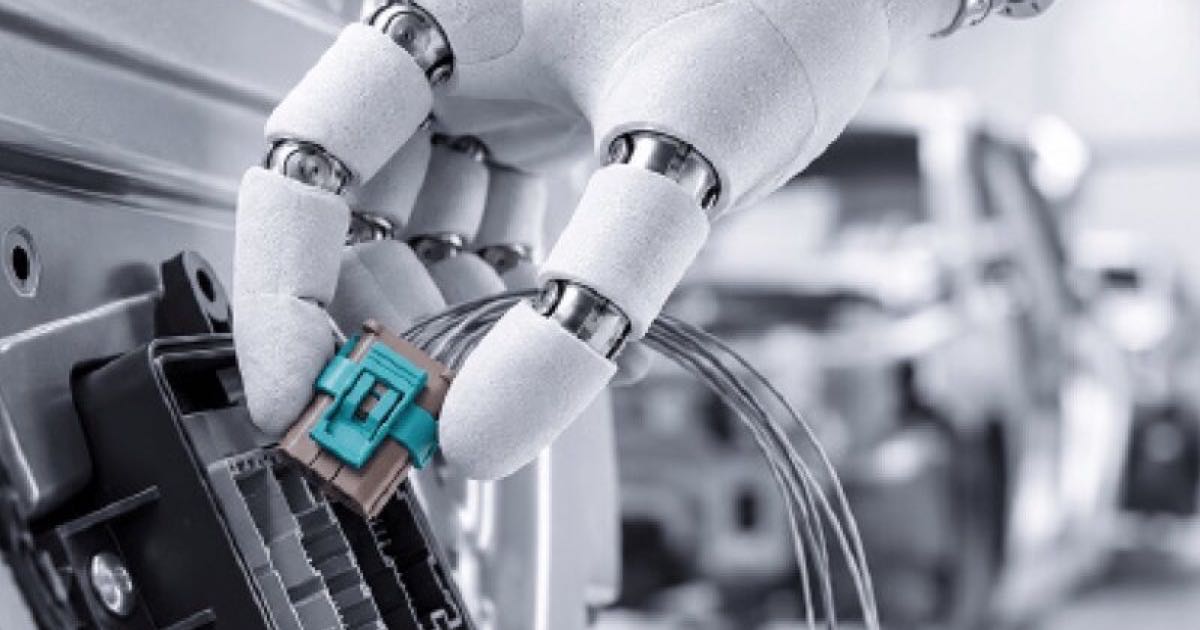
The positioning is aggressively platform-agnostic: the hands are aimed at humanoid robots, collaborative arms and mobile manipulators alike, with the company promising compatibility regardless of which robot builder or AI stack sits on top. The target tasks it names read like a punch list of the fiddly work that still defeats today’s humanoids — connector mating, clip insertion and cable routing in automotive assembly, vial handling and sample preparation in laboratories, machine tending, piece-picking in logistics.
Schunk CTO Timo Gessmann framed the bar the company has set for itself: “Robotic hands open up new automation possibilities, especially for tasks that previously required a lot of manual skill. To generate real benefits, they must be simple to integrate and reliable in continuous use.”
The hand as the bottleneck, not the body
There is a reason the largest gripper company in the world is spending a spin-off on this. The humanoid race has been run almost entirely on bodies — form factors, payload claims and walking videos — while dexterous manipulation remains the weak link. Boston Dynamics reached the same conclusion from the opposite direction, adding a purpose-built four-finger hand to Atlas because manipulating real objects is where the platform’s value has to eventually live. We covered that bet when the hand arrived; Tactilia is the supply-chain thesis to the same argument.
The structural read is uncomfortable for platform-builders and encouraging for component suppliers. A company like Schunk doesn’t need to bet on one winner in the humanoid race; it needs every finalist to need hands. Selling grippers is why Schunk has been family-owned since 1945 with roughly 3,700 employees and partners in 75 countries while flashier robot names came and went. A modular hand aimed at whoever wins is a classic components-and-margins play — the same logic that created Europe’s parts-supplier strength in autos. The robot-agnostic positioning implies exactly that: hands sold across platforms rather than into one captive product line.
It is not a guaranteed win. Dexterous manipulation is also the single most crowded research frontier in robotics right now, with platform makers building in-house hands and VC-funded hand startups circling. Incumbent advantages are integration muscle and reliability records, not novelty.
Why the spin-off structure, and why Europe
The company is at pains to present Tactilia as independent — “startup speed” on top of what its own materials call more than 80 years of gripping and automation expertise. Kristina I. Schunk put it as “giving a highly specialized team the entrepreneurial freedom to quickly bring high-performance robotic hands into industrial applications.” The new company keeps access to Schunk’s 15 CoLabs worldwide, the regional application centres where systems get tested with actual industrial customers — which is where the claims will have to survive contact with real production data.
Netzer’s “we want this technology to come from Europe” line will read to some as boilerplate and to others as the point. The humanoid and dexterous-hands race is currently dominated by American and Chinese players — from Unitree, which listed publicly earlier this year on real customer revenue, to the US platform builders and a wave of Chinese hand suppliers. Europe keeps excelling at supplying the components underneath everyone else’s robots, and Tactilia is that strategy extended into the most valuable component of the next decade’s robots. The company’s headquarters in Munich’s Arabellapark district, chosen for its density of universities, research institutions and robotics companies, is the standard playbook applied with real money behind it.
The honest caveat: a ten-month-old company has shipped nothing into industry yet, and “the robot arm changed the industry” is a founder’s analogy, not a track record. What Tactilia has is the patronage of the company that already owns the gripper aisle. Watch the CoLabs validation results and, eventually, the first specification sheet — that is where this bet gets its first real test.
Sources: SCHUNK announcement, Robotics & Automation News, Tactilia Robotics. Additional coverage tracked via Foro3D.
Image: Tactilia Robotics’ own product photography of a robotic hand in an automotive application.